
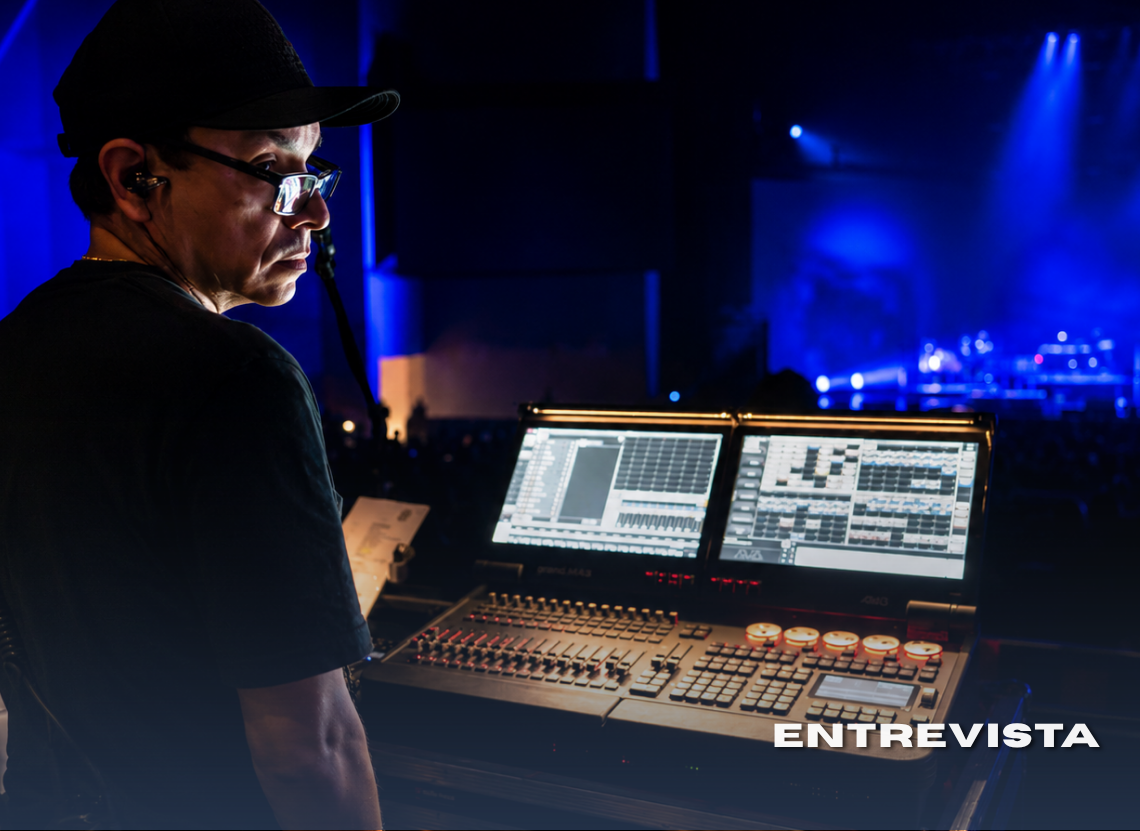
From a Diamond 3 to the D7, the Mexican lighting designer has built a relationship with Avolites spanning more than 30 years. A story shaped by technological evolution, programming speed, and one idea that remains unchanged: the console must adapt to the designer and to the needs of each show.
Some professional relationships are built around a product, while others eventually become part of a career. Tony Pérez’s story with Avolites clearly belongs to the second category.
Antonio Pérez Torres —although everyone in the industry knows him as Tony PT— began his professional journey in the entertainment industry in the late 1980s and came across an Avolites Diamond 3 in the early 1990s. Since then, his career and the evolution of the platform have progressed almost in parallel.
Three decades later, Tony continues to use Avolites as his primary control platform. And his recent addition of a D7-215, which was the first unit of this model to arrive in Mexico, represents much more than the purchase of a new console: it is the continuation of a way of working that has adapted to the needs of each era.
A relationship that survived technological change
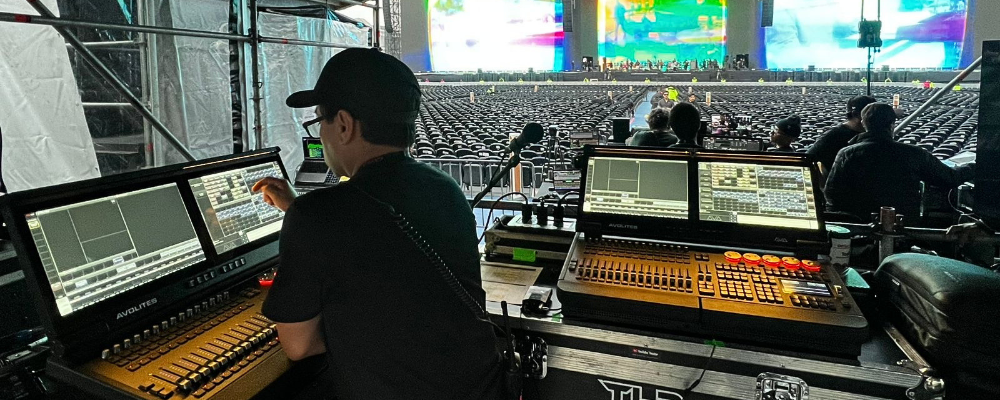
Tony’s loyalty to Avolites is not simply the result of being familiar with an interface. Throughout his career, he has tested other platforms and had direct experience with different control systems. However, he found in Avolites a way of working that eventually became a natural part of his programming approach.
“The reality is that I became very accustomed to the console interface,” he explains. For Tony, ease of use does not simply mean that a console is easy to operate. It means that the designer can quickly reach the result they have in mind.
That concept appears repeatedly throughout the conversation. Programming speed is, for him, one of Avolites’ fundamental attributes because every action that can be simplified represents time gained during programming or live operation.
But there was another decisive factor in his decision to remain with the brand: Avolites’ ability to evolve.
Tony began using the earliest generations of the platform and later moved to Titan, a platform he has used since its early versions. Along the way came Pearl, Tiger Touch, Quartz, Arena and, finally, D7.
Each console changed the working surface, the number of faders, the screens, the executors and the control possibilities. However, the fundamental logic remained familiar enough to allow him to transfer his experience from one generation to the next.
“You try to make the console adapt to what we need,” he says. That sentence probably summarizes his relationship with the platform better than any other.
From Diamond 3 to D7
Technological evolution can be clearly observed through Tony’s own history.
He remembers his first Diamond 3 as a physically huge console, but one whose architecture he found logical and user-friendly for programming. Later came the Pearl, which allowed him to work with a large surface and a significant number of physical controls.
Then came Tiger Touch, with a much more developed graphical interface and new possibilities for programming and triggering directly from the screen.
The transition toward more compact consoles was also driven by a very specific need: travel.
Tony began working with different surfaces depending on the size and characteristics of each production. Quartz, Arena and other consoles each occupied different places within his workflow.
The D7 therefore appears as a logical evolution of that journey. When he had the opportunity to test it in Mexico, still as a prototype, he found a combination that responded particularly well to his needs: a modern platform, with an interface closer to current standards and, at the same time, compact enough for touring.
“I mainly need something to travel with,” he acknowledges. That was one of the central reasons for choosing the D7-215 over a larger surface.
On projects such as Latin Mafia, where mobility is a determining factor, carrying a compact console can make a significant difference logistically. Tony wanted to maintain the capabilities of a professional platform without turning the console into an excessively heavy or bulky element within a tour.
The decision was therefore eminently professional: software continuity, operational familiarity and portability.
The console does not change the designer
One of the most interesting ideas to emerge from the conversation is that Tony does not believe a new console necessarily has to change the way a designer works.
His perspective is almost the opposite. “Every programmer, every designer finds in the console what they specifically need to work or for their shows,” he says.
For Tony, there is no single correct way to use a platform. Each designer develops their own method based on the characteristics of the show, the number of fixtures, the use of pixels, macros, effects, manual or automated programming and, above all, their relationship with the artist.
That is why the evolution of consoles does not mean abandoning a way of working, but rather finding new tools to expand its possibilities.
His own journey demonstrates this. He moved from surfaces with numerous physical faders to more compact consoles, and then back to larger configurations when the project required them.
“What I’ve always had to do is build the foundation of my programming. And everything else, everything I need externally, I’ve adapted according to the surface and the size of the console.”
The tool changes. The methodology remains.
Titan: a platform no longer limited to lighting
Another aspect Tony highlights is the evolution of Titan.
For him, one of the major transformations of the latest generations is related to the ability to integrate different protocols, surfaces and tools within the same control environment.
The possibility of working with different systems and information sources allows control to move beyond being restricted exclusively to lighting.
Tony mentions tools and protocols such as NDI, Art-Net, ACN and other systems that expand the possibilities for integration.
“It is no longer limited in terms of protocols or functions, or only to controlling lighting specifically. Now we can control other things as well.”
For a designer working on shows where lighting, video, automation and other systems constantly coexist, this evolution has a direct consequence: the lighting designer is no longer working within a technological island.
Lighting is part of an ecosystem. And the controller needs to be able to communicate with that ecosystem.
Latin Mafia: when technology needs to disappear
Tony’s experience with Latin Mafia represents another particularly interesting chapter in his recent career.
The group’s visual approach presented him with a challenge that, paradoxically, had less to do with using more technology and more to do with learning to use less.
The three brothers who make up Latin Mafia have a very clearly defined visual identity. They seek to recover a more austere aesthetic associated with another era of lighting: white light, backlight, limited variations, no excessive movement and a much more restrained use of the capabilities of modern fixtures.
For a designer accustomed to having moving heads, pixels, beams and an entire generation of tools capable of producing enormous amounts of movement and effects at his disposal, the first reaction was one of limitation.
“They stopped me and took me back,” Tony recalls. But that limitation ultimately became a creative opportunity.
The challenge was to understand what the artist actually needed and discover how to use the available technology to build an aesthetic that, precisely, did not look technological.
This is where one of the characteristics Tony considers fundamental in a Lighting Designer comes into play: the ability to listen.
Technology should not impose itself on the show. It should serve the idea.
When speed also becomes creativity
For Tony, a console’s speed is not simply a matter of convenience. It can directly become a creative tool.
“If the control system is not agile and up to date enough, you won’t be able to create what you have in your head,” he explains.
The idea is simple but profound: between imagining something and actually bringing it to life, there is a chain of decisions, commands and actions. The more efficient the tool, the shorter the distance between the idea and its execution.
That is why Tony repeatedly emphasizes Avolites’ programming speed.
It is not simply about doing a job faster when that job would have to be done anyway. It is about ensuring that the tool does not become an obstacle between the designer and what they want to achieve.
In that sense, the console can become an extension of creativity.
The value of listening to the user
Tony also places particular emphasis on something he considers fundamental to the evolution of a platform: manufacturers listening to the people who work with it every day.
During his experience with the D7, he has even provided specific suggestions regarding the placement of certain functions.
His argument is practical: the person designing a console may have an in-depth knowledge of the technology, but the person working with it every day can identify small details capable of saving seconds over and over again.
And in professional programming, those seconds add up.
“It is very important that they listen to you, that they listen to you as a lighting designer,” he says.
For Tony, the evolution of a console should not happen exclusively within development departments. It should also be built through feedback from the people who spend hours behind the control surface, programming, operating and solving real-world problems.
In this sense, he believes the new generations of Avolites are a response to that interaction between manufacturer and user.
The biggest challenge: growing without losing identity
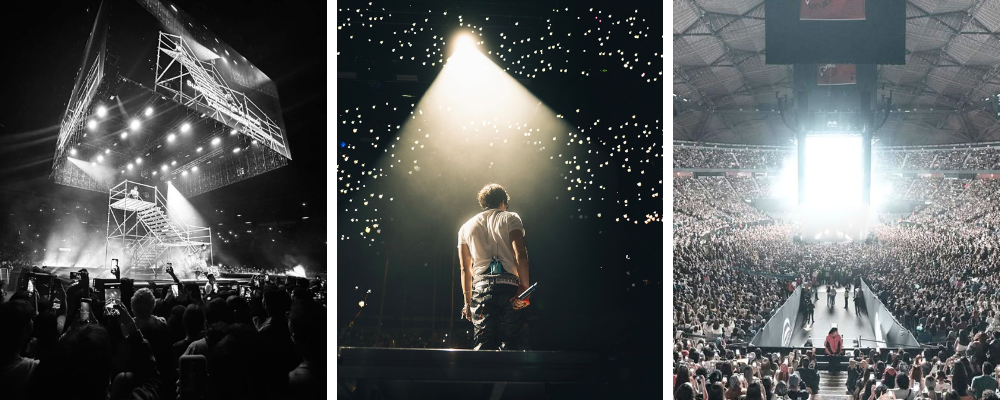
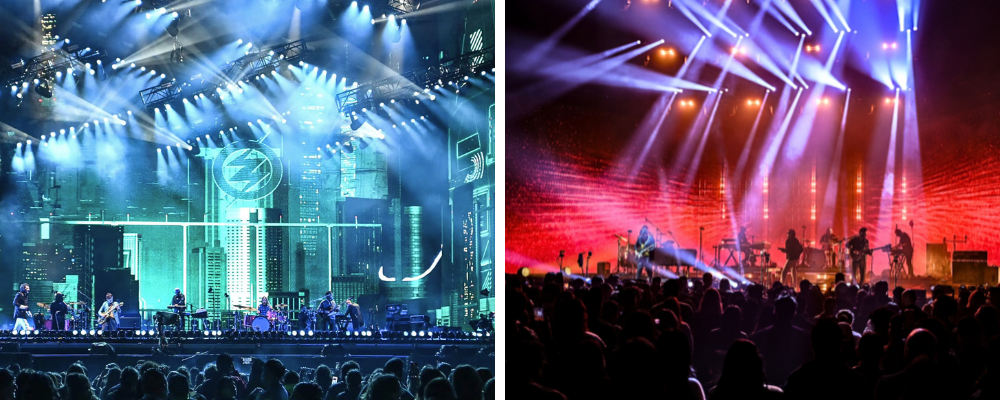
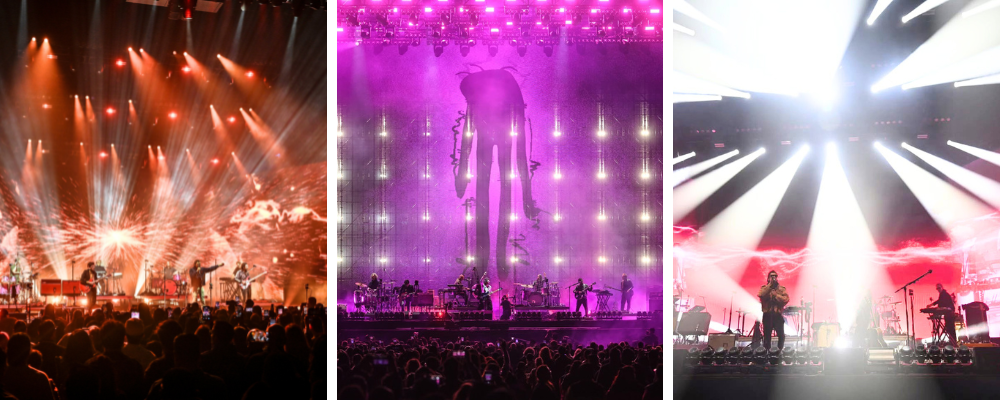
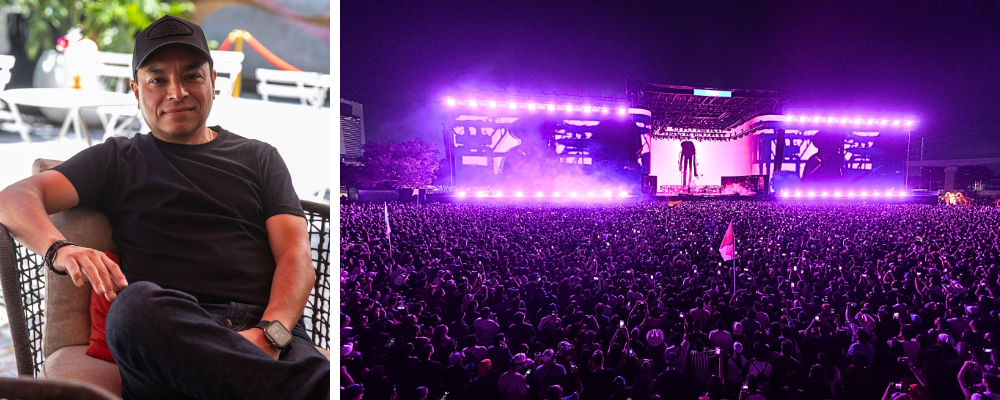
Among the projects that have most tested the combination of Tony and Avolites are Zoé’s recent performances at Mexico City’s Estadio GNP Seguros.
For that production, the D7 had to manage a large number of fixtures and a highly demanding configuration. According to Tony, he has used up to 128 universes with the console and worked with a main system accompanied by backup and multi-user operation.
The scale of the show also required finding a balance between lighting and video, particularly because of the amount of screens and fixtures involved.
And, according to his experience, the console responded without becoming a limiting factor.
“Whatever I needed, the console allowed me to do it, generally without any problem.”
For a professional who has experienced virtually every stage of Avolites’ evolution, that statement carries particular weight.
It is not simply about the specifications of a console. It is about trust.
Thirty years later, the story continues
Tony Pérez belongs to a generation of professionals who experienced the complete transformation of lighting control: from large physical surfaces and early digital architectures to platforms capable of integrating multiple protocols, video, automation and different control surfaces.
His journey with Avolites offers a particularly valuable perspective on that evolution: that of someone who not only used the brand’s different generations, but purchased several of them and incorporated them directly into his professional work.
He was the first person in Mexico to acquire a Tiger Touch. He was also the first to own an Arena. And once again, he was a pioneer by acquiring a D7.
But beyond those milestones, what matters is the continuity. Tony did not remain with Avolites because the consoles did not change. He remained because they did.
Each new generation responded to a different need: more universes, greater capacity, new interfaces, portability, integration and speed.
And now, as the industry moves toward increasingly complex shows where lighting coexists with video, automation and emerging technologies, his expectations are clear: faster control systems, lighter software, more tools and greater responsiveness.
For Tony, evolution has no endpoint. Neither does his relationship with Avolites.
“It is something very important to my work,” he concludes.
After more than three decades, there may be no better way to define the relationship between a designer and a control platform.
More than three decades after that first Diamond 3, Tony Pérez is still standing behind an Avolites console. The console changed, the software changed, the shows changed and the technology changed; what did not change was the need for a tool capable of responding at the speed of an idea.
In Tony’s journey, Avolites’ evolution did not mean starting over. It meant being able to keep moving forward without losing what made him choose the brand in the first place.
And perhaps that is the true measure of a professional control platform: not how much a console can do, but how much it allows the designer behind it to do.
Credits
Cover Photo: LATAM STAGE
Inside Photos: Antonio Perez – LATAM STAGE
The journalistic production, research, writing, editorial approach, and editing of this content are original works by LATAM STAGE and are protected by copyright.
No part of this content may be reproduced, copied, distributed, adapted, or published, in whole or in part, in any medium or format, without the prior written authorization of LATAM STAGE.


