

Spain – La Velada del Año VI once again took live event production to an extraordinary scale. For Toni Llobet, lighting director and designer, the challenge was not only to control a large-scale system, but also to organize the simultaneous work of several programmers, separate responsibilities and maintain a single direction over a show in constant motion. In this edition, he found in MA Lighting an architecture capable of responding to that complexity.
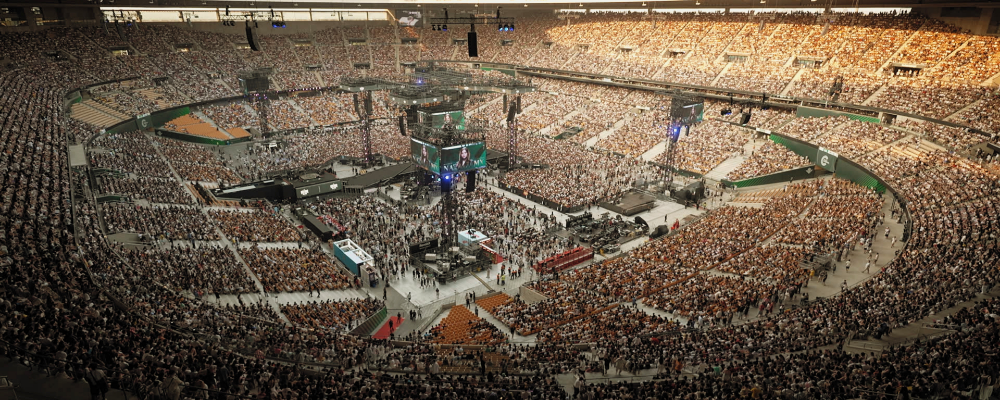
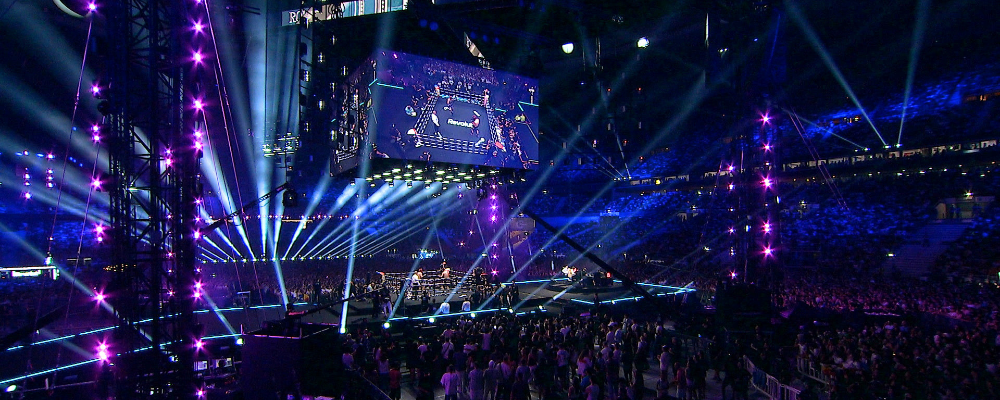
When Toni Llobet began working on La Velada del Año, the event was still far from reaching the dimensions it has today. Five editions later, that project has become a stadium production where boxing, musical performances and entertainment coexist for hours in front of tens of thousands of spectators and a digital audience that multiplies that figure.
La Velada del Año VI, created by Spanish streamer Ibai Llanos and held on July 25 at La Cartuja Stadium in Seville, brought together around 80,000 people and sustained a broadcast of approximately eight and a half hours. The scale multiplied in the digital environment: the simultaneous broadcast through YouTube, Twitch and TikTok registered an average of 6.17 million connected viewers and a combined peak of 8.73 million.
For Llobet, however, the growth is also measured from a less visible perspective: each edition has required an evolution in the way the show is designed, programmed and technically organized. In 2026, one of those changes was decisive: MA Lighting and grandMA3 moved to the center of the lighting control architecture.
An evolution alongside La Velada
Toni’s relationship with lighting began long before stadiums. At 15 or 16 years old, he was already experimenting with DMX while playing in bands and trying to understand on his own how those systems worked. This learning would continue to be largely self-taught in his approach to programming and consoles as well.
Later, he studied film between Barcelona and Madrid, specializing in cinematography, without abandoning music or live lighting. For nearly a decade he accompanied Els Catarres, growing alongside the band and bringing to the stage the perspective he had developed behind the camera. Later, new projects would arrive and, since 2025, his own studio, consolidating a career built precisely at the intersection between technology and image. “What I love is making art with technology,” Llobet summarizes.
Over the years, that combination also led him to specialize increasingly in multi-camera projects, where his experience on both sides — lighting and camera — ultimately defined much of his professional profile. Today, his work is more focused on design and cinematography than on accompanying tours as an operator, an evolution that finds a particularly distinctive environment in La Velada: there, what happens in front of tens of thousands of people must work simultaneously for a large-scale broadcast.
La Velada appeared in that journey as an unexpected leap. His arrival in Ibai’s universe came in 2021 and, after participating in some smaller-format projects, he received the proposal to take on a stadium show for the first time. From then on, his professional evolution advanced practically in parallel with the growth of the event.
Each edition left technical lessons, but also others related to production, staging, cameras and the need to make multiple departments coexist within the same proposal. Even after the show is over, Llobet acknowledges that he continues reviewing for months those decisions that did not work as he expected, trying to understand what happened and how he could solve them differently in the next edition.
For him, part of that learning has also involved better understanding how to communicate with the broadcast team and the other departments, negotiating where it makes sense to concentrate resources and anticipating how each decision will ultimately work within the whole.
When controlling more is no longer enough
The scale reached by La Velada created a different need. It was no longer simply about having a platform capable of handling a large system. Llobet needed an architecture that would allow that control to be distributed among several people, work simultaneously and keep organized a production in which different areas had to move forward at the same time.
His approach to grandMA3 began to take shape during the latest edition of ISE in Barcelona, where he was able to speak with the MA Lighting team about the platform. One of the recommendations he received was particularly practical: before thinking about acquiring hardware, he should download the software, try it and check whether it really responded to his way of working.
He did so and found a logic that sparked his interest.
At the beginning of 2026, he also completed specific grandMA3 training and began a learning process that involved changing habits built over years with other programming environments.
It was not simply about learning where each tool was. He had to understand a new working philosophy.
What made it particularly challenging was that Llobet did not have years to make that transition. Barely a few months after beginning to delve deeper into grandMA3, he had to take the platform into one of the most complex productions of his career. And La Velada would be the real test.
Six consoles and two simultaneous sessions
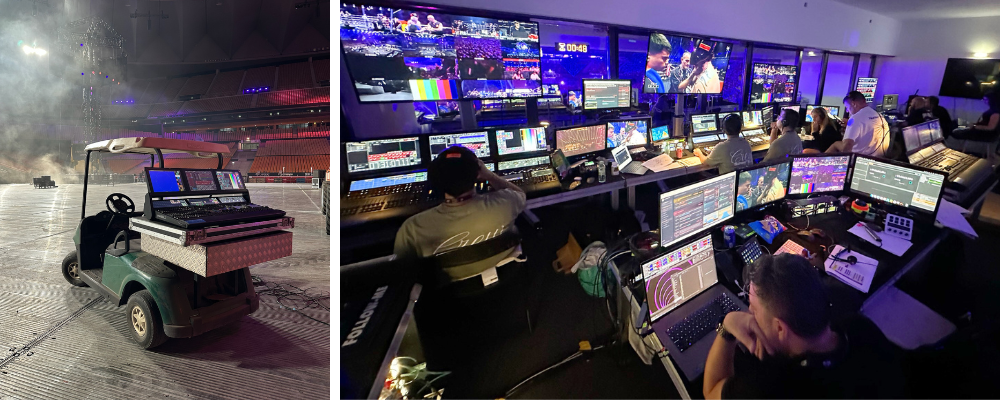
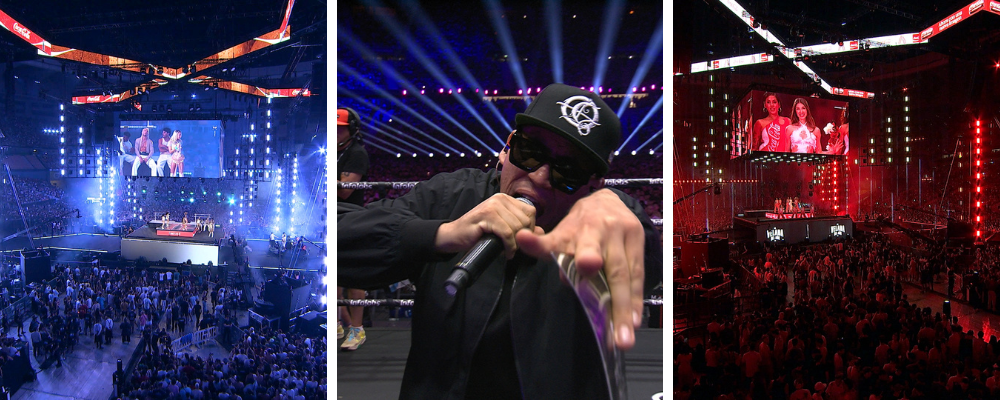
The La Velada VI control system consisted of six MA Lighting consoles, organized around two independent sessions working simultaneously.
The first was dedicated to the core of the event: fights, participant entrances and general continuity. The second was specifically intended for musical performances and allowed the teams of the different artists to work within an environment prepared for their needs.
The separation was deliberate. In a production with numerous guests, granting full access to the main system was not convenient. At the same time, the designers and programmers of each artist needed enough freedom to build their own shows.
“grandMA3 allowed us to establish a middle ground. The main system retained overall control, while the session intended for guests provided the resources necessary to develop each performance without intervening in areas that had to remain under the responsibility of the La Velada team,” for Llobet, without a doubt, this ability to divide control without completely isolating the different parts of the production was one of the fundamental points of the new architecture.
Four programmers working simultaneously
Within that structure, four programmers ended up working simultaneously in the same session. And it was precisely there that he found one of the main values of grandMA3 for a project of this scale.
The multi-user capability allowed different members of the team to work in parallel on specific areas of the show, rather than concentrating the entire process at a single programming position.
Tools such as Worlds made it possible to define working environments, while each programmer could organize their own windows and have the information necessary for their task. “I see it as an incredible tool for working in a session with a team of people who are all working on the console,” Llobet explains.
“The detail of the windows may seem minor compared with the scale of La Velada,” but for him it summarizes part of the flexibility he found in the platform. While he could keep certain information about color, temperature or timecode visible, each programmer built a workspace adapted to their responsibility.
The goal was not to fragment the show, but precisely the opposite: to allow several people to build it simultaneously while maintaining the same direction.
In an eight-and-a-half-hour production, where the time available for programming inside the stadium was limited, that ability to move forward in parallel acquired a concrete value.
Separating La Velada’s overall control from the musical performances allowed the system to be protected, but both sessions had to exchange information. To resolve this, the team created communication through fixtures that gave guest programmers freedom without giving them full control. “They are like two separate sessions, but they communicate with each other. If the artist wants the stadium to be red, they can request red from their session, but we decide which fixtures turn red and at what intensity,” Llobet acknowledges.
The same logic was applied to functions that, for safety reasons, had to remain under the responsibility of the main team. “They can request an action, but control remains on our side.” In this way, grandMA3 made it possible to share resources and requirements between teams while keeping access and responsibility levels clearly defined.
Months of work before turning on a console
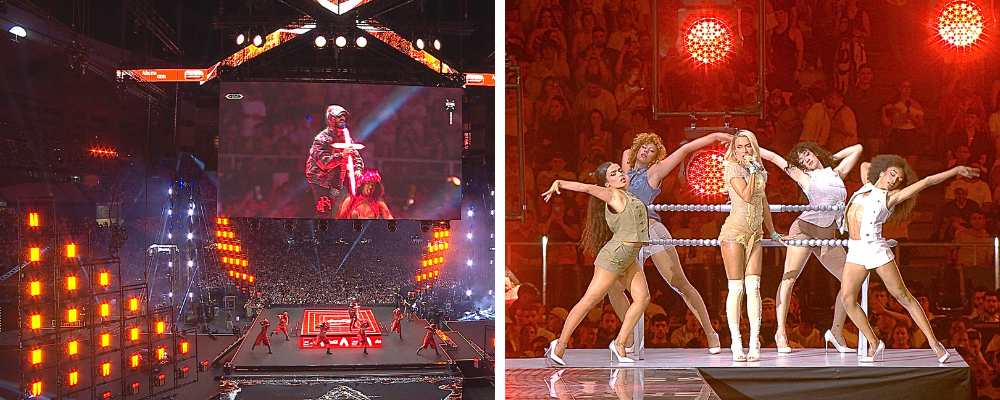
La Velada began to take shape many months before arriving at the stadium. Llobet started working around November, first with more spaced-out meetings and then at an increasingly intense pace. Renders, plans and 3D previsualizations made it possible to advance with programming and incorporate camera positions, heights and lenses into the design to anticipate how each decision would affect the broadcast shots.
However, all that work later had to confront the actual conditions of the venue. “You have a render and plans, but when you arrive at the stadium there are always things that weren’t there. You have to be very fast and very agile to find solutions,” Llobet says.
The physical size of the stadium even presented another problem: from a single position it was impossible to observe everything that was happening. To solve this, the lighting team itself had a closed-circuit system with three cameras, independent from the main broadcast, allowing them to monitor different points of the venue during programming and the show. “We have our own closed-circuit camera system to have eyes in more than one place, because it’s so big that it’s no use being in one place and that’s it,” he explains.
Added to this was the very nature of the event: “La Velada is a very live format. Suddenly an entrance changes or a need appears that wasn’t planned and you have to react.”
For that reason, months of planning coexisted with decisions made practically on site. Toni summarizes that dynamic from the experience accumulated across the different editions: “I think what suits me about this gig is being fast, being agile and knowing when to say no.” In a production of this scale, adapting was essential, but so was recognizing when a modification could compromise the team’s work or the stability of the show.
Learning grandMA3 while building La Velada
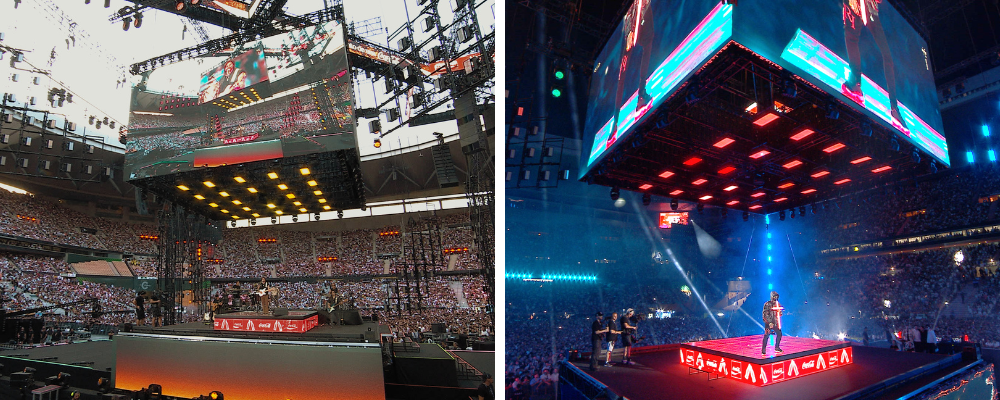
The incorporation of MA Lighting had one particular characteristic: Llobet was learning and deepening his knowledge of grandMA3 while simultaneously directing the development of one of the most complex productions of his career. The platform change did not mean that he would take over all programming, but he needed to understand its logic and tools in order to direct the team from another level. “My colleagues have a huge amount of control; the programming is basically theirs. But I have the perfect level to understand what they are doing, to be able to ask for things and to be able to modify what I’m interested in modifying,” he emphasizes.
That way of working became especially important with the multi-user architecture planned for La Velada. While programmers could work simultaneously on different areas, Llobet maintained the overall view of the design and could intervene in the system whenever necessary. This understanding allowed him to know what each programmer was doing and communicate precisely what he needed. In this way, grandMA3 did not replace the work of directing, but rather provided him with a structure from which to coordinate a team that needed to work in parallel without losing the same creative direction.
The learning curve thus became part of the challenge itself: in just a few months, Llobet went from beginning his specific grandMA3 training to using it in a production built around six MA Lighting consoles, two simultaneous sessions and four programmers working at the same time. A first experience with the platform that was far from taking place in a controlled environment: it arrived directly at the scale of La Velada del Año VI.
The experience ultimately confirmed why that architecture made sense for La Velada. The complexity was not only in the size of the system, but in ensuring that operators, sessions and responsibilities could coexist without losing a common direction. grandMA3 provided precisely a structure for organizing that scale from both the technological and human perspectives.
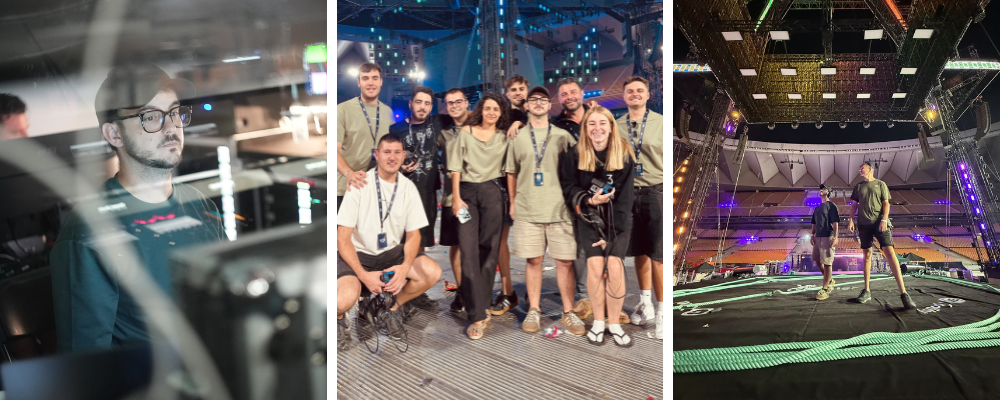
It is worth highlighting that behind this structure was an extensive lighting team, with different roles and responsibilities that made it possible to bring the design and operation to the scale required by La Velada. Led by Toni Llobet, the team included:
Toni Llobet — Lighting Director and DOP
Lupe Belmonte — Assistant DOP, Satellite Sets
Oriol Pino — Lighting Technical Director
Àlex Alonso — Programmer/Operator
Jofre Majoral — Programmer/Operator
Paula Dorado — Follow Caller / Production
Xavier Batallé — Programmer/Operator
Dani López — Programmer/Operator
Sasi García — P3 Programmer/Operator
Julio Casielles — Gaffer, Satellite Sets
A workflow ready to keep evolving
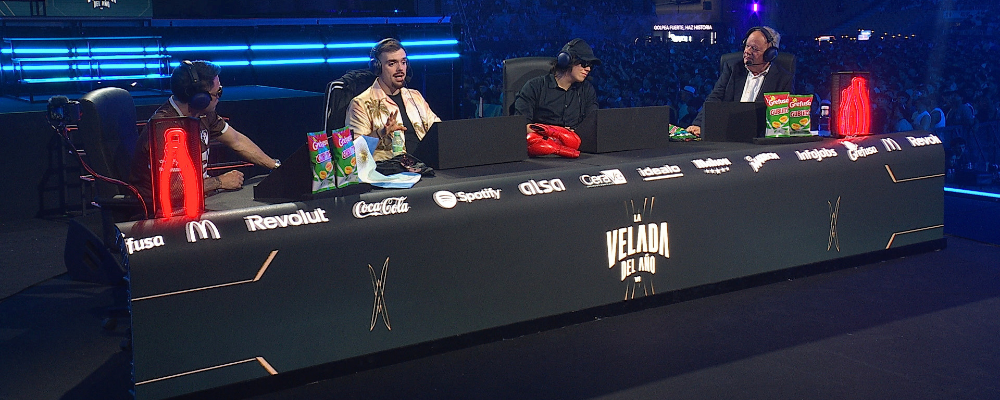
La Velada is, by nature, an event that can hardly remain the same. Each edition incorporates new ideas, formats and needs, while the evolution of streaming and production tools opens possibilities that only a few years ago were not even part of the conversation.
For Llobet, finishing one edition also means beginning to analyze the next. Part of that process comes precisely from going back over what happened, understanding what worked, identifying what could have been solved differently and turning it into learning. Just a few days after this edition ended, he had already begun gathering references for a possible seventh Velada.
In that process, the experience with grandMA3 left something especially valuable: a workflow that proved capable of working at the project’s real scale. Six consoles, two sessions and several programmers working simultaneously made it possible to distribute responsibilities without losing a common direction, but also established a foundation on which to continue experimenting with new ways of controlling and organizing the show.
In an environment that evolves at the speed of digital platforms, that flexibility becomes particularly relevant. La Velada is not only what happens inside a stadium; it is also a production conceived for millions of viewers who follow it live through different platforms, with languages and dynamics that are constantly changing. Each new edition forces the team to review what has been learned and explore how far the available tools can take them.
The sixth edition thus marked a new point in that journey. With grandMA3 already tested under the real conditions of La Velada, Toni Llobet and his team now have a working architecture on which to continue building, experimenting and responding to new needs.
In an event whose scale, language and digital reach continue to transform, the next challenge is not necessarily to control more, but to explore what new possibilities can emerge from a system that has already demonstrated that it can accompany that evolution.
Credits
Cover Photo: Claudia Herran
Inside Photos: La Velada IV YouTube @ibai // La Marga
The journalistic production, research, writing, editorial approach, and editing of this content are original works by LATAM STAGE and are protected by copyright.
No part of this content may be reproduced, copied, distributed, adapted, or published, in whole or in part, in any medium or format, without the prior written authorization of LATAM STAGE.


