
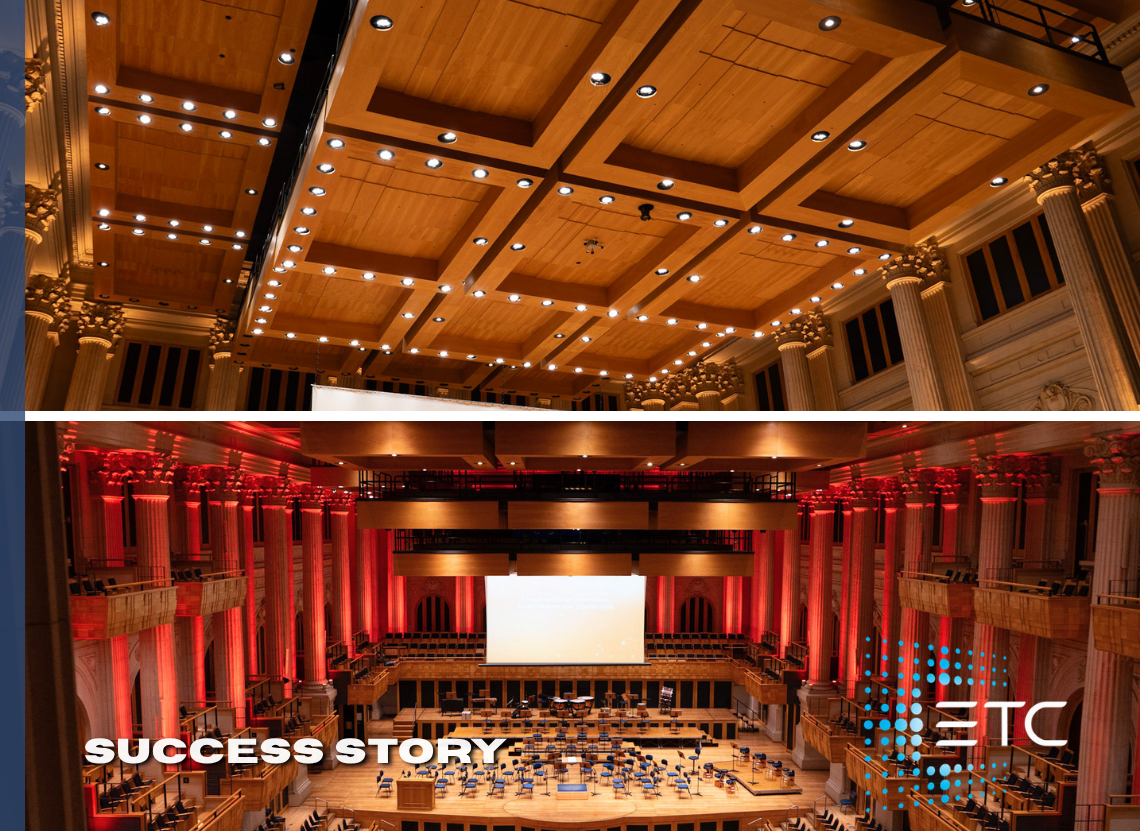
Internationally recognized for its outstanding acoustics, Sala São Paulo faced an unusual challenge: completely modernizing its lighting system without compromising the sonic excellence that has made it one of the world’s most prestigious concert halls.
The implementation of a new ETC infrastructure expanded the venue’s artistic possibilities, optimized operations, and supported its technical evolution while preserving its architectural and acoustic heritage. The project included the supply, specification, and technical support provided by Arte em Cena, ETC’s official distributor in Brazil, headquartered in São Paulo.
There are buildings where technology can be updated without major consequences. And there are others where every intervention must be carried out with absolute precision. Sala São Paulo belongs to that select group.
Located in the historic Júlio Prestes Railway Station building, constructed between 1926 and 1938 to transport São Paulo’s coffee production to the Port of Santos, the venue is now the permanent home of the São Paulo State Symphony Orchestra (OSESP) and one of the world’s most renowned classical music concert halls. The transformation of the former railway complex, inaugurated in 1999, turned a heritage building into an international reference for acoustic excellence, capable of competing with the great concert halls of Europe and North America.
Much of that recognition is due to an unusual combination of architecture and acoustic engineering.
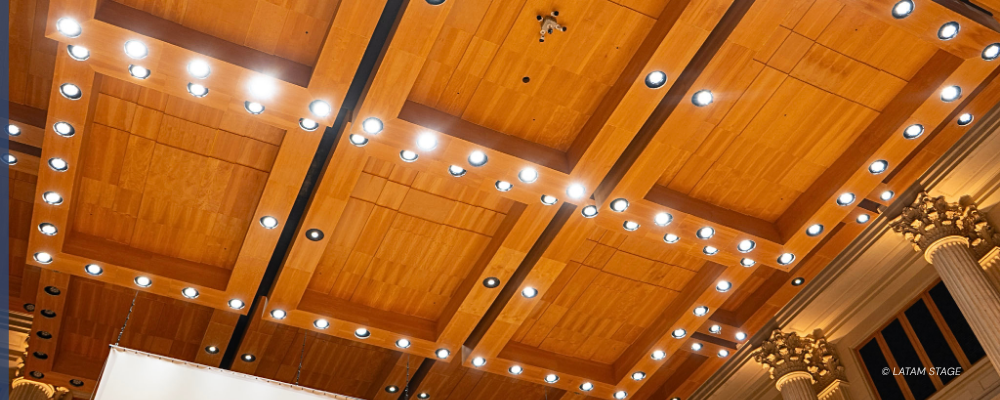
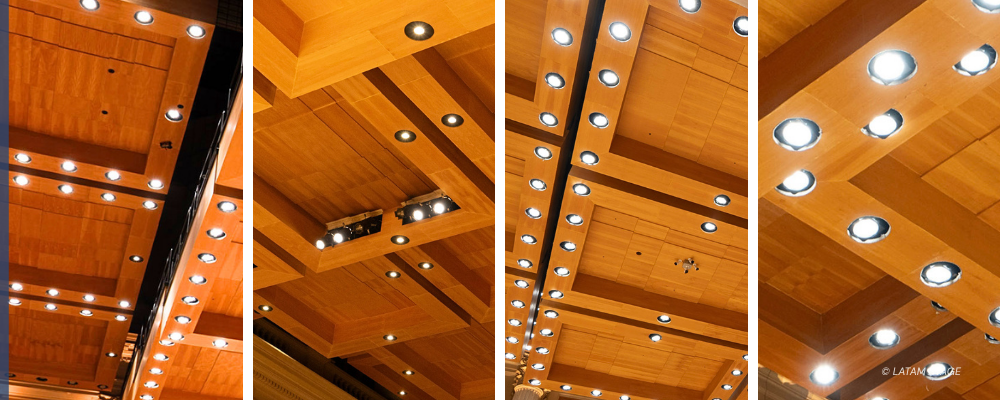
Its movable ceiling, composed of suspended panels that modify the hall’s internal volume, allows the reverberation time to be adjusted according to the repertoire being performed. Together with other acoustic treatment elements, this system enables the same venue to respond with precision to both large symphonic works and chamber music ensembles.
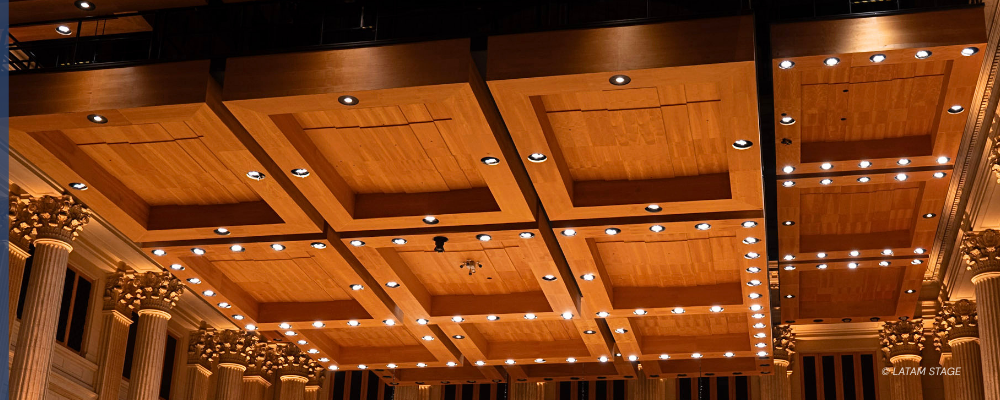
It was precisely on this structure that most of the new lighting system was installed, making the integration of technology, architecture, and acoustics one of the project’s greatest challenges.
In a venue designed so that sound is the true protagonist, any technological upgrade represents an extraordinary challenge.
Because in a concert hall where music is at the center of the experience, even the lighting must follow one fundamental principle: accompany without interfering. And the lighting system could not be an exception.
Greater artistic freedom without altering the venue’s essence
For years, Sala São Paulo operated with a lighting system based on conventional fixtures connected through parallel circuits.
The solution adequately met the venue’s needs at the time but presented one important limitation: multiple fixtures would turn on simultaneously, reducing creative flexibility and limiting the possibilities for adapting lighting to each production.
“The main objective was to expand artistic flexibility. Previously, we used conventional fixtures operating in parallel circuits, switching groups of luminaires on simultaneously. By replacing them with ETC’s ColorSource PAR Pearl LED system, it became possible to control each fixture individually, adapting the lighting to every scenario and type of performance,” explains Sala São Paulo’s technical team.
The difference goes far beyond a technological replacement.
Where previously groups of luminaires responded to a single circuit, each fixture can now be individually controlled, providing lighting designers and directors with considerably greater creative freedom.
At the same time, the upgrade reduced the system’s electrical load, significantly improved color rendering, and increased the venue’s operational efficiency while maintaining complete integration with the building’s acoustic and architectural requirements.
A choice guided by precision
For a venue where lighting must coexist with unamplified concerts and highly demanding symphonic repertoire, selecting the right technology involved much more than comparing technical specifications.
Silent operation, light quality, optical precision, and integration with the building’s architecture were all decisive factors.
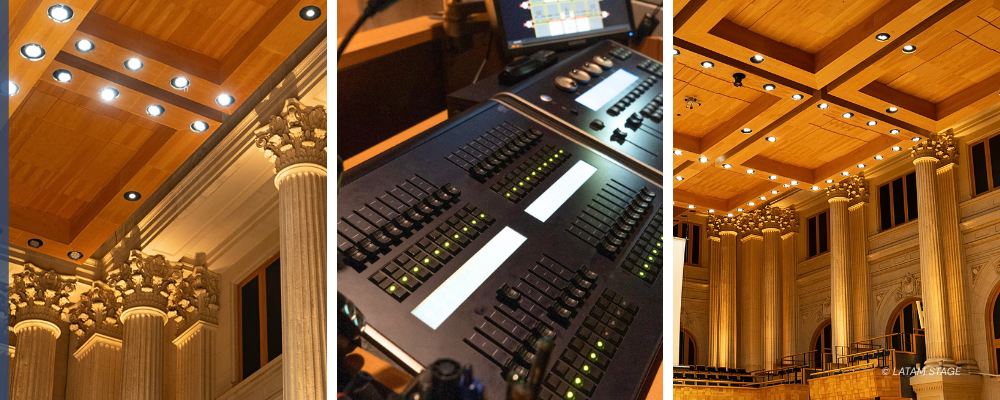
For this reason, Sala São Paulo installed a system consisting of 215 ETC ColorSource PAR Pearl LED fixtures and 22 ETC ellipsoidal fixtures, distributed primarily across the venue’s signature movable ceiling.
The choice is based on a feature rarely found in the market. Unlike conventional RGB LED systems, these luminaires use a white light source with variable color temperature ranging from 2700 K to 6500 K, making it possible to reproduce everything from warm tones to cool whites with a naturalness particularly appreciated in classical music performances.
This characteristic provides much more natural white light reproduction, an especially important aspect in a venue where color fidelity and subtle lighting are part of the artistic experience.
The ETC ellipsoidal fixtures installed at the front of the hall complement the system with precise light cuts whenever required by each production, providing greater stage control without altering the venue’s visual cleanliness.
The configuration allows complete stage coverage and can quickly adapt to symphonic concerts, operas, recordings, corporate events, and hybrid productions, responding to an increasingly diverse artistic program.
When silence is also part of the lighting
In most theaters, lighting performance is usually measured by intensity, power, or the ability to create visual effects.
“ETC was chosen for the reliability of its equipment, the excellence of its color and color temperature reproduction, its mechanical robustness, and its broad acceptance in the international concert hall market. Factors such as silent operation, optical precision, integration with advanced control systems, and the discreet appearance of the fixtures within the venue’s architectural context were decisive,” confirms the technical team.
In a venue where even minimal mechanical interference can affect the perception of a symphonic performance, the extremely low operating noise becomes just as important as the quality of the light itself.
“We observed a significant improvement in light quality, reduced energy consumption, and greater programming agility, with increased precision in cue execution and superior reliability during live performances.”
A system prepared to respond to any production
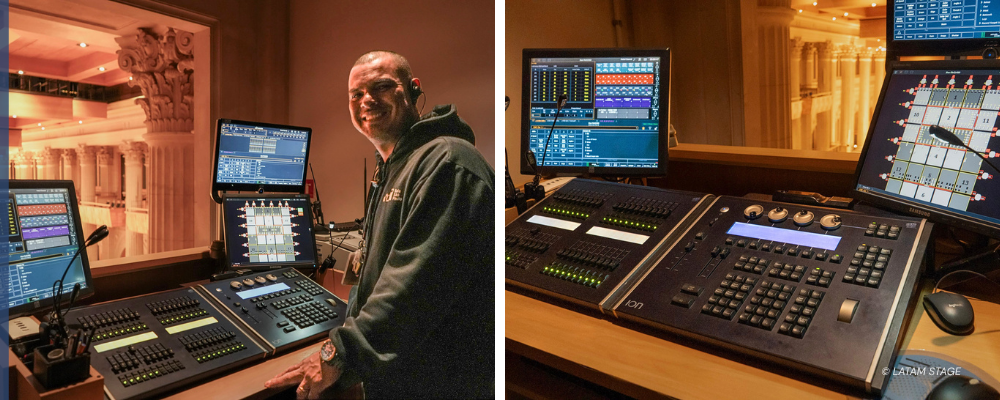
To fully take advantage of the system’s capabilities, Sala São Paulo also upgraded its entire control platform by incorporating Eos consoles together with a backup NPU system, a combination that guarantees operational security even during highly complex productions.
Internationally recognized for its precision, memory capacity, and advanced color processing, the Eos family makes it possible to manage everything from traditional symphonic concerts to productions with multiple scenes and lighting changes while always maintaining immediate response.
But the real difference appears in everyday operation.
In a venue with a permanent schedule, where rehearsals, concerts, recordings, audiovisual productions, and corporate events coexist, the speed at which lighting can be adapted between activities is just as important as the quality of the light itself.
“Daily operation is smooth and reliable. The system allows quick adjustments during rehearsals, precise execution during concerts, and complete operational security, even during extended programs or last-minute changes,” states the technical team.
Before entering operation, the entire system underwent a calibration process that included focus adjustments, optical alignment, color calibration, and the creation of specific scenes for different musical configurations and types of performances.
Each of these parameters was developed while respecting the building’s architecture and the specific requirements of a venue where the lighting must adapt to completely different repertoires without losing visual consistency.
Technology serving a living venue
Although Sala São Paulo is internationally recognized for its symphonic activity, its current programming extends far beyond traditional concerts.
The venue regularly hosts operas, audiovisual recordings, corporate events, and hybrid productions, each with completely different lighting requirements.
Thanks to the new system, the technical team can now respond to this diversity with a level of flexibility that was previously impossible.
Individual fixture control, stable color temperature, and precise dimming make it possible to create specific atmospheres for each production without compromising the acoustic experience that defines the venue.
And precision also depends on the technical team.
The operation of a venue at this level depends as much on the musicians performing on stage as on the professionals working behind it.
The system’s daily operation is led by Daniel, technical supervisor and head of the lighting department, together with permanent technicians Anderson, Denis, and Pedro, who coordinate equipment maintenance, show programming, and support for visiting lighting designers and productions.
Their work goes far beyond operating a lighting console. It also involves ensuring that every concert achieves the same level of technical precision that has made Sala São Paulo an international benchmark.
Arte em Cena: a partner throughout the entire process
A project carried out in one of Brazil’s most important cultural venues required much more than supplying equipment; it also demanded specialized support throughout every stage of implementation, from defining the solution to the system’s daily operation.
From the earliest stages, through commissioning and continued support, Arte em Cena, ETC’s official distributor in Brazil, headquartered in the city of São Paulo, actively participated in every phase.
The company’s participation also included technical and operational training for the venue’s permanent staff, allowing rapid adaptation to the new system and the standardization of operational and maintenance procedures.
This support proved essential in ensuring that the technological transition took place without affecting the venue’s intensive artistic schedule.
Modernizing while preserving identity
Updating the technical infrastructure of a venue like Sala São Paulo was never simply about replacing a lighting system.
The true challenge was to incorporate new tools without altering the delicate balance between architecture, acoustics, and artistic experience that has made the concert hall one of the world’s leading references for symphonic music.
The integration of ETC technology expanded creative possibilities, optimized daily operations, and enabled the venue to respond to an increasingly diverse artistic program while preserving the essence of a space designed to keep music as the true protagonist.
Because in venues of this magnitude, innovation is not measured by how much a place changes, but by its ability to evolve while respecting what made it exceptional.
And when technology integrates with such naturalness, it stops drawing attention to itself and fulfills its most important role: to accompany.
The journalistic production, research, writing, editorial approach, and editing of this content are original works of LATAM STAGE and are protected by copyright.
Its reproduction, copying, adaptation, or publication, in whole or in part, in any medium or format, without the prior written authorization of LATAM STAGE, is strictly prohibited.
Photo @ LATAM STAGE


