
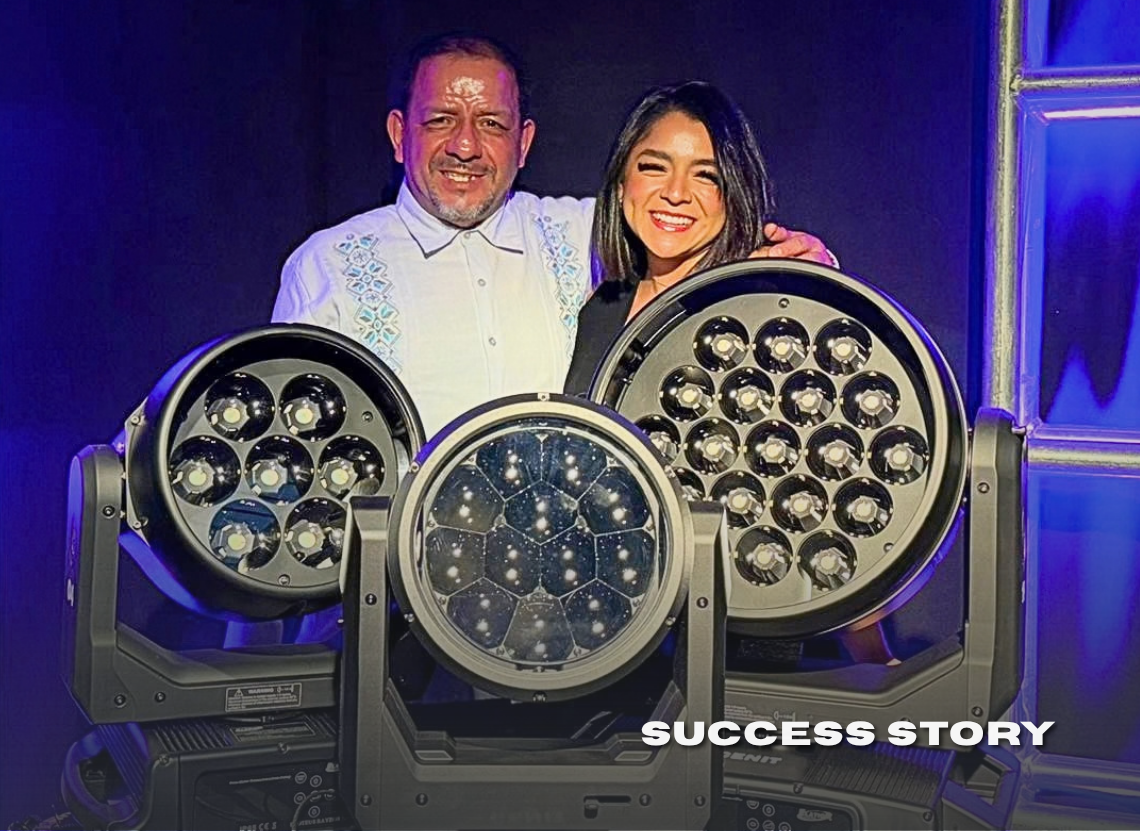
Mexico – With 13 years of history under the CENIT name and nearly four decades of experience from its founder in the industry, the Mexican company has built a lighting inventory capable of responding to projects of very different nature and scale. Jesús Ramírez Morales shares the journey of a company that found its path to growth through specialization and that today works with Elation, ADJ and Obsidian while moving toward a new stage marked by connectivity.
The first time Jesús encountered automated lighting, he was still working primarily in audio. He had started as an artistic assistant at a recording studio and later joined a company dedicated to the installation and provision of audio and lighting services, where he participated in projects with artists such as Gloria Trevi and Rocío Dúrcal.
The arrival of the first automated lighting fixtures at that company changed his professional interests. The movements, effects and possibilities of a technology that was beginning to gain ground in shows sparked a curiosity that would ultimately define his career.
“They bought lighting and it moved everything in me, the technology, the effects. Automated lighting was already starting, it was already becoming more involved, and that’s when I really liked lighting, it caught my attention a lot,” he recalls.
He first focused on installation and later began exploring programming. His growth led him to work for six years with singer Lucero as head of lighting and setups, with some involvement in operating automated fixtures. Although design remains an activity he enjoys, over time he decided to concentrate on contracting, management and project production.
That journey led to Navigation Lights, a family-owned company that remained active for approximately twelve years. In 2013, after its members decided to pursue their own paths, Jesús founded CENIT Iluminación y Producción, which celebrated thirteen years in June 2026.
Growing without losing specialization
The decision to focus on lighting has accompanied Jesús throughout his entire business career. Although CENIT participates in productions that require structures, stages, audio and video, the company decided not to diversify its investment into those areas.
To respond to comprehensive projects, it works together with companies specialized in the other disciplines. In this way, it can offer a complete production without abandoning the area in which it has developed its experience and technological inventory.
CENIT’s activity also changed over the years. While Jesús was associated with artists and tours for a long time, the company’s growth gradually shifted toward corporate and social events, while continuing to participate in musical shows, public celebrations, sports projects and architectural lighting.
His career includes work with Emmanuel, Ricardo Montaner, Ricardo Arjona, Miguel Bosé, Lucero and José José, as well as television productions such as Desafío de Estrellas, La Academia Quinta Generación and Disco de Oro, from TV Azteca.
Jesús particularly remembers that period because of the demands of live broadcasts and the responsibility involved in ensuring that the equipment operated during every performance.
“There is not a single project that marked a before and after in my career, I prefer to talk about growth built from many experiences. It has been a day-to-day, it has been a day-to-day and daily growth.”
Among the first projects that drove that development, he mentions theatrical productions with Alejandro Gou, tours of children’s shows and Vaselina, around 1999 and 2000. Later came projects such as the September 15 celebrations in Puebla and Cumbre Tajín, which allowed the company to continue reinvesting in equipment.
This last festival, held in Veracruz around Totonac culture and the archaeological site of El Tajín, held a special place in the company’s history. For several years, Jesús and his team participated in the architectural and ambient lighting of the spaces that made up the event.
Those experiences helped build an inventory that began to be requested even by other rental companies, while CENIT progressively expanded its presence across different segments of the industry.
Elation and ADJ: building an inventory for different applications
Today, Jesús estimates that approximately 65% of CENIT’s inventory consists of Elation and 35% of ADJ. Added to this equipment are control and connectivity solutions from Obsidian, which form part of the infrastructure used by the company.
The composition of the inventory responds to a specific decision: to have different fixture families available to approach projects without depending on a single configuration.
“We have automated fixtures, washes, spots, and a lot of architectural lighting, so we can cover the entire spectrum. In Elation, I especially highlight the brand’s positioning within the professional market and its presence on riders. In ADJ I found a proposal that allows it to complement that inventory with versatile and easy-to-operate equipment.”
Among the Elation solutions that are part of its current activity are Paragon, different members of the Proteus Rayzor family, Chorus Line 16, SixPar, Rebel Wash 12 and architectural fixtures such as Paladin Panel and Paladin Cube. In ADJ, the company works with the Encore family, ElectraPix solutions in Par and bar formats, and compact fixtures that Jesús considers especially useful for social productions.
That combination allows it to address everything from large-scale stages to corporate events, weddings and architectural interventions, selecting the tools according to the conditions of each production.
El Zócalo, between architecture and entertainment
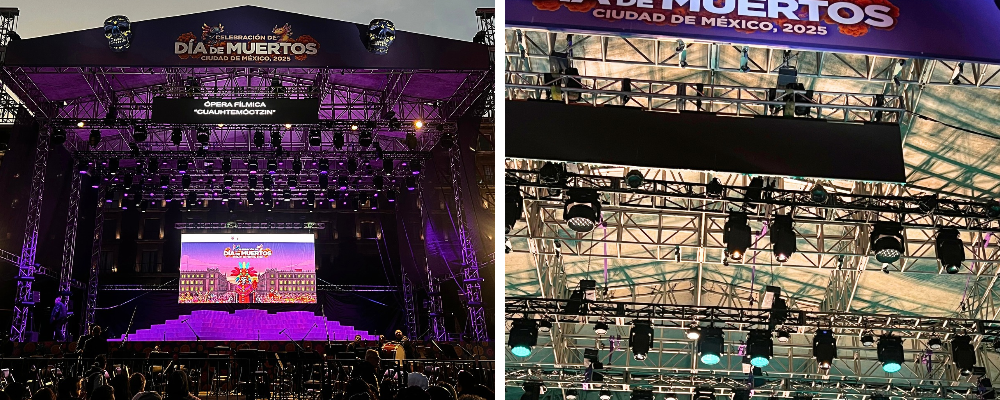
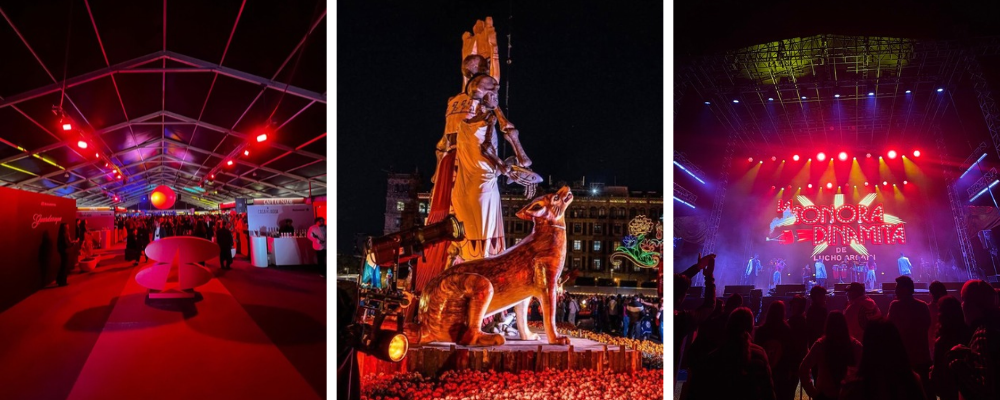
Among CENIT’s recent projects, the Mega Ofrenda Monumental at the Zócalo in Mexico City particularly demonstrates that ability to work across different applications within the same production.
The company was responsible for the architectural lighting of the elements that made up the installation and also participated in the staging of the Cuauhtemóctzin Film Opera, developed on the main stage.
“The deployment brought together 235 Elation and ADJ fixtures. For the architectural intervention, Elation Paragon M, Paladin Panel and Color 5 Profile were used, accompanied by ADJ Encore LP12Z. On stage, the configuration incorporated Proteus Rayzor 1960, SixPar 100 and ACL 360 Matrix to respond to the needs of the show,” Fátima explains in detail.
The production made it possible to address two projects with different characteristics: on one hand, the lighting of a monumental installation designed to be walked through by the public; on the other, a stage production that required accompanying the development of an audiovisual and musical work.
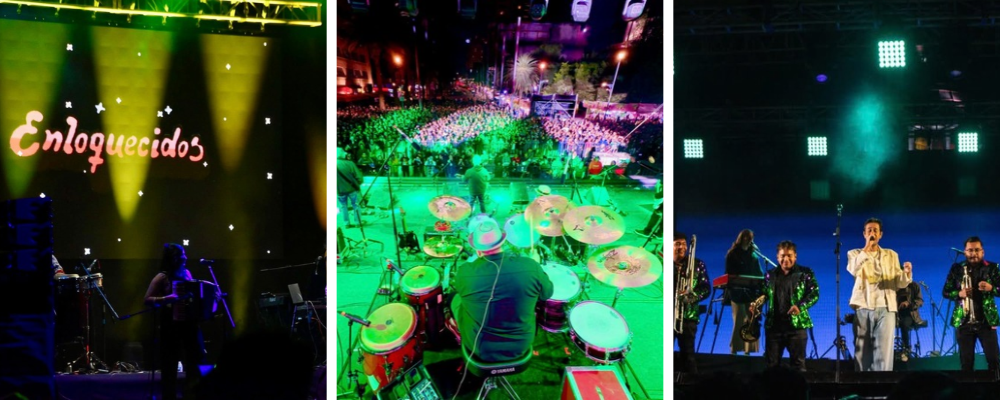
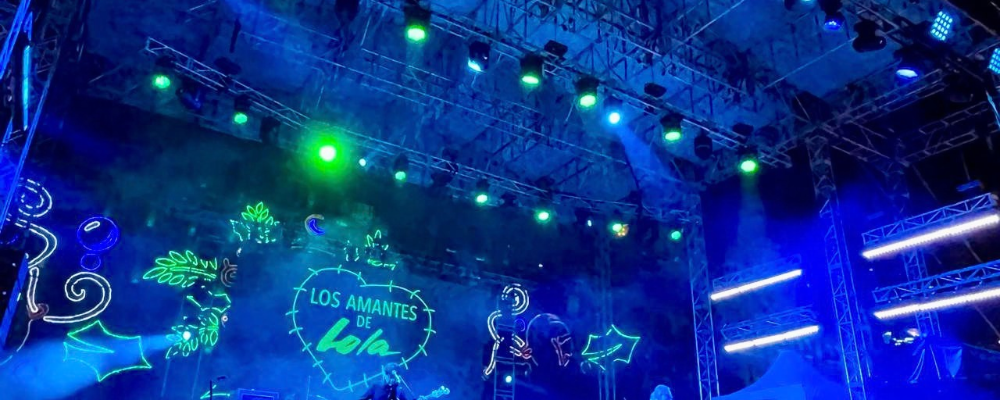
Jesú also highlights one of the company’s most recent milestones: “Luces de Invierno 2025, organized by the Secretariat of Culture of Mexico City. On that occasion, we were in charge of lighting the main stage, where 76 musical performances took place. The program brought together very diverse proposals, with artists and groups such as Inspector, Los Amantes de Lola, Orquesta Canela, Los Askis and Cardenales de Nuevo León. To accompany them, we used a full Elation rig consisting of Proteus Rayzor Blade L, Proteus Rayzor 760, Proteus Rayzor 1960, Paragon M and Cuepix 16 IP.”
Its participation also extended to the city’s other fifteen boroughs, where Christmas installations were carried out with nativity scenes, crèches, lighting and different elements intended to create the atmosphere of the celebrations.
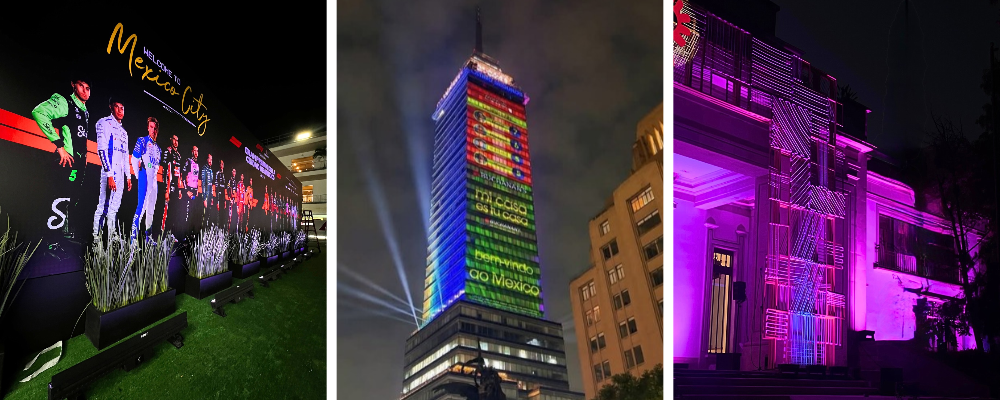
CENIT’s presence in major productions also extended to activities related to Formula 1, with interventions in the Media Center and the main paddock entrance; the exterior lighting of the Torre Latinoamericana during the World Cup season; and cultural projects in Mexico City at venues such as Plaza Manuel Tolsá, Parque Natural La Cañada and Monumento a la Revolución. Play Passion MX, another production associated with the World Cup, was also added, consolidating a period of intense activity in which Elation, ADJ and Obsidian accompanied the company’s work in stages, urban spaces and international events.
The experience at the Mexican Open Tennis tournament offers another example of how a specific need determines the choice of equipment: “We have supported the tournament for approximately fifteen years in Acapulco and ten in Los Cabos. It is an event that requires a lot of power and a lot of lumens on the court for the live broadcast of the matches,” he explains.
Although the stadium had its own lighting, it did not reach the levels requested for coverage. The solution consisted of incorporating Elation Paladin and Paragon fixtures as reinforcement, distributed on both sides of the court: “Paragon is the ideal fixture for this, it gave us the power that was required on the court.”
The project reflects a common condition in today’s major productions: lighting must work both for those who are present and for the cameras broadcasting the event.
Connectivity, a new stage for CENIT
After nearly four decades in the industry, Jesús remains attentive to the evolution of lighting fixtures. However, one of the aspects that currently interests him most is not exclusively related to power, effects or movement, but to the way equipment communicates.
“I’m very, very obsessed and very, very surprised by connectivity right now. I’m very interested in the incorporation of Ethernet into recent generations of fixtures and in the possibilities this technology offers to simplify distribution and communication within a system. It is undoubtedly a great advance and it keeps improving.”
Jesús observes that the integration of new communication capabilities into lighting fixtures makes it possible to rethink part of the infrastructure traditionally used to connect devices: “Elements such as nodes and splitters are being eliminated; the fixture itself is already a node, it is a splitter in a certain way.”
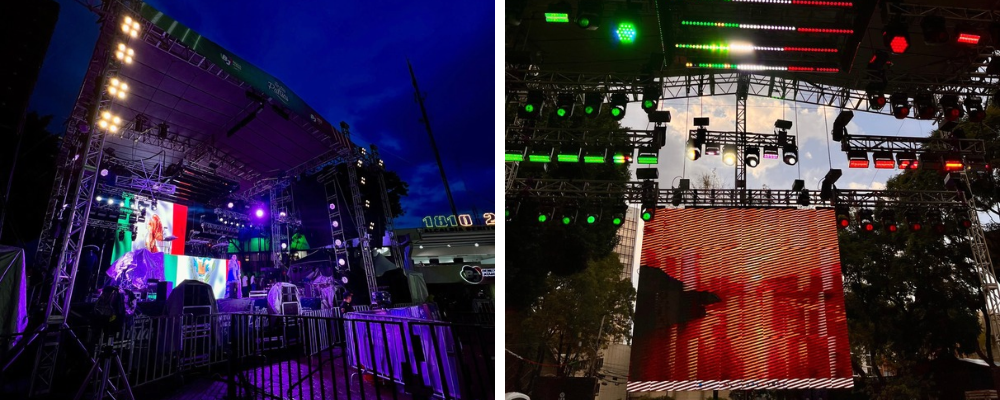
It is a change that he considers especially important for the way CENIT will organize its systems in the coming years. In this process, Obsidian has a place within the company’s infrastructure, as it uses both its consoles and its connectivity and distribution solutions, present in productions such as Luces de Invierno, where EN12 devices and DMX equipment were incorporated for system communication.
Jesús’ search is focused on increasingly taking advantage of the possibilities offered by new lighting fixtures and moving toward an integrated operation in which control and connectivity accompany the company’s growth.
A relationship that continues after the acquisition
CENIT’s relationship with Elation, ADJ and Obsidian is also associated with the support it receives from the brands’ team in Mexico.
Jesús maintains a direct commercial relationship with Miguel Licona, while Héctor Rojo and Alan Corona are among the regular contacts for resolving technical questions, programming needs and library development.
“They always take very good care of us. We call: ‘Hey, we have this problem,’ and they call us to ask whether we solved it or not with what they gave us,” Jesús says.
For Fátima, that availability has particular value when needs arise during the preparation or execution of a production: “We have asked them like: ‘Hey, I urgently need this library for such-and-such console, please,’ and they really always respond very quickly.”
The support also includes advice and invitations to training sessions, something Jesús considers part of a close relationship with the brands. And Fátima especially highlights the possibility of maintaining direct contact with the technical team and receiving explanations when she needs to understand a function or resolve a situation.
“I think that it is something that draws you to the brand, that encourages you to want to continue having contact with them because they respond to you and advise you and they never refuse, and for us, who work on productions with such diverse characteristics, having that support is part of our daily operation.”
A new generation and a look toward the future
CENIT carries out its activities from Pedregal de Santa Úrsula, near Estadio Azteca, in Mexico City. Its offices and warehouse are located there, where the team prepares, checks and maintains the fixtures before and after each project.
Jesús continues to lead the company’s general management, sales and project development, while Fátima is increasingly involved directly in field production. Her work also includes documenting events and generating content to communicate the company’s activity, a task she considers fundamental to its commercial presence.
Lighting presents a particular challenge when it comes to showing the results: finding images capable of conveying the experience that took place in the space.
Juan Pablo, for his part, is beginning to become especially involved in connectivity and technology, one of the areas toward which Jesús seeks to direct the company’s development. Víctor, Daniel and Miguel are part of the warehouse and logistics work, making sure the equipment is prepared and in condition for each departure.
The addition of new responsibilities coincides with a stage in which Jesús also observes how the work of operators is changing.
When asked where he believes lighting will go, he first responds with humor: “Programming itself. Directly, with an app.”
That curiosity about technology is the same one that led him to leave audio when he discovered the first automated lighting fixtures. Today, after decades of work and thirteen years at the helm of CENIT, he continues to find new possibilities within the specialization he chose.
For Jesús, his interest in lighting remains as strong as it was at the beginning; what has changed is the number of tools available to move each project forward.


