
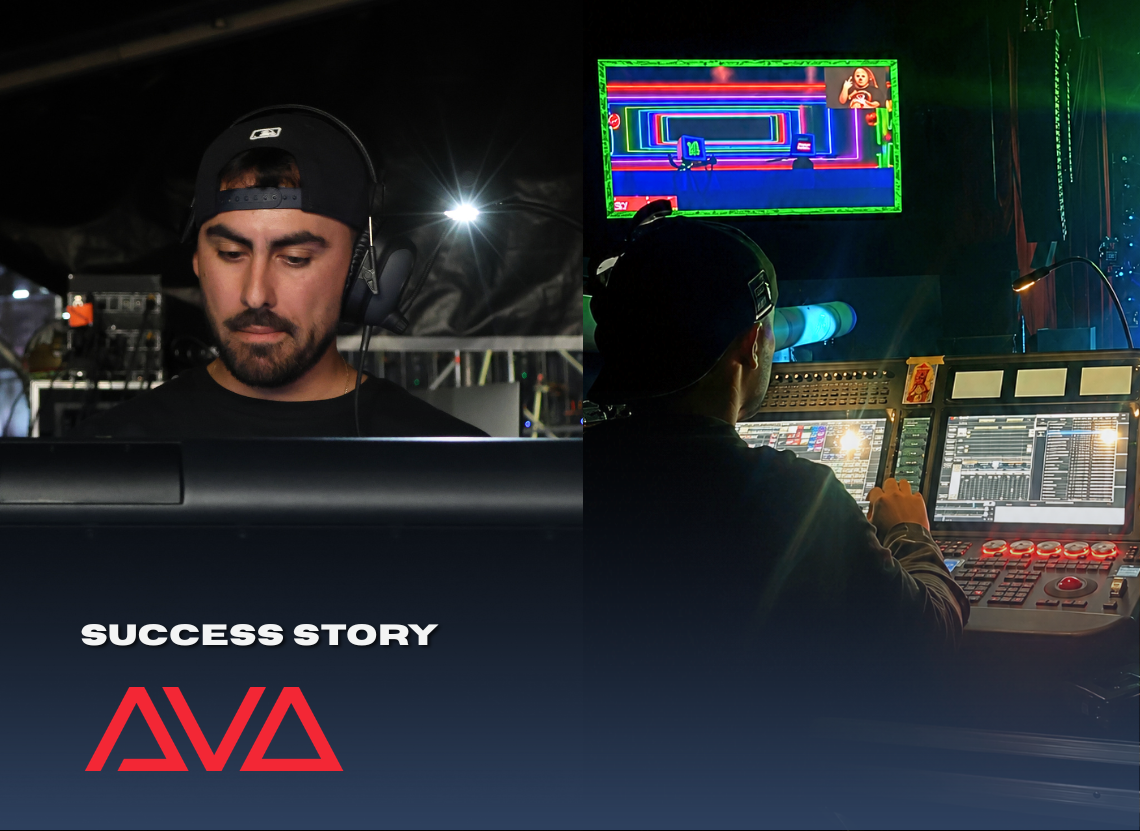
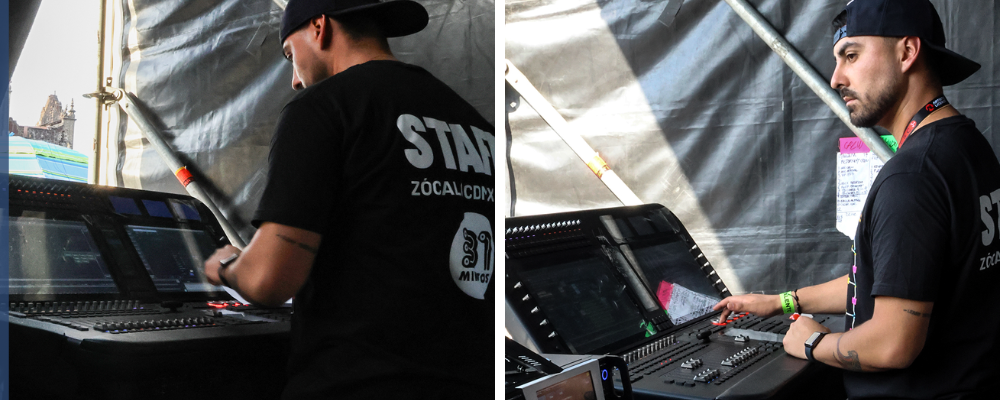
Some decisions change a career long before the first fixture is turned on. For Bastián Pezoa, one of those decisions was investing in an Avolites Titan Mobile when he still had no certainty that he would be able to recover the investment. Years later, that same console remains at the heart of his workflow, accompanying him on international tours, major productions, and challenges such as adapting the lighting design for 31 Minutos for the massive performance held at Mexico City’s Zócalo.
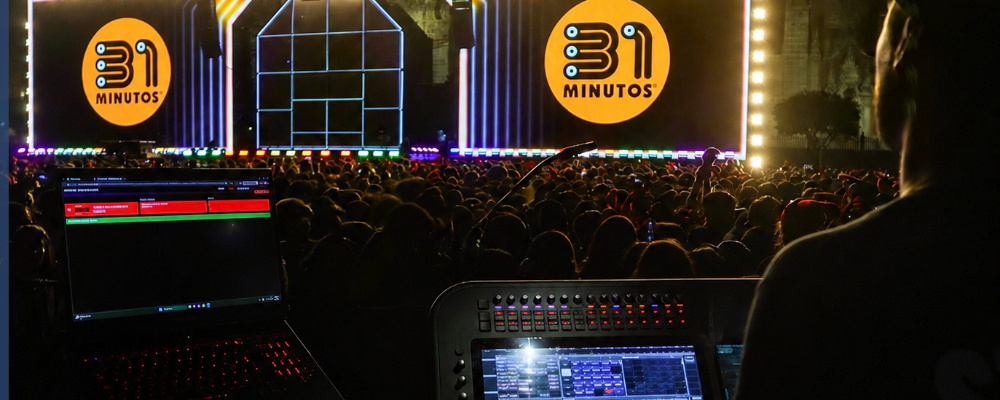
When Bastián Pezoa graduated from university, he had two paths ahead of him. On one side was electrical engineering, the profession in which he had just earned his degree. On the other was a far more uncertain world: live entertainment, where he had already been working on weekends while still studying.
The pandemic seemed to provide the answer. With stages closed, he returned full-time to engineering and projects related to energy and electricity. But when concerts returned, so did a question that would ultimately change the course of his career.
“I was offered the opportunity to buy my own console. It was a significant investment, and we were just coming out of the pandemic. My concern was very simple: what if everything shut down again? How was I going to pay for that investment?”
The answer came from someone he least expected—a colleague.
“He told me, ‘If you never take risks, you’ll never know whether you can succeed.’ That sentence ended up pushing me to make the decision.”
He bought an Avolites Titan Mobile, convinced it would take about a year to recover the investment. Reality turned out to be very different. Just two months later, the console had already paid for itself.
A tool that grew alongside his career
The Titan Mobile not only allowed him to become independent, it also changed the way he approached every project.
“I started by buying the console. Then came the software, the computers, and other tools. Without realizing it, we ended up building a creative space where we now develop projects together.”
That growth also opened new opportunities. Urban music artists came first. Then came the lighting design for Mon Laferte’s tour and the visual development of her performance at the Viña del Mar International Song Festival.
Soon afterward, an entirely different challenge appeared.
When theater requires a different way of thinking
Until then, much of Bastián’s work had been tied to concerts and touring productions, where timecode and automated sequences were a natural part of the show.
But 31 Minutos operated under a completely different logic. It was not simply a concert. It was a theatrical production featuring live musicians, actors, puppeteers, and a stage performance where every show could include small variations.
“With a band, you automate many things through timecode. In 31 Minutos, the workflow changes completely. You have to follow the progression of the show, pay attention to the script, and react in real time. That’s where I had to learn an entirely different way of working using cue lists—something I had never done before.”
That transition reinforced one of the qualities he values most about Avolites—not its speed or the number of features it offers, but its ability to adapt to his own way of working.
“What I like most is that I can translate my ideas very quickly. It’s a very intuitive platform, but at the same time it continues to offer me new features every time I explore a little deeper. Even after so many years, I keep discovering new ways to work with it.”
The Zócalo changed the scale of the show
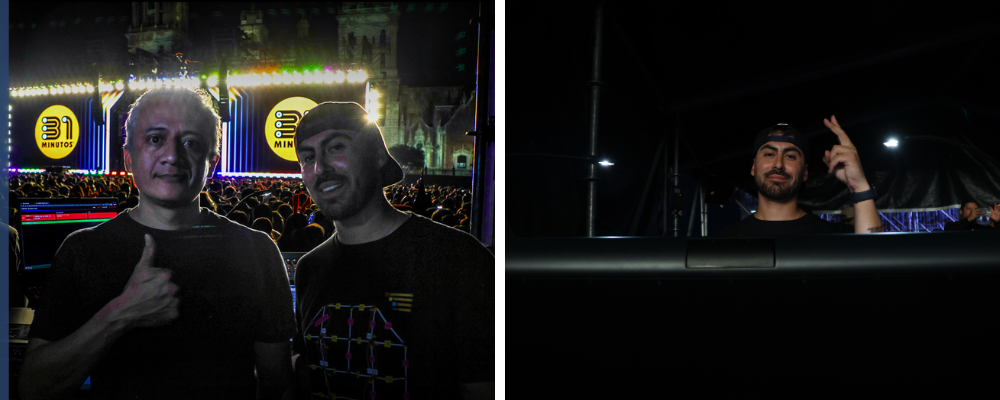
The biggest challenge came when the company was invited to present Yo Nunca Vi Televisión at Mexico City’s Zócalo, one of the most iconic public spaces in the Americas.
The original production had been designed for theaters and auditoriums, but the Zócalo was a completely different story.
Bastián immediately understood that simply transferring the same design would not be enough. It had to be reimagined.
“At the Zócalo there could be hundreds of thousands of people. The screens originally planned were far too small for a production of that scale, so the entire visual concept had to be adapted.”
Working alongside the audiovisual team, they redesigned part of the production so the show would maintain its impact in front of a massive audience.
And all of this happened while the tour itself continued.
There was no time for full rehearsals. No room for mistakes.
“We solved everything as we went along. The work progressed in parallel with the other tour, and there was practically no opportunity to rehearse. We simply had to make decisions and trust the team’s work.”
A console that adapts to the way he thinks
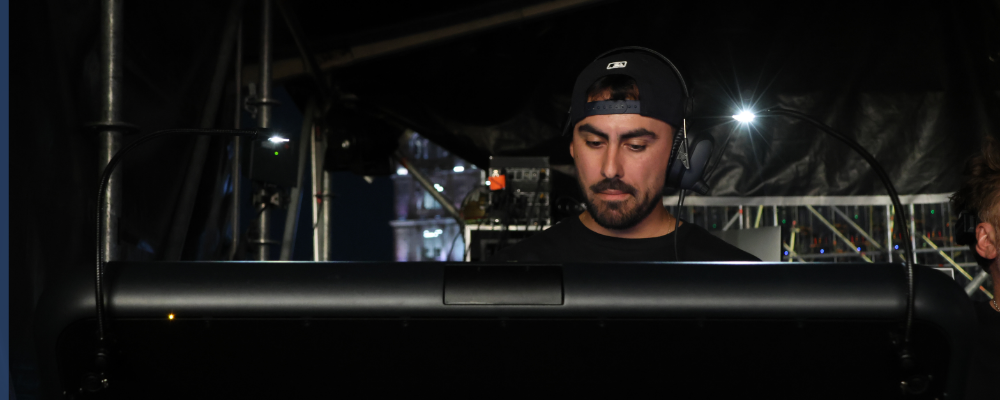
After several years working with Avolites, Bastián says he is still discovering new possibilities within the platform—not because new features appear overnight, but because each project forces him to rethink his own workflow.
“It’s a very intuitive console. It allows you to work very quickly, but that doesn’t mean it’s simple. The deeper you go, the more tools and new ways of solving things you discover. I still keep learning every time I face a different project.”
That flexibility is precisely what allowed him to move from fully automated, timecode-based productions to theatrical performances where every show demands a much more dynamic operation, without having to change platforms.
For Bastián, creativity never depends on the console. The console should adapt to creativity.
“Creativity doesn’t come from the tool. The tool simply allows me to turn an idea into the result I’m looking for. I spend a lot of time observing, imagining scenarios, and building those ideas first in Capture. Then another part of the work begins: figuring out whether that design can actually be built, what equipment will be available, and how to adapt everything to reality.”
His background as an electrical engineer also influences the way he approaches every project.
“It’s not just about creating a beautiful design. You also have to think about where it’s going to be installed, what resources the production will have, and how to make that idea work in the real world.”
The value of an ecosystem that delivers
On an international tour, the performance of a console depends not only on its features. It also depends on knowing that, when a problem arises, there will be someone on the other end ready to help.
That support is another aspect Bastián highlights about Avolites.
“There’s always someone who responds. In Chile, I have the support of ProMusic, but I’ve experienced the same thing in Mexico with Showco. Whenever I need something, I always get a quick response. When you’re on tour, that means a lot.”
For a lighting designer working across different countries and facing very different productions, that support network becomes part of the ecosystem itself.
An investment that changed his direction
Looking back, Bastián acknowledges that his decision to invest in a Titan Mobile turned out to be much more significant than he had imagined.
Not because the console solved every challenge, but because it allowed him to build a way of working that now supports increasingly ambitious projects.
The Titan Mobile continues to travel with him on tour. And although he has been offered newer models, his answer remains the same.
“I’ve been offered the chance to move to other models, but I always say the Titan Mobile is staying with me. I’m comfortable with it, I know its workflow perfectly, and it still delivers exactly what I need.”
Perhaps that’s why, when speaking with young lighting professionals, the advice he repeats most often is not about a specific feature or software. It’s about taking the first step.
“Don’t be afraid to invest in your tools. They’re what ultimately add value to our work and to our professional growth.”
In Bastián Pezoa’s story, that phrase stopped being advice a long time ago.
It became a decision that began with a Titan Mobile, crossed stages throughout Chile, accompanied international tours, and ultimately illuminated one of the most iconic public spaces in Latin America.
And one thing is certain: behind every great show there is always a tool. But it is the people willing to invest in it who truly write the story.
Credits
Cover Photography: Showco (@showco.mx) & Bastián Pezoa (@pmbasti)
Inside Photography: Showco (@showco.mx) & Bastián Pezoa (@pmbasti)
The journalistic production, research, writing, editorial approach, and editing of this content are original works by LATAM STAGE and are protected by copyright.
Any reproduction, copying, distribution, adaptation, or publication, in whole or in part, by any means or in any format, without the prior written authorization of LATAM STAGE, is strictly prohibited.


