
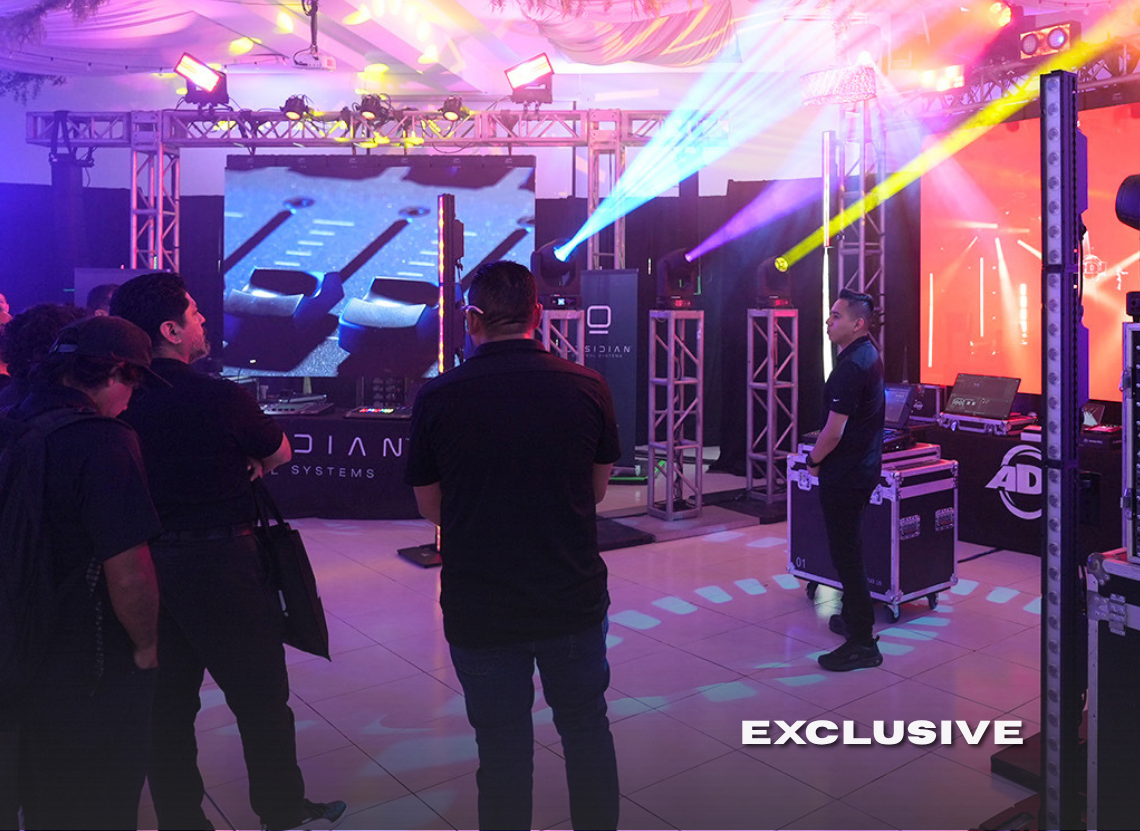
Cancún and Guadalajara were the first stops on a tour aimed at bringing training, demonstrations, and technology closer to professionals in different regions of Mexico, while also providing a closer look at a market that is raising its standards and presenting very different needs depending on each area. Abraham Levit, General Director of ADJ Mexico, shares the first conclusions from a tour that will continue adding cities throughout the year.
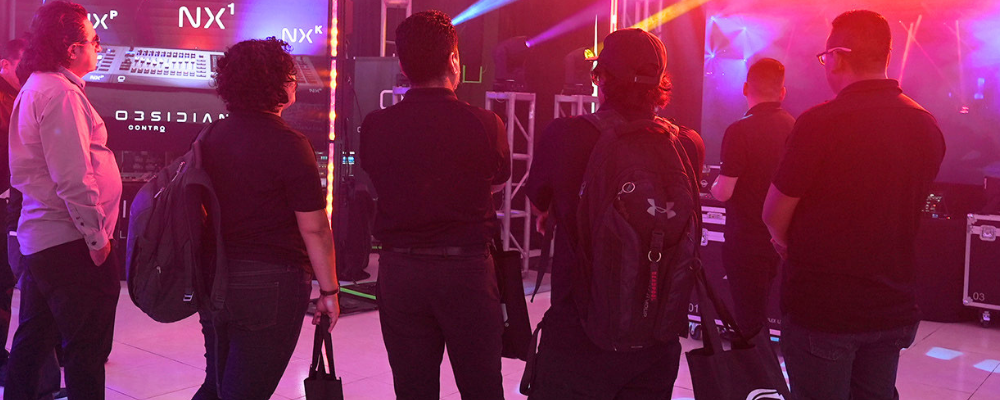
Mexico does not present a single scenario for professional lighting. The tourism activity along its coasts, major events, festivals, hospitality, theaters, clubs, and a network of rental companies and integrators distributed throughout the country create markets with their own specific needs. Reaching those professionals was the starting point of the Road Show that ADJ began developing this year.
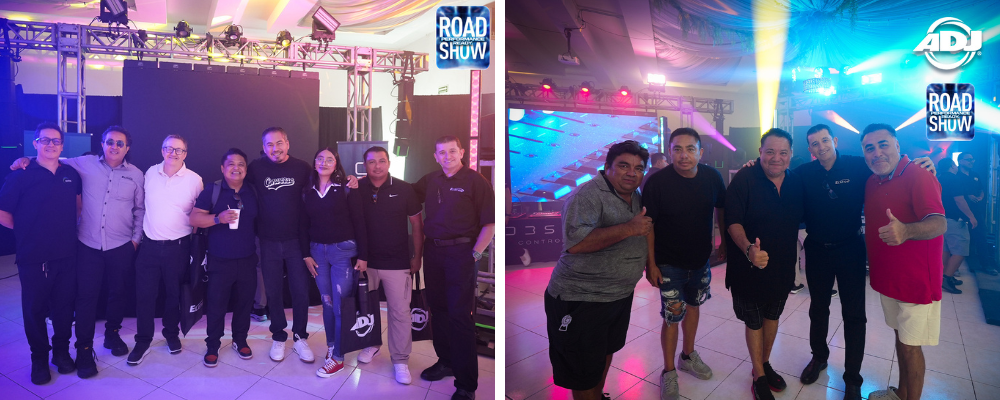
The first stage took the brand to Cancún and Guadalajara, with two additional cities still to be confirmed. At each stop, the program combined technical training, control, and integration during the morning with a practical session in the afternoon, when the equipment was made available to attendees so they could test it and compare its performance.
“The initiative was born from the idea of bringing technology to more places across the country. We aim to bring the latest fixtures directly to users and share knowledge in a more practical way through live demonstrations and training provided by our specialists and technicians for everyone who is part of the lighting community,” explains Abraham Levit, General Director of ADJ Mexico.
Lighting designers, operators, rental companies, producers, system integrators, technicians, and riggers participated in the different sessions. Professionals connected with segments such as hospitality, nightclubs, theaters, and houses of worship were also present.
The in-person meetings also created an opportunity to put faces to relationships that are often maintained at a distance and bring regional users into the conversation who may find it difficult to travel to all of the industry’s major international events.
“It opens up business opportunities with regional integrators who are not always able to travel to major trade shows such as Sound:Check Xpo, InfoComm, NAMM, or LDI,” Levit highlights.
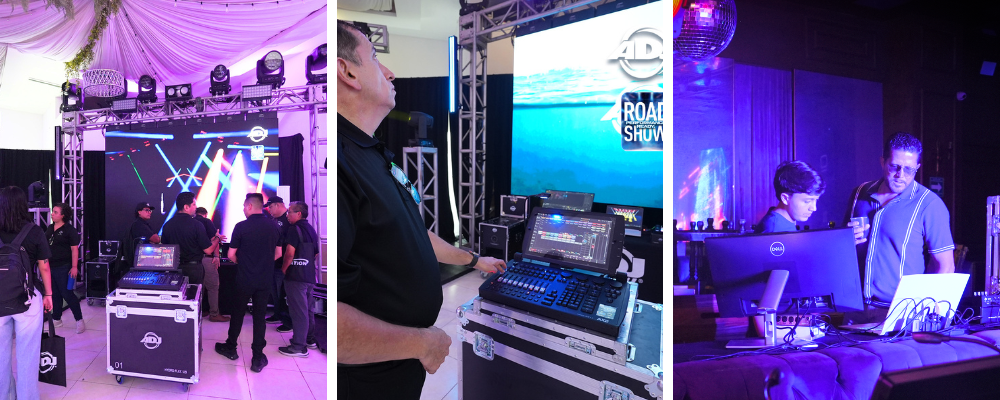
Geography also defines the technology
Traveling through different cities made it possible to begin drawing a much more specific map of the demands of the Mexican market.
In coastal and tourist areas, environmental conditions have a direct impact on equipment selection. Saline humidity, rain, and high temperatures coexist with intense hospitality and social event activity, where setup speed and the ability to reduce cabling are also important.
“In industrial cities and central regions, interest is more strongly focused on high-power hybrid moving heads for rental companies, festivals, theaters, and larger-scale stages. The needs changed radically depending on the region,” Levit says.
This diversity turned the tour itself into a testing ground. Taking the fixtures to different parts of the country made it possible to understand which characteristics are prioritized by those who work in these environments every day.
Among the technologies that attracted the most attention were solutions with an IP65 rating, particularly relevant for exposed applications, while battery-powered fixtures also found a particularly receptive audience in productions where fast setup and mobility are part of everyday operations.
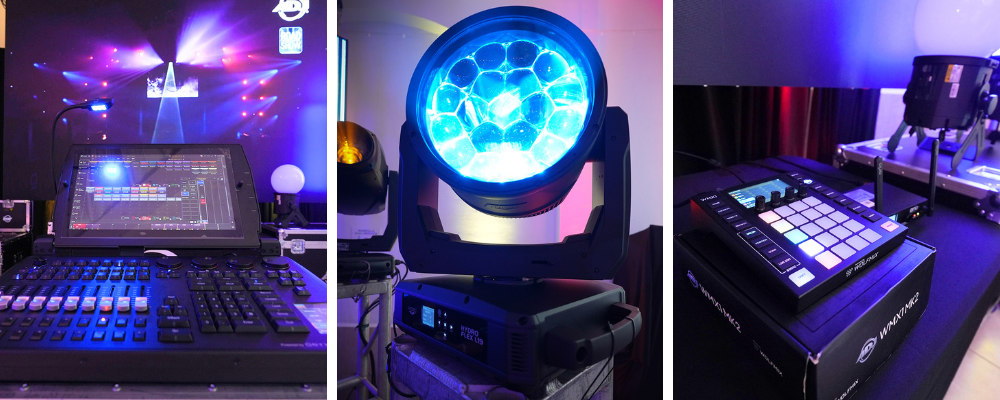
A portfolio seeking to occupy new spaces
The Road Show brought together different families from ADJ’s professional catalog. The Hydro series was represented by Hydro Hybrid, Hydro Profile, and Hydro Beam X1, while the wireless line included ElectraPix Bar 8, ElectraPix Bar 16, and ElectraPix Par 7.
Also featured were Jolt FXIP bars, atmospheric effects from Magmatic, and the AX2 from Obsidian Control Systems, incorporating control into the demonstrations and technical sessions.
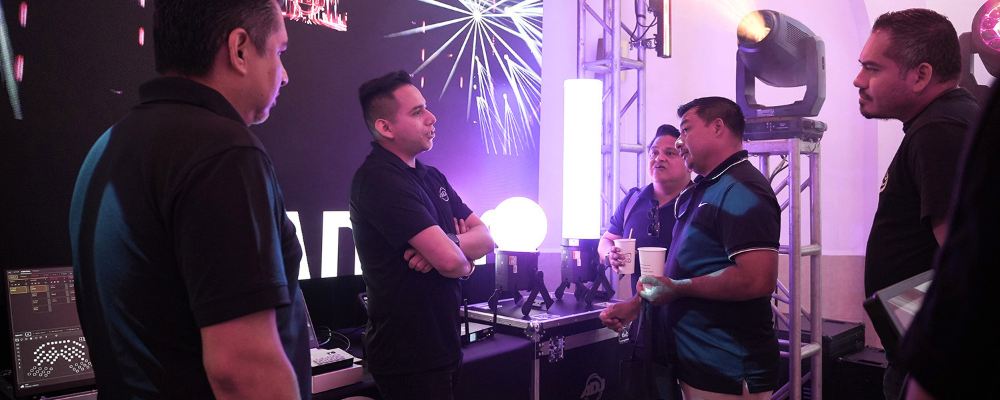
The opportunity to work directly with the equipment brought the conversation toward issues that are part of everyday operation: power, energy consumption, construction, optics, color mixing, battery life, and durability.
“Attendees highlighted the price-performance-power ratio, the low energy consumption compared to traditional sources, and the quality of the optical polish in the color-mixing optics.”
The physical construction of the fixtures was also part of the testing. For professionals accustomed to the constant movement of a tour or rental company, being able to handle the equipment made it possible to directly evaluate the robustness of its chassis and its response to intensive use. This approach coincides with a stage in ADJ’s evolution in which the brand is seeking to expand the territory it has historically occupied within the industry.
“ADJ has gone from being a brand focused primarily on clubbing/DJ applications to positioning itself as a manufacturer of tour-grade lighting for tours and festivals. The development of high-power LED sources, framing systems, advanced color mixing, and IP65 protection ratings responds to the standards demanded by today’s large-scale productions.”
The evolution of the portfolio therefore accompanies a transformation that Levit also identifies among Mexican users themselves.
A market raising its standards
Traveling across the country made it possible to identify a process of professionalization that is no longer concentrated in the cities traditionally associated with major productions.
“Mexico’s regions are experiencing an accelerated technical leap. Local customers are no longer satisfied with basic fixtures; they demand versatile equipment, professional optics, and modern connectivity. The emergence of protocols and technologies such as Art-Net, sACN, and Aria X2 among those demands reveals a market that is beginning to look at the complete system rather than only at the fixture as an independent element.”
For rental companies, designers, and integrators, the choice increasingly depends on how a fixture can coexist with current control infrastructures, respond to different types of productions, and remain operational under demanding conditions.
This evolution also changes the relationship between manufacturer and user. Presenting a new product provides information; seeing it in operation generates different questions.
And during the Road Show, those questions became information for ADJ’s own team.
Listening to the market in the field
The conversations held during the sessions made it possible to gather experiences related to operation, interfaces, applications, and support. Levit describes it as a form of “field R&D,” where the user takes an active role in the exchange: “It allows us to understand the usability of the interfaces and adjust local support policies according to the real problems technicians face during their everyday events.”
That contact takes on another dimension when it happens in the territory itself. The priorities of an integrator working on hospitality developments in the Mexican Caribbean can differ considerably from those of a company dedicated to festivals or heavy-duty rental in another region of the country.
The Road Show made it possible to bring those needs to the same table and build a less homogeneous understanding of the Mexican market.
When the Road Show ends
The relationship with attendees continues after each session. ADJ offers equipment loan programs for demos in real-world productions, in-person and streaming training, as well as after-sales support and spare parts availability within the country.
In this way, equipment presented for a few hours can later move onto a stage, into an installation, or into a production where users have the opportunity to evaluate it within their own workflow.
The next step will be to expand that reach. ADJ plans to add new regions to the calendar, increase the range of technical certifications for control console operators, and continue expanding its local inventory to make equipment available more quickly for integration projects.
Two new cities are still to be confirmed for this year, but Cancún and Guadalajara have already provided a first snapshot of the road ahead.
The map of professional lighting in Mexico is becoming broader, with one common denominator: the technical level is growing beyond the major centers.
The Road Show fulfills its objective precisely where that transformation is taking place: in front of the professionals who are using, testing, and selecting the technology for their next projects.
Credits
Cover Photo: ADJ
Inside Photos: ADJ
The journalistic production, research, writing, editorial approach, and editing of this content are original works by LATAM STAGE and are protected by copyright.
No part of this content may be reproduced, copied, distributed, adapted, or published, in whole or in part, in any medium or format, without the prior written authorization of LATAM STAGE.


