
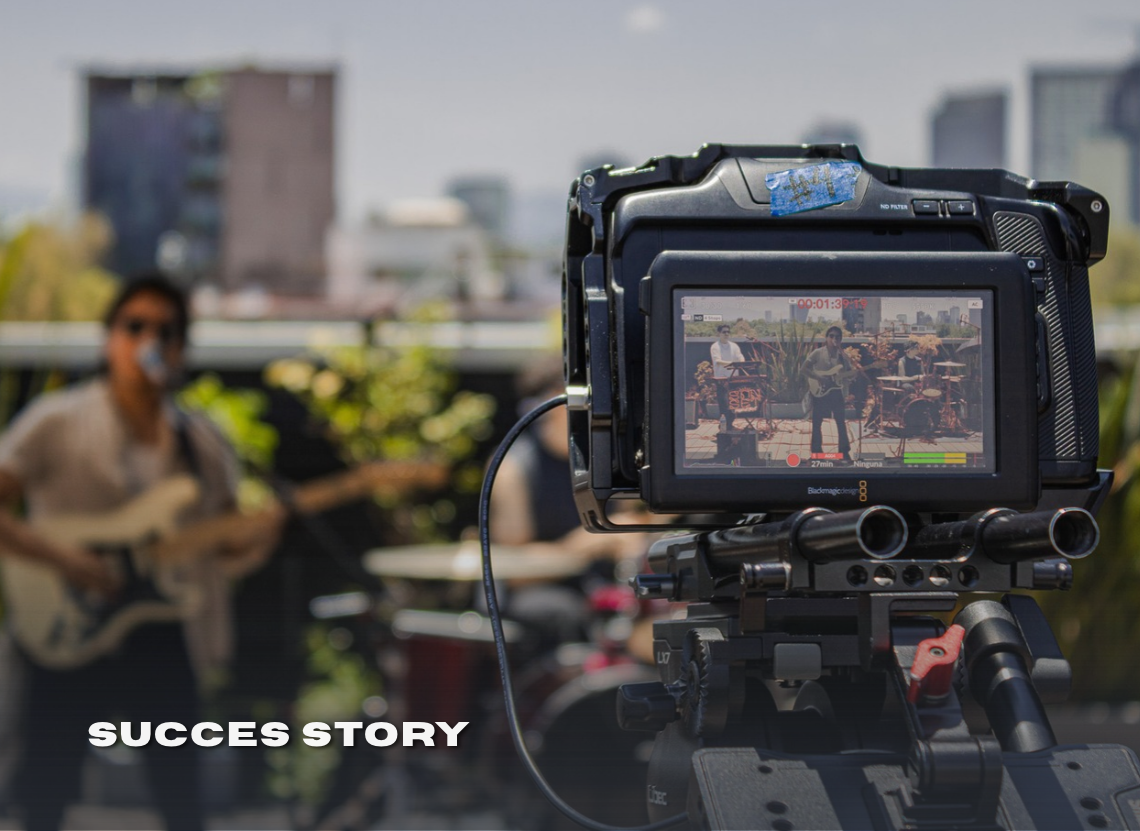
What began as an idea by two musicians to record themselves playing with friends at sunset evolved into an audiovisual production company. Using Blackmagic Pocket Cinema Camera 4K and Pocket Cinema Camera 6K models, a multicamera setup, and postproduction in DaVinci Resolve Studio, Sun Set Productions has developed a recognizable aesthetic around a condition as appealing as it is unpredictable: working with natural light as the day draws to a close.
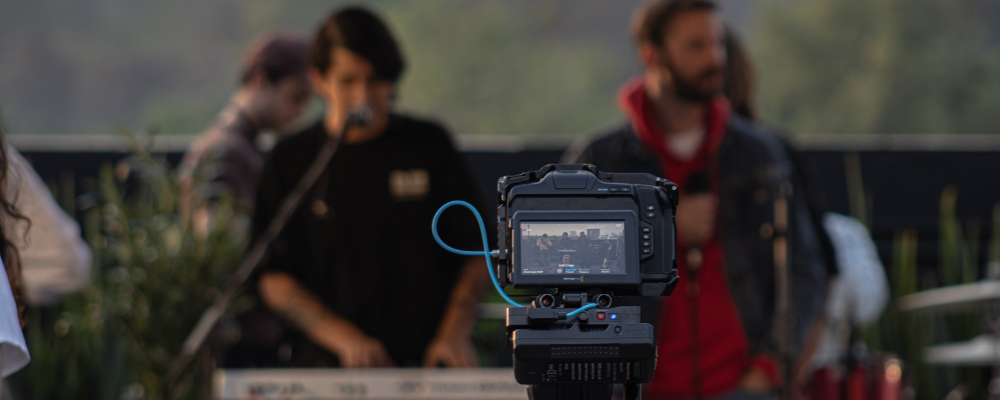
At Sun Set Productions, an essential part of the image depends on something far less controllable: whether the sun, clouds, and weather cooperate during the few minutes when sunset takes place.
That limitation ultimately became part of the company’s identity.
Based in Mexico City, the production company founded by cousins Ilan and Joshua Snaiderman creates live sessions that combine music, audiovisual production, and an aesthetic originally built around the golden hour. More than three years after launching the project, they have produced over 50 multicamera sessions in 4K with artists associated with Universal Music, Warner, and Mexico’s independent music scene.
Although they now work in different locations, sunset remains central to the Sun Set concept. And behind those warm, seemingly spontaneous images lies a process that demands planning, precision, and an audiovisual workflow capable of delivering when simply repeating a take is not an option.
From making music to telling its stories
Before stepping behind the cameras, Ilan and Joshua were on the other side.
First cousins and music enthusiasts since childhood, they grew up playing instruments: Ilan played piano, while Joshua played guitar. When it came time to pursue professional studies, both found different paths within the same industry.
Joshua studied Music Business at SAE Institute in Mexico City. It was during a visit to the institution’s facilities that Ilan ultimately decided to pursue Audio Engineering.
During those years, the initial idea that would eventually become Sun Set Productions began to take shape. They wanted to play, record themselves, and produce music with their friends.
“We said, ‘Why don’t we record ourselves playing the music we were making up there on the rooftop?’ And we started recording not only ourselves, but also friends and friends of friends who wanted to participate. That’s how it all began,” Ilan recalls.
Their choice of time of day was no coincidence either. For both of them, stopping to listen to music as the sun went down had personal meaning long before it became an audiovisual concept. New artists joined, productions became more ambitious, and the need to improve image quality led the team to move beyond their initial recordings made with smartphones.
That was when Blackmagic Design entered the picture.
Their introduction to the brand came through a recommendation from a friend studying filmmaking, whom Ilan and Joshua regularly consulted about audiovisual production. When they decided to take a step forward in quality and start working with cameras, his advice was straightforward: try Blackmagic Design.
SAE Institute also had equipment from the brand available for certain productions, a resource they still complement with their own gear.
“The first thing he told us was, ‘Keep doing the sessions, but improve the quality. Move beyond smartphones and shoot them with cameras.’ We asked him, ‘Which camera do you recommend?’ And he said, ‘Blackmagic.'”
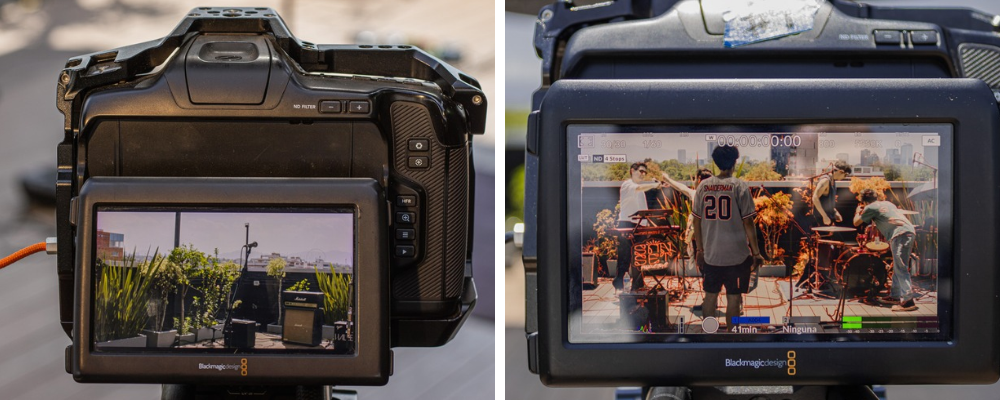
Today, Sun Set works with Blackmagic Pocket Cinema Camera 4K and Pocket Cinema Camera 6K models, typically in a three-camera setup.
The arrangement changes depending on the location and, especially, the musical lineup. Sun Set has worked on everything from DJ sessions to productions featuring 13 musicians performing simultaneously. One band may include drums, guitar, bass, and vocals, while another may feature multiple keyboards, additional guitars, saxophone, backing vocals, or other instrumental combinations.
Each lineup changes the relationships within the frame and requires the team to rethink camera placement and what each camera needs to capture.
During rehearsals, the team also takes the opportunity to capture inserts and closer shots of the musicians. This footage later complements the main take, adding greater visual variety to the edit without disrupting the dynamics of the performance.
Their experience with the Pocket Cinema Cameras also helped establish the visual standard Ilan and Joshua wanted to maintain across their productions.
“Ever since we started using these cameras, I remember thinking, ‘Wow, the image quality is incredible.’ From the very first minute, I said, ‘These are the kinds of cameras we need for all our sessions,'” Ilan says.
When the golden hour also directs the shoot
Shooting at sunset creates a distinctive aesthetic, but it also introduces a condition that shapes the entire production: the available time cannot be extended.
Sun Set records its main sessions in a single take. The color of the sky, the position of the sun, reflections, and light intensity all change while the cameras are rolling.
For Ilan, much of the format’s appeal lies precisely in that unpredictability.
“It’s not like a backdrop. It’s not a production I can control. It lasts as long as it lasts, and if you didn’t get the recording at that moment, your shooting day is over. Every sunset is different, it’s incredibly variable, but I think that’s part of the magic.”
The apparent naturalness of the result therefore conceals rigorous preparation. The team works with a precise schedule and prepares cameras, filters, and lighting in advance to minimize uncertainty when recording begins. The experience gained over dozens of sessions has allowed them to anticipate conditions more effectively and reduce the improvisation that was unavoidable in their earliest productions.
Even certain effects that might otherwise be considered technical difficulties become part of the image. Ilan particularly mentions the lens flares that appear when the sun descends in front of the camera, an effect he enjoys capturing during sessions and one that reinforces the presence of the surrounding environment in the production.
The human factor is also part of that equation. Musicians must arrive prepared to perform, knowing that the main take will not simply be repeated because something could have been improved.
A session designed to help artists grow
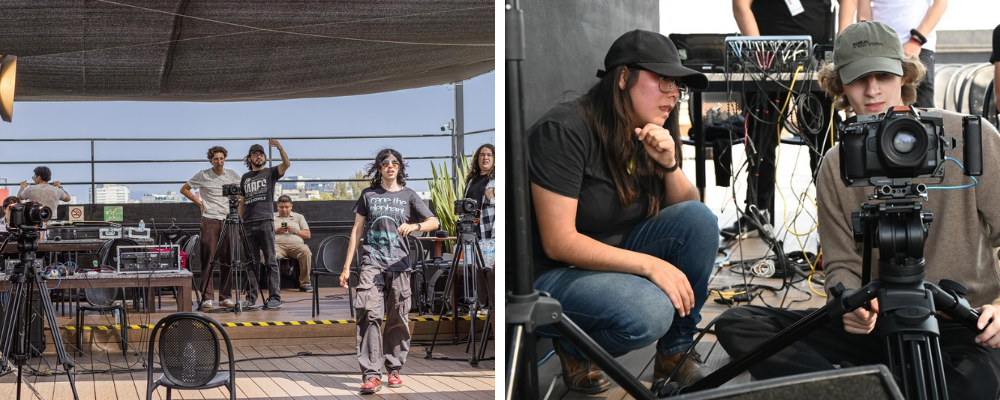
Each production is part of a content strategy that unfolds over approximately two weeks and includes specific pieces for TikTok, Instagram, and YouTube.
Before filming, Sun Set conducts an initial assessment with the artists to better understand their project, identity, and what they want to communicate. Further conversations then help refine the concept.
“We want artists to grow, for the sessions to really work for them, and to help advance their careers in some way,” Ilan explains.
Some of this content is captured on the same day as the session, before the light disappears or even before the main shoot begins. Music production, video, and digital strategy are therefore approached as interconnected elements of a single project.
This way of working also helps explain why Sun Set is not defined solely by an aesthetic. Mexico City may offer clear skies or completely disrupt the plan with rain, clouds, or changing atmospheric conditions.
“When we shoot at sunset, we like the sky to be part of the experience too. And something important to us is that every session looks different, precisely because every day is different,” Ilan explains.
That decision also influences how the team works with the cameras. They aim to keep the artists properly exposed without losing the presence of the surroundings, allowing the available light to remain an integral part of the image.
From multicamera production to DaVinci Resolve Studio
The relationship with Blackmagic Design continues beyond image capture. Today, the sessions are postproduced in DaVinci Resolve Studio, a platform the team adopted after trying other tools.
The transition was connected to the arrival of new editors on the team. Both were already using Resolve, and as the workflow moved to Blackmagic Design’s platform, Ilan began to recognize the possibilities it offered in one of the most important aspects of Sun Set’s identity: color.
“Where we see the biggest difference, honestly, is in color correction. Going from a sunset session to one shot at midday changes everything. Color correction is a game changer for us,” he explains.
DaVinci Resolve Studio therefore represents the other end of the ecosystem Sun Set currently uses: the Pocket Cinema Cameras handle image capture, while the platform supports editing and, especially, the final development of the color.

More than 50 sessions and a concept that continues to grow
In just over three years, Sun Set Productions has completed more than 50 live sessions, working with artists associated with Universal Music and Warner, as well as musicians from Mexico’s independent scene.
That growth has also changed the scale of its productions. What began with two cousins and their friends on a university rooftop now involves a dedicated crew, collaborations across different locations, and a production setup capable of adapting to widely varying musical configurations.
For Ilan, part of that evolution has involved learning to use the available tools through experience. He does not present himself as a technical video specialist and prefers to speak from his perspective as a creator and user. Throughout that journey, he particularly emphasizes the reliability he has found in Blackmagic Design cameras during recording.
“The cameras have never given us any problems. It’s not as if they suddenly shut down or stop recording halfway through. That’s never happened to us,” he says.
Investment remains one of the constraints for a young production company. Expanding an audiovisual system involves much more than adding cameras: every session also requires lenses, supports, lighting, storage, technical personnel, and a production structure that must grow alongside the equipment.
For that reason, Sun Set’s development has been gradual, combining its own equipment with resources from SAE Institute. The goal is to continue expanding its production capabilities and exploring increasingly ambitious formats.
New locations, new challenges
Sun Set’s future is not about endlessly repeating the same shot of a band performing against a sunset. Ilan and Joshua want to take the concept to different places, even when doing so means introducing new variables beyond their control.
Among the productions they are preparing is a session at a safari park near Mexico City.
“We’re always looking for ways to push ourselves further and further outside our comfort zone,” Joshua summarizes.
Rooftops, gardens, studios, and future locations may change. The connection with sunset, however, remains the element Ilan envisions continuing to shape Sun Set’s identity.
After more than 50 sessions, an idea that emerged almost naturally has found its own aesthetic, its own production approach, and, above all, its own way of looking at music.
Every shoot still holds something unrepeatable. There are only a few minutes for musicians, cameras, light, and landscape to come together before the sky changes again. Then, inevitably, the sun sets and the day comes to an end.
For Sun Set Productions, however, the sun is only beginning to rise.


