
Colombia — Meyer Sound’s ULTRA Series offers a different perspective on sound reinforcement system design: one less constrained by traditional categories and more focused on the actual needs of each space. LATAM STAGE explores this evolution to understand why ULTRA has become a benchmark tool for audio professionals.
The evolution of Meyer Sound’s ULTRA Series demonstrates that innovation in professional audio does not always mean building larger systems. Sometimes, it means achieving greater power, more control, and a more precise response within a format that simplifies deployment. To understand the philosophy behind this approach, LATAM STAGE drew on the knowledge and experience of Jean Paul Gaspard, Director of Audio Concept, Meyer Sound’s distributor for Colombia, Panama, and Venezuela.
For years, the sound reinforcement industry associated demanding coverage and sound pressure level requirements with line array systems. However, there are countless applications where such a solution may be excessive, complex, or inefficient. This is precisely where the ULTRA family has found its place.
Meyer Sound developed the ULTRA Series around a seemingly simple idea: enabling a point source loudspeaker to deliver power, coverage, and consistency without sacrificing the precision associated with larger-format systems.
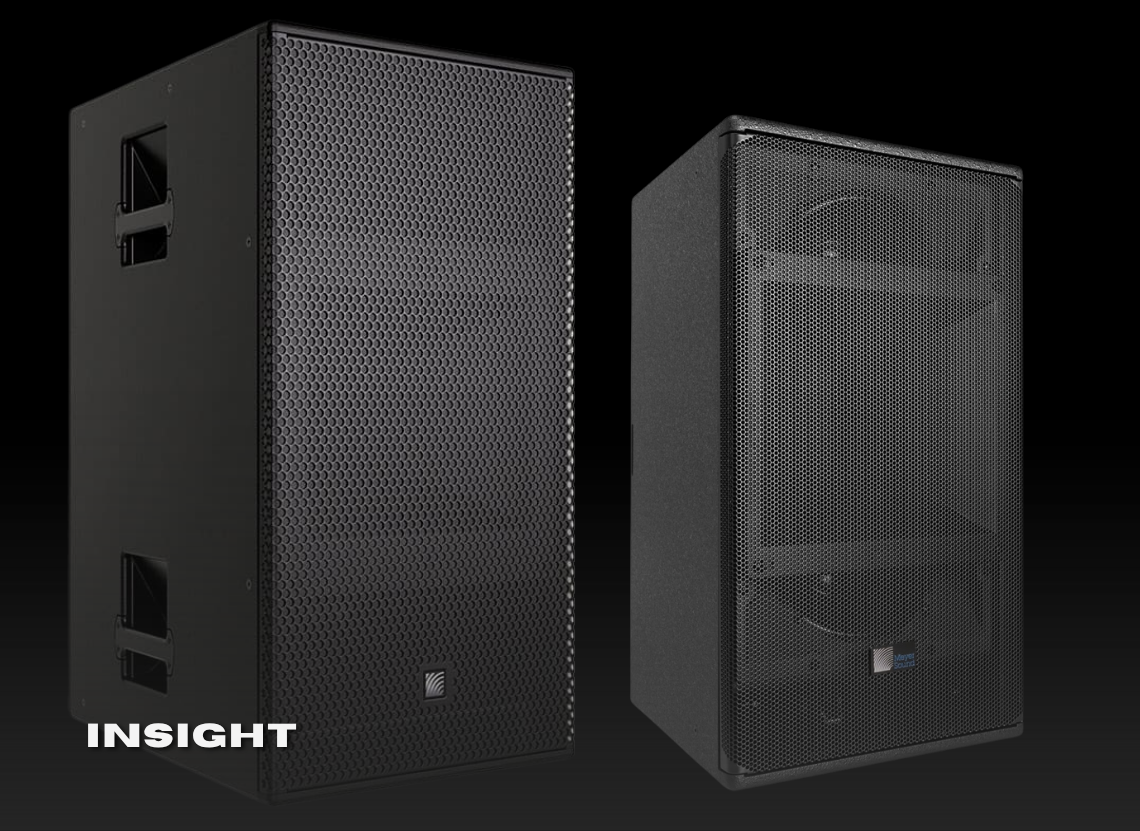
The result is a family that currently includes the ULTRA-X20, ULTRA-X40, and ULTRA-X80, models that can be used individually or combined while maintaining a consistent sonic signature. Meyer Sound identifies this as one of the family’s key attributes: the ability to scale solutions without losing clarity or coherence.
And that consistency is far more important than it might initially seem. ULTRA’s true strength lies not only in how much SPL a loudspeaker can deliver, but in how it manages that energy, controls coverage, maintains phase and frequency response, and enables designers to create systems with fewer components and greater predictability.
ULTRA-X40: concentrated precision
The ULTRA-X40 was designed to occupy a very specific position in the professional audio market. It is compact, relatively lightweight, and capable of delivering so much power that its size is no longer a reliable indicator of its performance.
Its architecture uses two 8-inch cone drivers combined with a 3-inch high-frequency compression driver in a concentric design. This configuration helps maintain a smooth response and consistent directional control, while the rotatable waveguide provides 110° x 50° coverage. For applications requiring a narrower coverage pattern, the ULTRA-X42 variant offers 70° x 50°.
But perhaps one of the most interesting aspects of the X40 is its power-to-size ratio.
Its three-channel Class D amplification system delivers 1,950 watts of peak power in an enclosure weighing approximately 23.6 kg. This combination makes the X40 suitable for a wide range of applications: theaters, clubs, houses of worship, theme parks, stadiums, nightclubs, corporate systems, front fills, and portable audiovisual applications.
This is where one of the concepts behind the ULTRA Series’ success becomes clear: it is not a loudspeaker designed for a single application. It is a design tool.
Designers can determine how to use it, where to position it, what coverage is required, and how to integrate it with other system components. Its mechanical flexibility supports this philosophy: the X40 features multiple rigging points, mounting options, and arraying capabilities that allow it to adapt to different configurations.
But another element fundamentally changes the equation: integrated processing. The ULTRA-X40 incorporates GEN-1, bringing networked audio connectivity and Galileo GALAXY-class DSP processing directly into the loudspeaker. Its internal processing includes crossover management, phase and frequency response correction, and driver protection. The objective is clear: reduce complexity and make system commissioning simpler and more scalable.
In other words, the X40 does more than reproduce sound. It actively participates in the system architecture.
ULTRA-X80: when a point source begins competing with other categories
If the X40 demonstrated how far a compact loudspeaker could go, the ULTRA-X80 takes that concept to another scale.
Officially introduced by Meyer Sound at InfoComm 2024, the X80 was developed as the new flagship of the ULTRA family and as a response to a specific market need: a high-power point source capable of handling applications that traditionally required small loudspeaker arrays.
The difference is apparent from the outset. The ULTRA-X80 uses two 12-inch neodymium cone drivers paired with a 4-inch high-frequency compression driver and a rotatable 95° x 40° waveguide. The ULTRA-X82 variant is also available, offering a narrower 50° x 40° coverage pattern.
The result is an unusual combination: extreme power from a single point source. Meyer Sound’s currently published specifications indicate up to 140 dB SPL of peak linear output from an enclosure weighing 62.6 kg. This enables the manufacturer to position the X80 as a solution capable of delivering the performance of multiple elements in a small line array within a single enclosure.
But reducing the X80 to SPL figures would overlook its most interesting qualities. Its real strength lies in preserving the acoustic philosophy of the ULTRA family.
Meyer Sound did not simply create a larger enclosure and add more power. It evolved the family’s concentric design, maintaining phase coherence, coverage control, and sonic consistency while bringing these concepts to a format designed for larger-scale applications.
In that sense, the X80 is a natural extension of the X40. The same DNA. A different scale.
A family designed to grow
This is perhaps one of the strongest arguments in favor of the ULTRA Series. The X20, X40, and X80 are not isolated products. They are part of an architecture.
The ability to use different models within the same ecosystem makes it possible to build systems where transitions between coverage areas do not necessarily involve a significant change in sonic behavior. Meyer Sound emphasizes that all three models can operate together or independently while maintaining precision, fidelity, and a consistent sonic signature.
This has a direct consequence for system designers. The question is no longer simply “Which loudspeaker do I need?” but rather “How do I want to address the needs of this space?”
A theater may require X40 loudspeakers in certain areas, complemented by subwoofers. A corporate system may find the X40 to be a compact and powerful solution. A stadium may use the X80 in areas where a line array would be unnecessary or impractical. A portable system can benefit from the speed of deployment offered by a self-powered solution.
The ULTRA Series demonstrates that technology should adapt to the application, not the other way around.
The value of self-powered systems
Meyer Sound’s philosophy regarding self-powered systems is not new. The company has been developing this technology since 1995 and considers integrated amplification to offer advantages in fidelity, reliability, consistency, and ease of deployment.
In professional production, this has tangible value. Fewer components. Less cabling. Fewer opportunities for error. Less space dedicated to amplifier racks. And, fundamentally, an optimized relationship between amplification, processing, and drivers.
Amplification is not an element added to the system. It is part of the design. This concept helps explain why Meyer Sound has built its identity around self-powered systems for decades. Processing, amplification, and drivers are conceived as a unified whole, with the goal of achieving predictable and consistent performance.
And for professionals who must design, install, and operate systems under pressure, predictability is extremely valuable.
The ULTRA Series as a design tool
The evolution from the ULTRA-X40 to the ULTRA-X80 also reveals something important about today’s market. Designers are no longer looking only for power. They are looking for efficiency.
They need to provide appropriate coverage, control acoustic energy, reduce setup times, transport fewer components whenever possible, and maintain a consistent quality standard regardless of the application.
In this context, the ULTRA Series has become a benchmark because it brings together factors that traditionally competed with one another: size, power, coverage, control, processing, connectivity, and ease of deployment.
And that is probably why the ULTRA family goes beyond the category of “point source loudspeakers.” It is a design platform.
Jean Paul Gaspard’s perspective
For LATAM STAGE, understanding a technology means more than simply reproducing the specifications published by a manufacturer. It means understanding what problem the technology is intended to solve and how that solution performs in response to the real needs of professionals.
That is why, to analyze the ULTRA Series, we turned to Jean Paul Gaspard, Director of Audio Concept, the company representing Meyer Sound in Colombia, Panama, and Venezuela. His experience working with projects, integrators, and professionals across these markets provides a particularly valuable perspective: that of someone who must translate world-class technology into practical solutions for Latin America.
This leads to an interesting conclusion. ULTRA’s strength lies not only in its components, specifications, or engineering. It lies in giving designers more tools to make better decisions.
That is innovation. Not necessarily doing more, but finding better ways to meet a challenge.
The ULTRA-X40 and ULTRA-X80 represent two stages in that evolution. The X40 demonstrated that a compact point source could deliver a level of performance that challenged conventional expectations of its category. The X80 took the same philosophy and extended it to applications where the required power begins to compete with solutions traditionally associated with line arrays.
And between them lies something even more important: a shared acoustic identity. Because when a product family allows designers to move from a compact solution to a high-power one without sacrificing precision, coverage, or consistency, it becomes more than just a loudspeaker range.
The ULTRA Series becomes a tool for thinking about the system itself. That is perhaps ULTRA’s true value. It is not simply about hearing more. It is about having greater control over what is heard.
And when power, precision, coverage, and simplicity are no longer separate concepts, designers gain something far more valuable than a new loudspeaker: they gain the freedom to design.


