
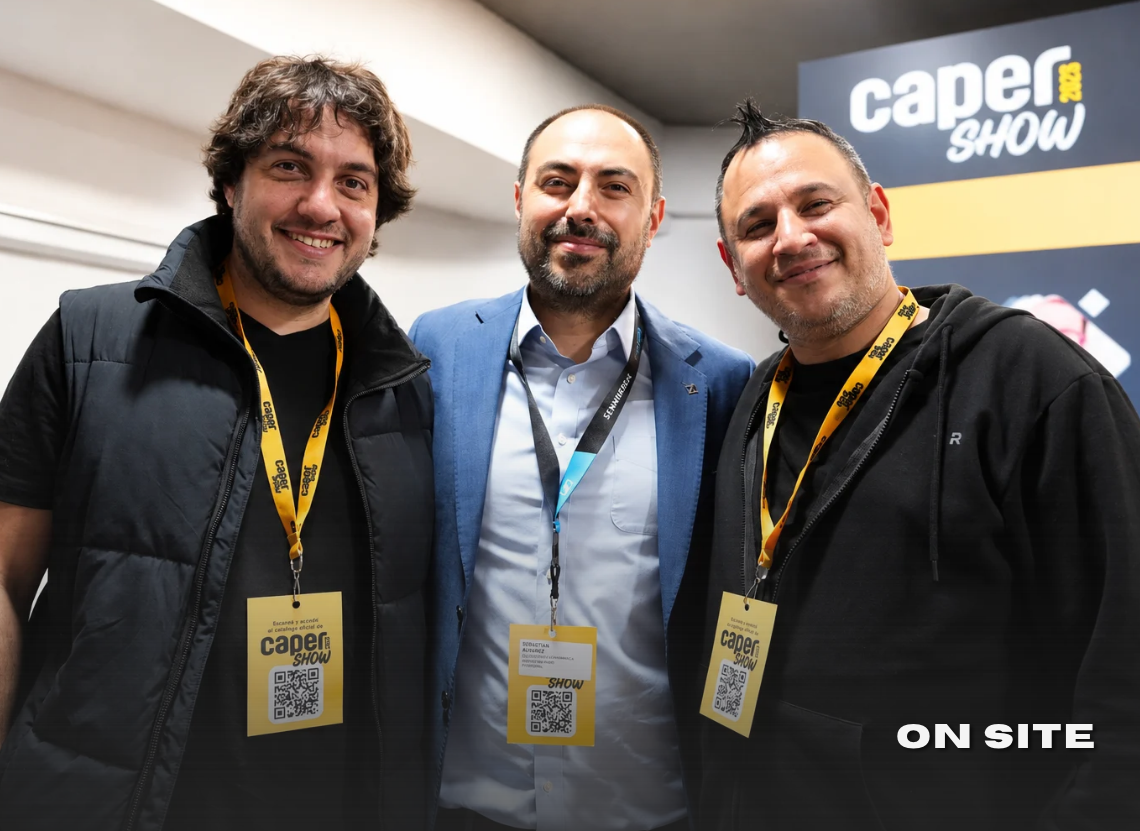
Argentina – In a discussion organized in collaboration with Todomúsica, Sennheiser’s distributor in Argentina, Sebastián Álvarez spoke with Jony Macon and Fernando Parra of STR Rental about their experiences using Spectera on tours and at live events. Dante and MADI integration, bidirectional operation, remote control, and multi-zone configurations were among the key topics discussed at a meeting that also included references to its use at Viña del Mar and Lollapalooza Chile.
From investment to onstage experience
Knowing what a wireless system can do is one thing; discovering how it performs when it reaches the stage, integrates with consoles, and is put in the hands of musicians and operators is quite another.
That distinction was the starting point for one of the conversations held during CAPER Buenos Aires, where Sennheiser, together with its Argentine distributor Todomúsica, brought audio professionals together to explore the applications of Spectera, its bidirectional wireless platform.
The discussion was led by Sebastián Álvarez, Sennheiser Sales Manager, with the participation of Jony Macon and Fernando Parra of STR Rental, an Argentine company that has incorporated Spectera into its infrastructure for productions and tours.
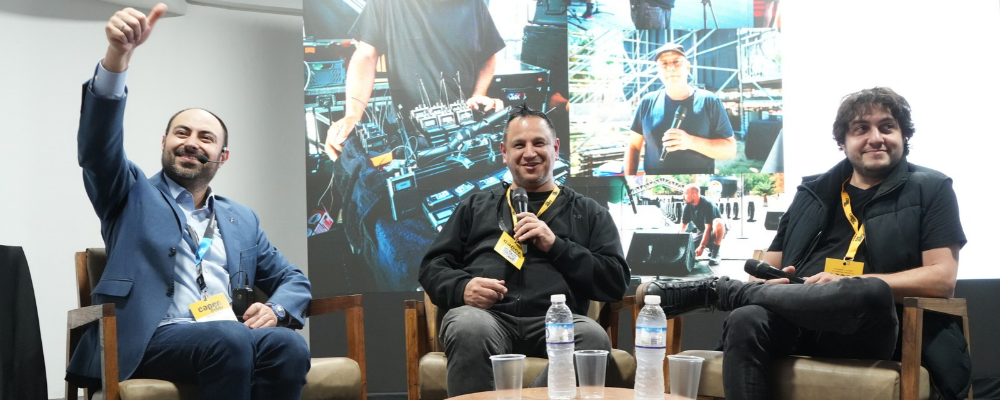
The acquisition, made through Todomúsica, had already marked a shift in STR’s technology strategy. Now, with the system in operation, the focus was on sharing real-world experiences, from integration with digital consoles to feedback from musicians and operators.
One of the first topics was Spectera’s architecture, based on WMAS (Wireless Multichannel Audio Systems), which allows multiple wireless channels to be managed within a wideband RF channel. Unlike conventional systems, where each link typically requires individual coordination, this approach centralizes operation and opens up new possibilities for managing available resources.
The platform also incorporates Dante and MADI connectivity, two protocols that STR already uses regularly. This made integration easier in configurations combining front-of-house mixing, monitoring, and recording, without the need for intermediate analog conversions.
During the discussion, STR’s representatives explained that compatibility with both protocols allows the system to adapt to different requirements while maintaining the flexibility of their digital networks.
One bodypack, two functions, and new possibilities
Bidirectional operation was one of the aspects that took up a significant part of the conversation. Spectera allows a single bodypack to transmit the signal from a microphone or instrument while simultaneously receiving in-ear monitor audio.
In a production involving numerous musicians, this architecture reduces the number of devices artists need to wear and simplifies the wireless infrastructure.
Fernando Parra recalled one of STR’s first experiences with Spectera, when they decided to take advantage of both functions during a performance featuring a brass section: “We finished the show, and one of the musicians came over to ask us about the equipment. We explained that it was a different kind of system, and he told us, ‘I’ve never heard myself sound so good.’ He found it really strange to have both things connected to the same bodypack.”
The experience demonstrated an advantage that also emerged during other tests: a reduction in the noise floor perceived by musicians. By working with a digital signal chain, operators noticed cleaner monitoring, especially during silent passages.
Jony Macon, for his part, highlighted how adopting the system had begun to change the way some tours were prepared: “Today, we have three or four artists touring nationally who ask us for the Spectera kit. It’s portable; they take a smaller version of the console, and everything is connected via MADI. From that perspective, it’s simplifying things for us considerably.”
Portability thus became an operational advantage, particularly for productions that need to move equipment between cities without compromising system performance.
Remote control, multi-zone coverage, and RF planning
Another major technical point was the ability to monitor bodypacks remotely. Spectera transmits control information through its wireless infrastructure, making it possible to check device status and modify certain parameters without physically accessing the units.
Sebastián Álvarez highlighted one of the differences offered by this architecture: “The same antenna carries not only the audio but also the control data. You can change the name, adjust the gain, and check whether the device is connected.”
This advantage becomes especially clear when a transmitter is concealed within an artist’s costume or located somewhere difficult to access. During the discussion, an experience in Chile was shared in which the level of a bodypack located inside a dress had to be adjusted. The operation was completed remotely without interrupting the show.
Álvarez also referred to the use of Spectera at the Viña del Mar International Song Festival and Lollapalooza Chile 2026, two events that illustrate the RF demands of large-scale productions.
Multi-zone coverage was another key topic. With Spectera, network-connected antennas make it possible to design different coverage areas, with active transmission from each point. For STR, this feature proved decisive when evaluating the investment, as it allows the company to address requirements that previously might have called for separate infrastructures.
The conversation also addressed the importance of properly preparing configurations. Although the architecture simplifies certain processes, aspects such as power levels, connections, channels, and antenna distribution must be defined in advance.
At STR, systems are prepared and labeled at the warehouse according to each production’s rider, so technicians receive a configuration that is ready to deploy.
When software expands the possibilities
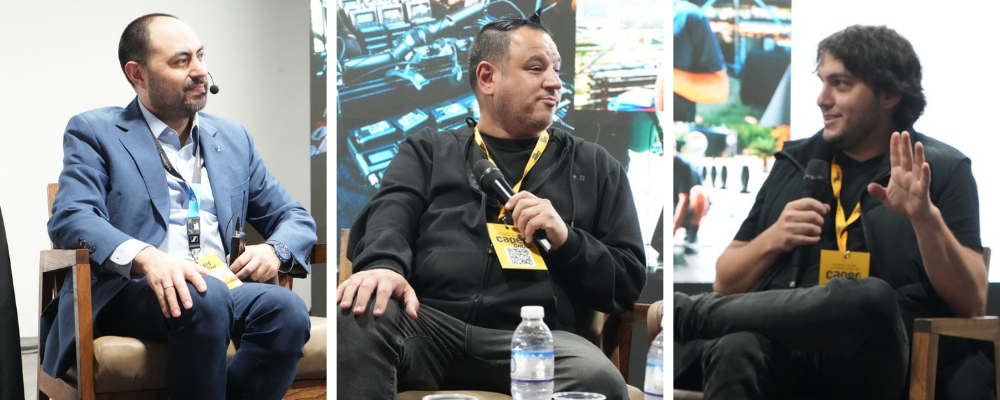
Audience participation steered the conversation toward common situations in live production: coexistence with other wireless systems, bandwidth management, monitoring functions, and instrument changes during a concert.
One of the most interesting examples was Spectera’s integration with Bitfocus Companion, an automation platform that allows devices to be controlled and actions to be executed through interfaces such as Stream Deck.
During the discussion with the audience, one attendee raised a common touring scenario: how to manage instrument changes for a guitarist who uses several guitars during the same show.
Sebastián Álvarez responded by explaining Spectera’s integration with Bitfocus Companion, which makes it possible to control different bodypacks from a control panel such as Stream Deck. This allows the technician to select which instrument sends audio to the system without having to switch off transmitters or interrupt RF links, which remain active throughout the operation.
The question also opened up a discussion of other platform capabilities, including bandwidth management, channel configuration, and the relationship between the number of links and audio quality. The exchange provided an opportunity to explore Spectera’s tools in greater depth and discuss new ways of organizing wireless operations during live productions.
At CAPER, STR Rental’s participation brought the perspective of professionals already dealing with these changes in real-world productions, while Sebastián Álvarez contributed Sennheiser’s technical expertise and experience with applications at major events.
Spectera requires users to learn a new way of operating, but its advantages become clear when the technology reaches the stage and musicians, monitor engineers, and technicians incorporate its capabilities into their daily work.
Credits
Cover Photo: LATAM STAGE
Inside Photos: LATAM STAGE
The journalistic production, research, writing, editorial approach, and editing of this content are original works by LATAM STAGE and are protected by copyright.
No part of this content may be reproduced, copied, distributed, adapted, or published, in whole or in part, in any medium or format, without the prior written authorization of LATAM STAGE.


