
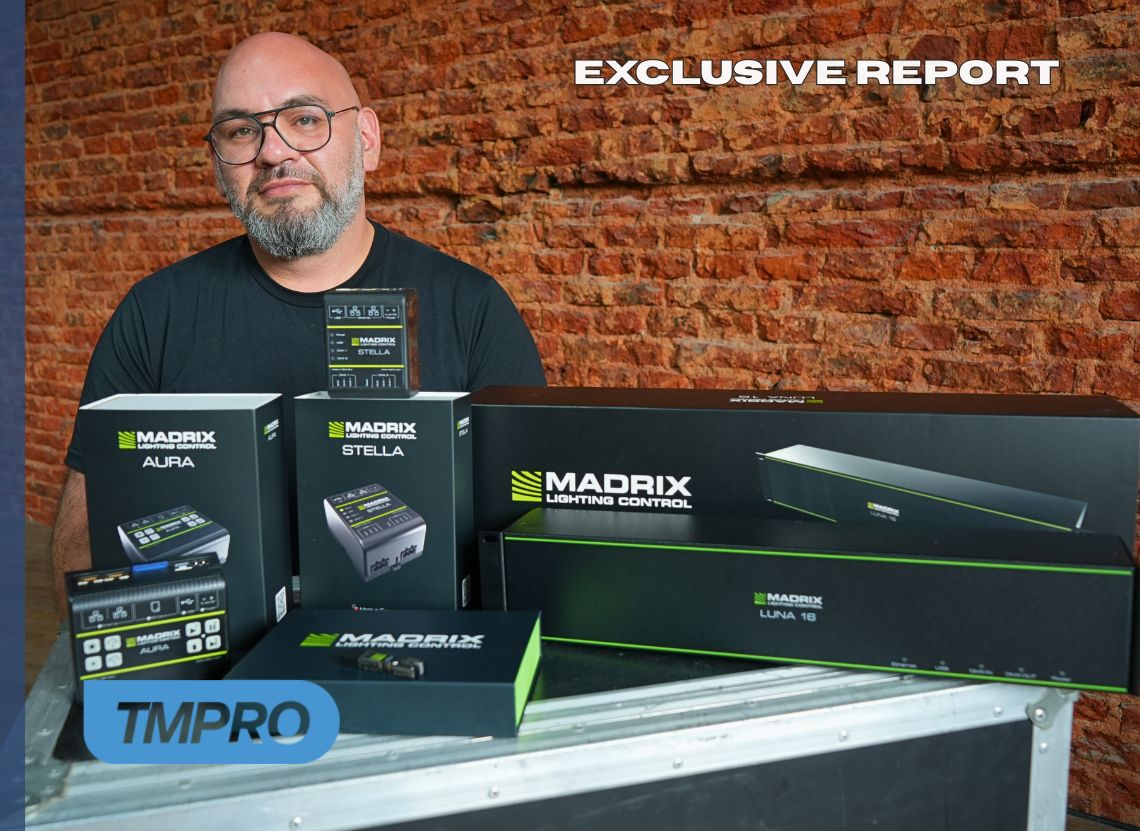
Drawing from hands-on experience, Argentine lighting designer Gastón Claver explains how MADRIX becomes a key tool for creative and technical control of LED projects, now available in Argentina through TM PRO, Todomúsica’s professional audio division.
In a context where LED lighting is evolving toward increasingly complex, flexible, and visual systems, MADRIX has established itself as one of the most powerful and versatile control platforms on the market.
Used both in live shows and permanent installations, the system combines software and hardware to deliver an intuitive, dynamic, and highly creative programming experience.
In Argentina, this technology is now available through TM PRO, the professional audio division of Todomúsica.
Argentine lighting designer Gastón Claver, a technical and creative reference within the local scene, sums it up directly: “MADRIX is a control system for LED lighting that can be used both for installations and for shows.” And that breadth of application is precisely one of its strongest differentiators.
From pixel to full system: how MADRIX works
One of the key points highlighted by Claver is the system’s scalability. “MADRIX can be used to control everything from simple LED strips to complex lighting systems with a very large number of LEDs,” he explains.
Added to this is one of its most powerful features: 2D and 3D mapping capabilities, which allow lighting content to be adapted to any surface, volume, or structure.
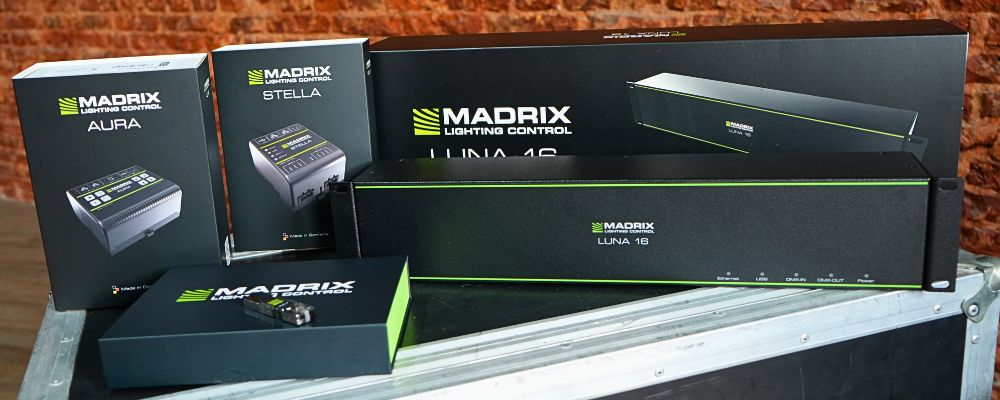
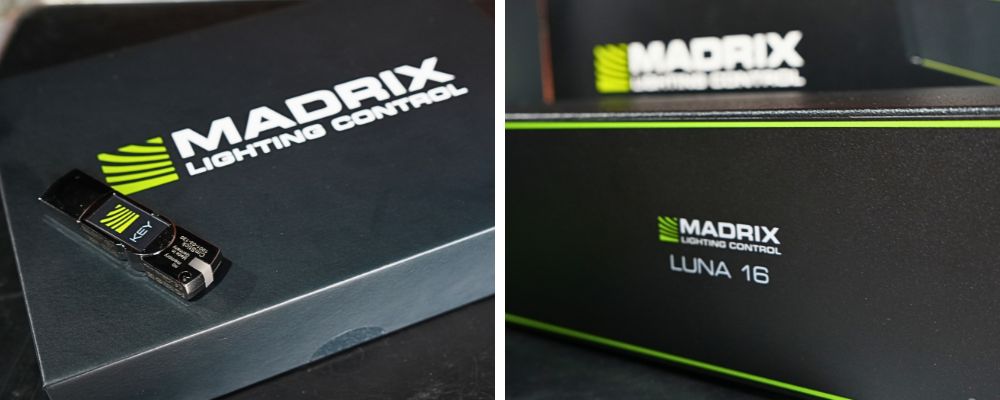
From a technical standpoint, MADRIX consists of software and a range of hardware devices that expand system control and connectivity. “Everything starts with the software, enabled via a license key, and from there the components are added that allow us to expand lighting control,” Claver details.
Among these components are the LUNA 4, LUNA 8, and LUNA 16 nodes, which enable direct communication between MADRIX and lighting fixtures; STELLA, designed for permanent installations as an Art-Net to DMX node; and AURA, a DMX recorder that allows operation without a permanently running computer. An architecture designed for autonomy, stability, and portability.
Intuitive programming and real-time effects
Beyond the technical structure, Claver emphasizes the user experience. “From the software we can achieve very intuitive programming, very easily and in a short amount of time,” he states. This is complemented by the ability to work with audio-reactive effects, a key tool for live applications: “It has effects that allow us to work automatically, in sync with the music.”
This combination of agile workflow, connectivity, and real-time response makes MADRIX an especially attractive solution for lighting designers seeking speed without sacrificing precision, both in stage and architectural environments.
A global standard for 24/7 projects
Internationally, MADRIX has established itself as a widely adopted platform for architectural lighting projects, permanent installations, and large-scale events, thanks to its stability and its ability to operate continuously and autonomously. The brand places strong emphasis on 24/7 reliability, a critical factor for installations where systems must run uninterrupted for long periods of time.
In addition, its compatibility with standard protocols such as Art-Net and sACN, combined with a modular approach, allows MADRIX to be integrated into hybrid environments where lighting, video, and stage control coexist—an increasingly common reality in large-scale contemporary projects.
MADRIX is not just a control tool: it is a creative platform that supports the evolution of LED lighting toward increasingly complex visual languages.
With a flexible architecture, powerful software, and a hardware ecosystem designed for different scenarios, the system positions itself as a comprehensive solution for those working with light and real-time content.
Through TM PRO and with the support of professionals such as Gastón Claver, MADRIX expands its presence in Argentina, bringing international-level technology closer to the local scene.


