
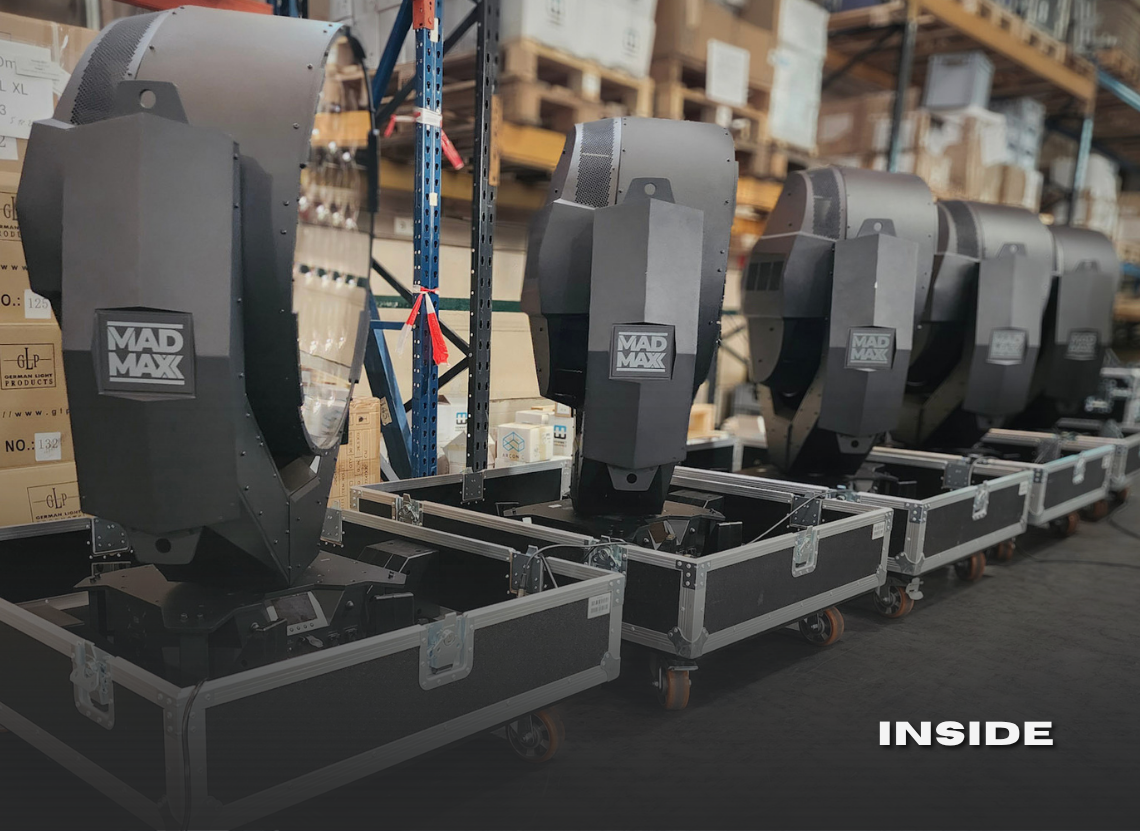
At GLP, many of the decisions that ultimately shaped its history began in a rather unconventional corporate way: with an intuition, a conversation, or simply the desire to try something that did not yet exist. That way of understanding innovation has accompanied the German company since its earliest days and largely explains how it came to build its own identity within professional lighting.
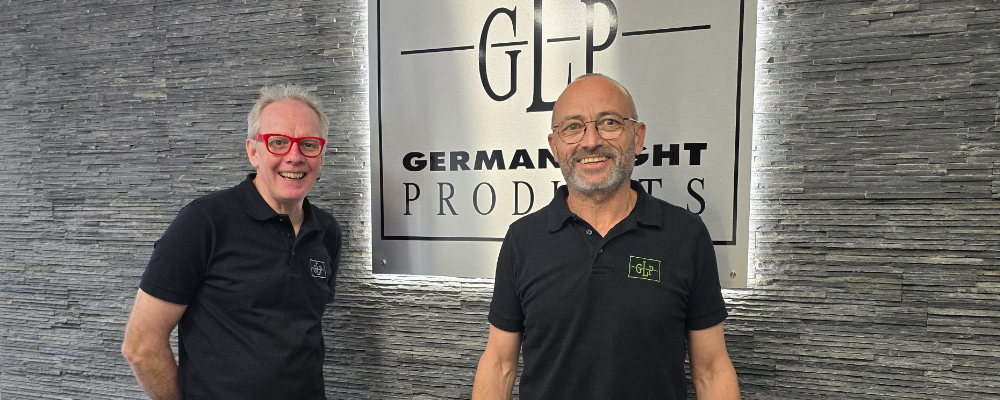
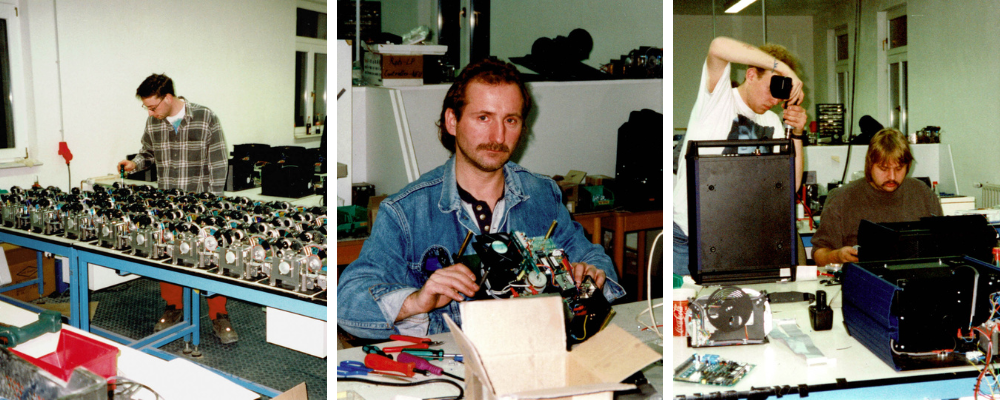
Behind that story is Udo Künzler, founder and CEO of GLP, whose relationship with light began long before he imagined that one day he would be leading an international company. He was still in school when he began helping his uncle, first a mobile DJ, later a club owner, and also a lighting fixture manufacturer. What began almost as a family adventure eventually became a lifetime dedicated to this industry.
“I entered this world through my uncle. He was already working as a DJ, then he opened his own club and had a company that manufactured lights. I helped him in my free time,” Udo recalls.
From there began a journey that, decades later, still retains something of that initial curiosity: looking at a tool, imagining that it could be done differently, and daring to try.
GLP was founded in Germany in 1994 and, from the beginning, the intention was to find something different. The company’s own history places the Patend Light at the origin of that ambition: a concept intended to combine elements of scanners, already established in the nightclub market, with the possibilities of the still-emerging moving lights. The development proved more complex than expected and, while it progressed, Udo and his uncle Hartmut Braun developed the Startec 2000, a scanner that helped sustain the young company. The Patend Light finally reached the market in 1996.
More than 30 years later, that need to find a solution that does not yet exist continues to emerge when Udo tries to define GLP’s DNA.
“We have many good ideas and we talk to people in the industry to ask them what they think, whether we are going in the right direction, and what ideas they have,” he explains. “We listen to the market, we listen to lighting designers, and we know their needs. But the key is always to find that special technology that allows us to do something no one else does.”
He does not speak about innovation as a corporate term. He speaks about it almost as an instinct.
And that difference runs through much of GLP’s history.
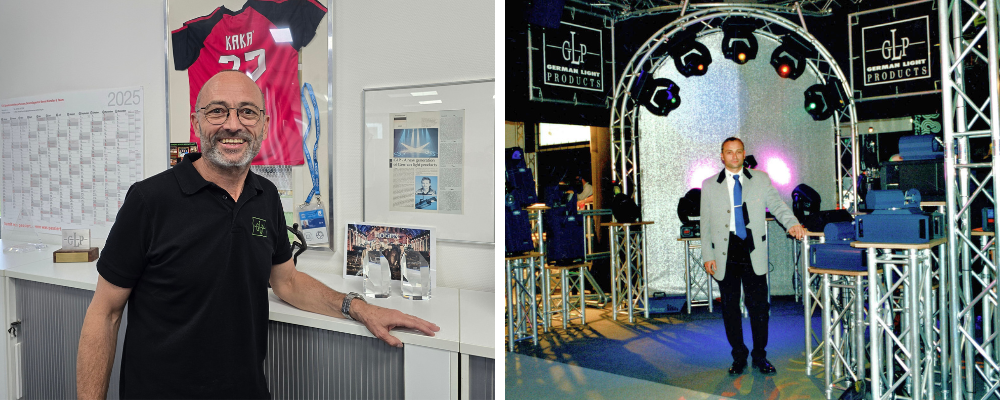
When a good idea also knows how to listen
One of the major turning points came with impression 90. Until then, GLP was already manufacturing scanners and moving heads, but Udo acknowledges that the company had not yet reached the position it was seeking within the professional segment. The arrival of that LED moving head changed the scale.
“With impression 90, we really brought one of the first professional LED moving heads to market,” he recalls.
But behind the development, something that appears repeatedly throughout GLP’s history emerges again: a conversation.
A longtime friend and customer insisted on a very specific idea: if GLP developed a new moving head, it had to be baseless. LED technology finally opened the possibility of doing so, moving the electronics into the fixture’s arms and eliminating the bulky traditional base.
It was not only a technical decision. It was also aesthetic.
“When it’s up in the rig, maybe it doesn’t matter that much,” Udo explains. “But sometimes it’s on the floor, behind people, and then it does matter.”
The concept became one of GLP’s visual signatures and continues to be part of its design language. But more interesting than the result is understanding the process behind it: the company proposes, tests, listens and, when necessary, starts again.
The X4 Bar probably offers one of the best examples. The market was asking for a new strip light, and GLP initially responded with a motorized concept capable of rotating 360 degrees. The prototype reached lighting designers, and the response was as useful as it was direct: the idea was interesting, but rotation was not really what they needed.
They wanted something else: the ability to place the fixtures side by side and create continuous lines.
“So we went back to engineering and said: we have to make it so they can be joined side by side. We changed the entire product again, and then it became a success,” Udo recalls.
That exchange reveals a great deal about how the company works. GLP does not see listening as something that happens after a product is launched. In many cases, the designer indirectly becomes part of the development process.
But there is another component: risk. “We don’t work with business cases or Excel spreadsheets to calculate what might happen with a product and what the numbers will be,” Udo acknowledges. “We simply have this feeling that it could be a very good idea, and then we do it.”
After three decades, he admits, experience helps distinguish which intuitions have a real chance of becoming something important.
GLP’s current evolution demonstrates that this philosophy remains active. The company’s portfolio combines established families such as impression X5 and JDC with more recent developments such as JDC Burst 1, Creos, Nexus, WildWash 12, X5 Dot Wash, and TWYN. The latter takes that combination logic one step further by bringing together an RGBL wash and a hybrid strobe inspired by JDC Burst 1 within a single double-sided moving head.
Technologies change. The initial question seems to remain the same: what tool can give the designer a possibility they did not have before?
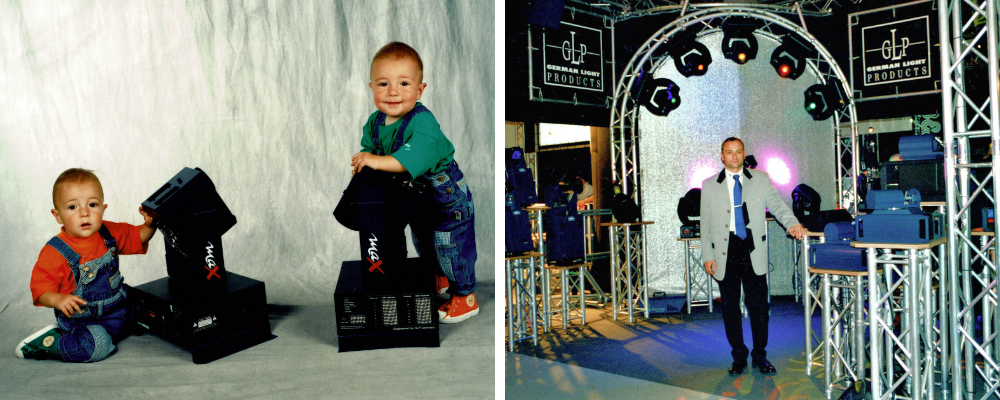
From Germany to the world, without losing closeness
GLP’s story is also that of a company that had to learn how to carry that identity beyond Germany.
Mark Ravenhill knows that process particularly well. A director of the company and responsible for years for GLP’s commercial and marketing development in the United States, his own path into the entertainment world did not begin in an office either.
“I started in amateur theater when I was at school,” he recalls. The local theater company was preparing Grease and needed young people to play the group accompanying John Travolta’s character. “From there, the road was long and winding,” he jokes. “I definitely moved quite far away from becoming a movie star. John Travolta can keep that.”
Behind the humor, a shared characteristic emerges again: both Udo and Mark entered the industry through experience, long before holding executive positions.
When GLP USA began operating in 2009, the initial challenge went much deeper than selling fixtures. They had to build trust.
“At the beginning, the challenge was getting people in North America to trust that GLP, as a brand, was going to be there, that it was going to stay, and that it would continue supporting its products,” Ravenhill explains.
Some U.S. customers had previously seen European manufacturers enter the market, discover that building a local operation required time, money, and commitment and, ultimately, return to Europe. Those who had purchased those products were then left with a difficult question: who was going to support them?
GLP had to demonstrate that its commitment was different. “You really have to be there for years. You have to commit, invest money and time,” Mark says. Trust came precisely that way: through permanence, support, and knowledge of the market. “Since then, we have gone from strength to strength.”
Today, GLP’s international structure extends far beyond its German origins, but Ravenhill believes that growth does not simply mean occupying more territories.
The speed at which those markets connect with one another has also changed. For Mark, the Internet and platforms such as YouTube or TikTok have made the world, in a sense, smaller: a production, a trend, or a new tool can cross borders almost immediately.
“Today we can share information much, much faster,” he says.
For GLP, adapting to this new scale means reaching more markets, but also learning to move within an industry where visual and technological references circulate at a completely different speed from three decades ago.
Three priorities constantly emerge in Ravenhill’s perspective: continuing to innovate, expanding global presence, and preserving service.
“We have to keep developing great ideas and products that people enjoy using. That will never stop being a priority,” he says. “And we have to continue providing fantastic customer service.”
For Mark, understanding the business of those who use the products is part of that service. A designer, a rental company, a programmer, or a production designer do not face the same problems, and GLP’s ability to remain relevant will depend, according to him, on understanding each of those perspectives.
And that responsiveness is not limited to the product.
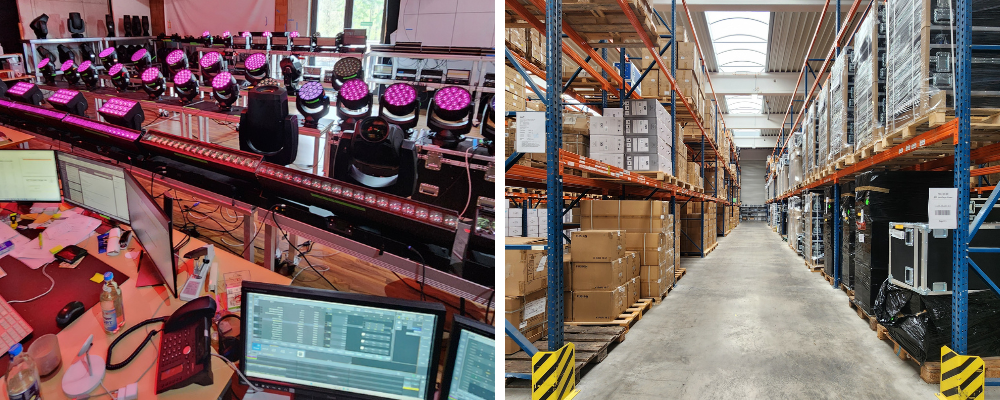
Ravenhill sees listening as a tool capable of changing even the way the company itself operates. Understanding what is happening in a market may mean increasing or reducing inventory in certain warehouses, adding more people, strengthening local structures, or launching new training programs.
In other words, the market does not only influence what GLP develops: it can also transform the way the company prepares to support it.
“Understanding exactly what the market is asking us for and responding to that is probably one of the key points in making sure we remain relevant,” he summarizes.
Listen first. “If we can understand the position of the lighting designer and the challenges they face, the position of a rental company, a production designer, a programmer, and all the people we are regularly in contact with, then we can respond to that.”
It is an idea curiously similar to the one Udo uses to explain how a fixture is born.
Perhaps that is one of the keys to GLP: product and company seem to develop using a similar logic.
The tool evolves, the designer does too
When the conversation turns toward the future, Udo avoids the temptation to present technology as the absolute protagonist.
Over twenty years, he acknowledges, the possibilities of professional lighting have changed radically. Designers today have tools that simply did not exist when GLP began. And that has made it possible to build shows of a scale and visual complexity that were difficult to imagine back then.
“We see much bigger shows than in the past,” he says. “Sometimes it can even become too much. More and more and more isn’t always good either. Sometimes less works too.”
The observation is significant coming from someone whose business is precisely to develop new tools. Because for Udo, evolution is not only inside the fixture. It is also in the person using it. “We can make the best tools, but if nobody knows how to use them, the result is not going to be good.”
Technology expands the vocabulary; the designer remains the one who builds the language. And in that evolution, hardware no longer tells the whole story.
Udo introduces software as an increasingly important extension of the physical tool. A fixture may be finished from a mechanical and electronic standpoint, but what happens afterward—how it is controlled, how its functions are accessed, and how easy it is to turn them into creative resources—can completely transform the experience of using it.
“Sometimes the product is already finished, but then the software to use it comes along, and that becomes very important,” he explains. For Udo, accumulating possibilities is not enough. They also have to be made accessible.
“You have to make the product easy to use and allow it to create a good show.” It is another way of understanding innovation. It is not enough to develop a fixture capable of doing more; true evolution appears when all that engineering can disappear behind the creativity of the person operating it.
GLP’s present reflects that pursuit. Its new generations of products move between touring, theater, broadcast, installations, and large-scale productions, while the company continues developing tools around light quality, consistency, service, and operational flexibility.
A compact development such as X5 Dot Wash brings the color technology of the X5 family into a format designed for discreet positions in theater, television, and architecture; while TWYN takes practically the opposite approach: concentrating two different visual languages within a single tool.
Different scales. The same creative question.
A global company that still wants to get closer
Within that international map, Latin America occupies a place that Ravenhill views with both interest and realism.
GLP has a presence in the region, although Mark acknowledges that it has not yet reached the scale the company would like. And he knows that developing it requires understanding something fundamental: Latin America is not a single market.
“Sometimes even the geographical size of South America is underestimated,” he says, also highlighting the differences between countries, cultures, and economic situations. “We want to move forward in that market and be relevant. And once again, everything comes back to listening to people, understanding the challenges they face regionally, and responding in the best possible way.”
The stages, however, already show part of that connection.
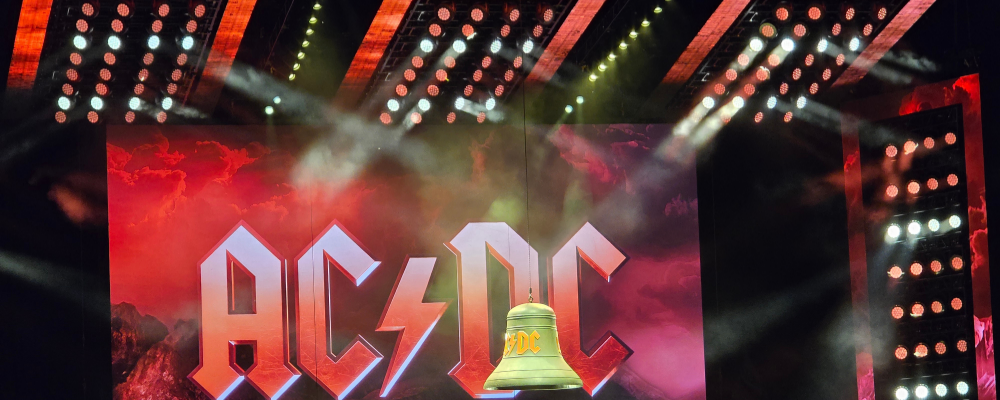
GLP’s presence in productions traveling through Latin America has been building for years and can be seen in examples involving both international artists and some of the shows currently mobilizing audiences across the region. Designers such as Cosmo Wilson have worked for years with the brand’s tools on AC/DC and Aerosmith tours, including productions that reached South America. On AC/DC’s Power Up Tour, for example, 168 impression X5 IP Maxx fixtures were integrated into a design that recovered part of the band’s historic visual language using contemporary technology.
More recently, GLP fixtures have also found a place within Bad Bunny’s visual universe, once again bringing the technology developed by the company closer to a production directly connected with Latin audiences.
But when Mark talks about the region, there is something that quickly displaces any commercial analysis: the audience.
“The passion of Latin American audiences… you can’t take that away,” he says.
From the United States, he has watched tours by Latin artists grow from no longer arriving only for a one-off show in Miami, but instead traveling through numerous cities with sold-out dates and a particularly intense relationship with their fans.
“They’re always sold out and they’re incredibly passionate and emotional about their artists. It’s amazing to see.”
And then he completely abandons the executive discourse and smiles: “The best audience in the world.”
Passion. Passion. Passion.
After talking about products, markets, designers, technology, and global expansion, the conversation ends by returning exactly to where it began.
To people.
When we ask Udo what he would say to a young person who dreams of entering this industry, for a moment the answer stops coming from the founder of an international company and seems to return to the boy who helped his uncle while he was still at school.
“It’s simply an incredible business. I can’t imagine any other job in the world that could have been better for me.” And then he talks about his twin sons.
Both studied electronics, completed their training, and are already working partly within GLP. Udo acknowledges, with evident pride, that technologically they know much more than he does.
But there is something that matters even more to him: “They love lights.” The story seems to come full circle.
Decades ago, it was an uncle who opened the door for Udo into an unknown universe. Today, he is the one watching a new generation enter that same world.
He also tells the story of a friend’s son who began technical training and working in a theater. He invited him to walk around Prolight + Sound and watched his expression as he discovered the industry from the inside.
“When you see the faces of young people walking around a trade show like that, you can see that they’re happy,” he says.
His advice contains no business formulas or grand statements about leadership. “This business is very special. You have to try it. You have to get into it.”
Mark listens and finds a single word to summarize it.
“Passion.”
Udo repeats:
“Passion.”
And for a few seconds, they are no longer talking about fixtures, sales, markets, or technology.
Passion. Passion. Passion.
Perhaps it is difficult to find a simpler definition for a company that was born from an idea, grew by often trusting intuition, and continues to search in every new tool for a different way to put possibilities into the hands of those who create with light.
Because after more than three decades, GLP can measure its growth in products, offices, markets, and stages around the world.
But its history seems to be measured in another way.
In the curiosity that got Udo started. In the trust that Mark helped build. In the designers who forced a product to change until it became better. In the ability to listen even when that means going back to engineering and starting again. In a company that understood that growing also means learning to respond differently to each market. And in the new generations that continue entering this industry and discovering that behind all that technology there is still something deeply human.
The passion for turning on a light and wondering what might happen next.
Credits
Cover Photo: LATAM STAGE
Inside Photos: GLP / LATAM STAGE
The journalistic production, research, writing, editorial approach, and editing of this content are original works by LATAM STAGE and are protected by copyright.
No part of this content may be reproduced, copied, distributed, adapted, or published, in whole or in part, in any medium or format, without the prior written authorization of LATAM STAGE.


