
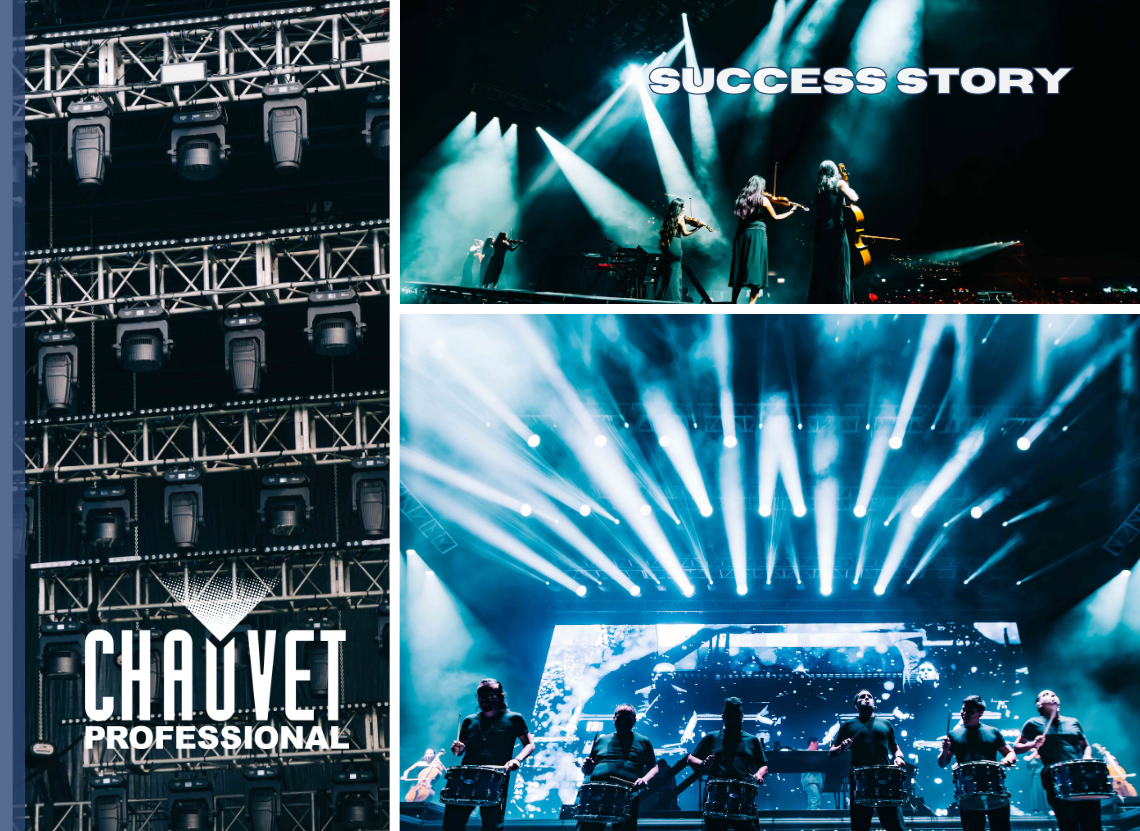
Peru – In just three months, DBLUX participated in some of the most important concerts and festivals held in Lima, consolidating together with CHAUVET Professional an operation capable of responding to international riders, simultaneous setups, and completely different designs from one another.
Without a doubt, names such as The Killers, Interpol, KYGO, Korn, Megadeth, Pablo Alborán, Los Fabulosos Cadillacs, and multiple large-scale productions marked one of the most intense periods in recent times for the entertainment industry in Peru. But behind this series of international shows, another key factor also emerges: the need to have technical operations capable of responding to increasingly demanding scales, designs, and work rhythms.
Because in today’s international touring circuit, sustaining a large-scale operation no longer depends solely on having equipment. The real difference lies in the ability to respond quickly, adapt to different visual languages, and maintain technical consistency even when schedules become extreme.
In Lima, DBLUX has been consolidating precisely that profile. During the last three months, the company participated in a series of international productions that highlighted the operational level achieved by the team led by Andrés Cuadros. Different festivals, international bands, and local productions relied on an infrastructure that had CHAUVET Professional as the technical core of the system.
Added to this list is also the work alongside renowned lighting designer Tony Zuccaro, in productions where response speed and rig versatility were key to maintaining the visual level of the shows.
“Today, the challenge is not only having power or quantity of equipment,” explains Cuadros. “What matters is having fixtures that can quickly adapt to different types of shows without losing performance or operational speed.”
And this is precisely where one of the keys to DBLUX’s growth appears: the construction of a coherent inventory, specifically designed for international touring. A single ecosystem to solve completely different shows, something that CHAUVET Professional undoubtedly provides them.
When analyzing the riders from the quarter, a very clear pattern appears: Chauvet fixtures were not used as occasional reinforcement, but rather as a structural part of practically all productions.
The fixture that appears most frequently is the Maverick Storm 1 Hybrid, present in shows such as Interpol, KYGO, The Killers, Pablo Alborán, and various large-scale festivals.
The reason is simple: real versatility.
The Storm 1 Hybrid made it possible to handle beam, spot, and wash functions within the same fixture, something fundamental when designs constantly change between artists and setup times become increasingly tighter.
“We need fixtures that can respond to different visual proposals without forcing us to rethink the entire structure of the show,” points out Cuadros. “That gives us a lot of operational flexibility.”
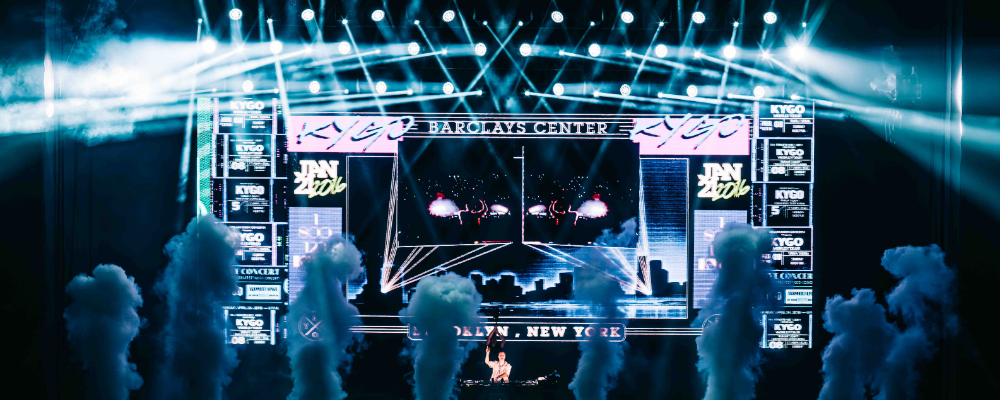
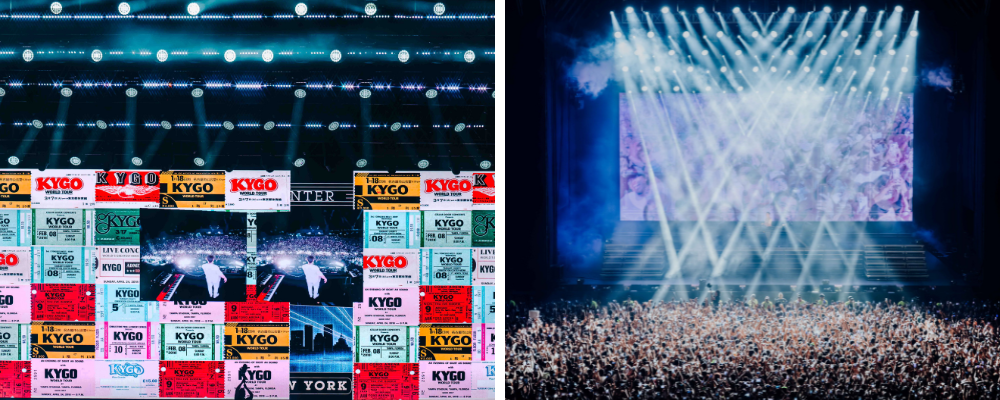
In productions such as KYGO, where visual content and immersive atmosphere play a central role, DBLUX worked with a particularly robust configuration: 46 Maverick Storm 1 Hybrid units, 44 Maverick Storm 3 BeamWash units, 16 Colorado PXL Bars, and 95 COLORband PiX-M USB fixtures, the latter belonging to the CHAUVET DJ line, specifically focused on pixel effects, mapping, and dynamic visual applications.
The combination made it possible to build visual layers, movement effects, and color structures capable of accompanying the audiovisual and immersive language of the show.
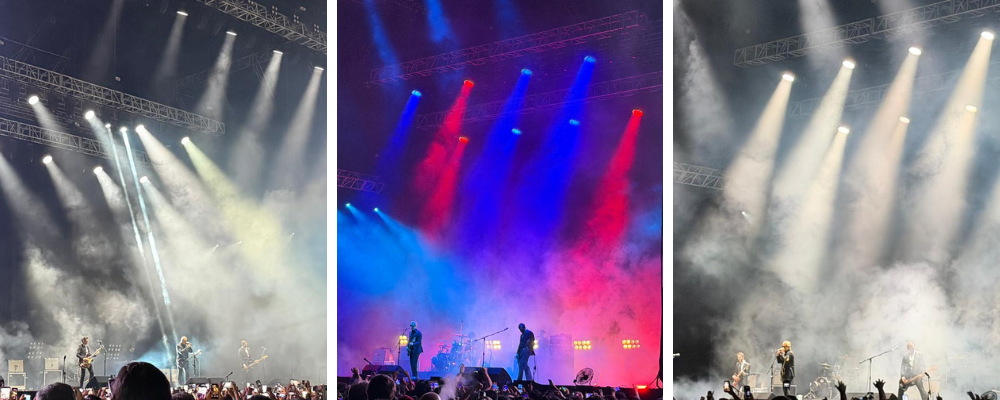
In contrast, productions such as The Killers, Interpol, or Korn required a much more aggressive approach, based on powerful beams, stage depth, and structures designed to generate visual impact in an arena rock format.
In the case of Los Fabulosos Cadillacs, the system had to adapt to a show with a different dynamic, where color, stage energy, and stage readability took on a completely different role.
“The same inventory had to solve very different shows,” explains Cuadros. “Rock, electronic, pop, salsa… and that speaks very well of the system’s capabilities.”
International touring, speed, and consistency
One of the most complex aspects of the quarter was the operational pace.
DBLUX managed consecutive productions with practically no margin between teardown and setup.
“We had weeks where we finished one show and the next day we were already setting up another completely different one,” says Cuadros. “That level of demand forces you to work with reliable and easy-to-integrate equipment.”
In this scenario, the CHAUVET Professional ecosystem became a key tool for maintaining consistency between productions.
The repeated use of fixtures such as Maverick Storm 3 BeamWash, Rogue R2 Wash, Strike M, Colorado PXL Bar, and Nexus 5×5 made it possible to build flexible rigs, quick to program, and prepared to respond to increasingly demanding international riders.
In the case of Megadeth, for example, the visual structure was supported by a combination of aggressive beams, RGB strobes, and wash layers that enhanced the energy of the show and reinforced the band’s characteristic visual language.
Meanwhile, more atmospheric and theatrical proposals such as Pablo Alborán’s required another approach, where color control, depth, and stage readability took center stage.
“Today, the Peruvian market is growing tremendously, and international productions are arriving more complete every time,” states Cuadros. “That also forces us to constantly grow.”
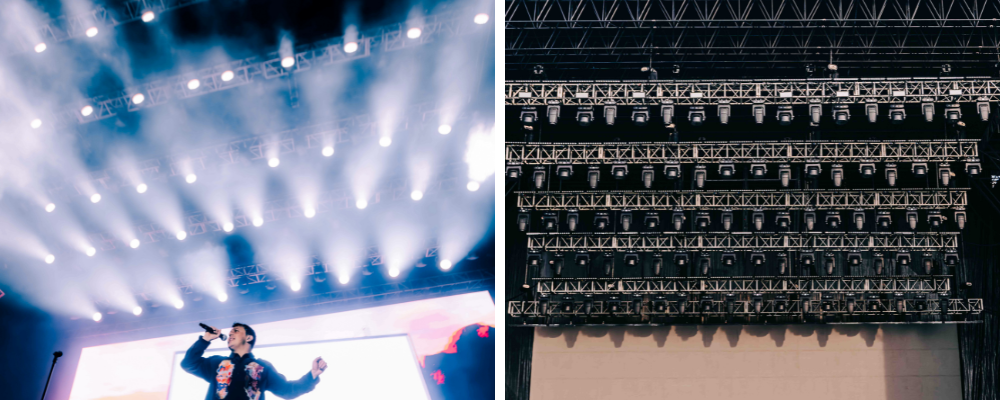
This growth is already reflected in the expansion of the company’s inventory and the continuous incorporation of new solutions.
“We continue investing because we need to maintain an operation prepared for multiple simultaneous shows. The idea is to continue expanding capacity without losing speed or consistency.”
Beyond the names themselves and the scale of the artists, this quarter made one thing clear: DBLUX no longer operates only as a local provider for international concerts. The company has been consolidating an infrastructure prepared for large-scale touring, capable of responding to different designs, different production rhythms, and different visual languages using a coherent and adaptable technical ecosystem.
And within that structure, CHAUVET Professional fixtures have become a central piece in sustaining that evolution.


