
USA – To celebrate the 150th anniversary of Poste Italiane’s Postal Savings Passbook, Hdemia Collective produced a corporate film for a custom 36 meter wide panoramic screen, which premiered at the La Nuvola Convention Center in Rome.
Filmed in the medieval Italian village of Bobbio, Director of Photography Jacopo Mutti shares practical insights from the production, shot with the Blackmagic URSA Cine 12K LF + EVF digital film camera and finished in DaVinci Resolve Studio.
With the finished film ultimately spanning an 8:1 frame, many of the usual decisions around composition, lensing and camera movement had to be considered for a canvas far wider than a conventional cinema screen.
Thinking the panoramic frame
The 36 meter screen began shaping the photography before Mutti had settled on the final camera and lens approach.
From the outset, the film was conceived for an aspect ratio of around 8:1, making full use of the screen’s width for the Poste Italiane event. Working in such an extreme panoramic format required a different approach to composition, particularly when moving between wide shots and closer coverage.
“The wider shots could feel very stretched, while in closeups the protagonist occupied a relatively small portion of the frame, so we had to think carefully about the balance between the character and the surrounding space,” explained Mutti.
Rather than moving away from the 8:1 format, the team embraced its scale and designed the photography around it. A second, less extreme 5:1 version was later reframed from the same original 12K material for the Director’s Cut and online viewing, making the composition easier to read on conventional screens while preserving the panoramic feel of the original.
Character and landscape
Working within such an extreme panoramic frame still left Mutti and the director with the question of how to keep the child protagonist visually present without losing the scale of Bobbio around him.
To achieve this balance, Mutti drew inspiration from the visual grammar of Western films, less for their iconography than for the way in which characters and landscape can carry equal narrative weight within the frame.
Rather than isolating details in the way a conventional closeup might, even the closest shots continue to include part of the surrounding landscape. Faces, hands and the symbolic coin thus remain rooted in their surroundings, rather than becoming abstract visual elements.
“This approach is close to my usual way of working, as I prefer to portray characters whilst maintaining a balanced relationship with the space around them, to create a more engaging image for the viewer.”
Anamorphic and spherical
The narrative scenes and those featuring CGI required distinct lens choices to pair with the URSA Cine 12K LF’s RGBW sensor.
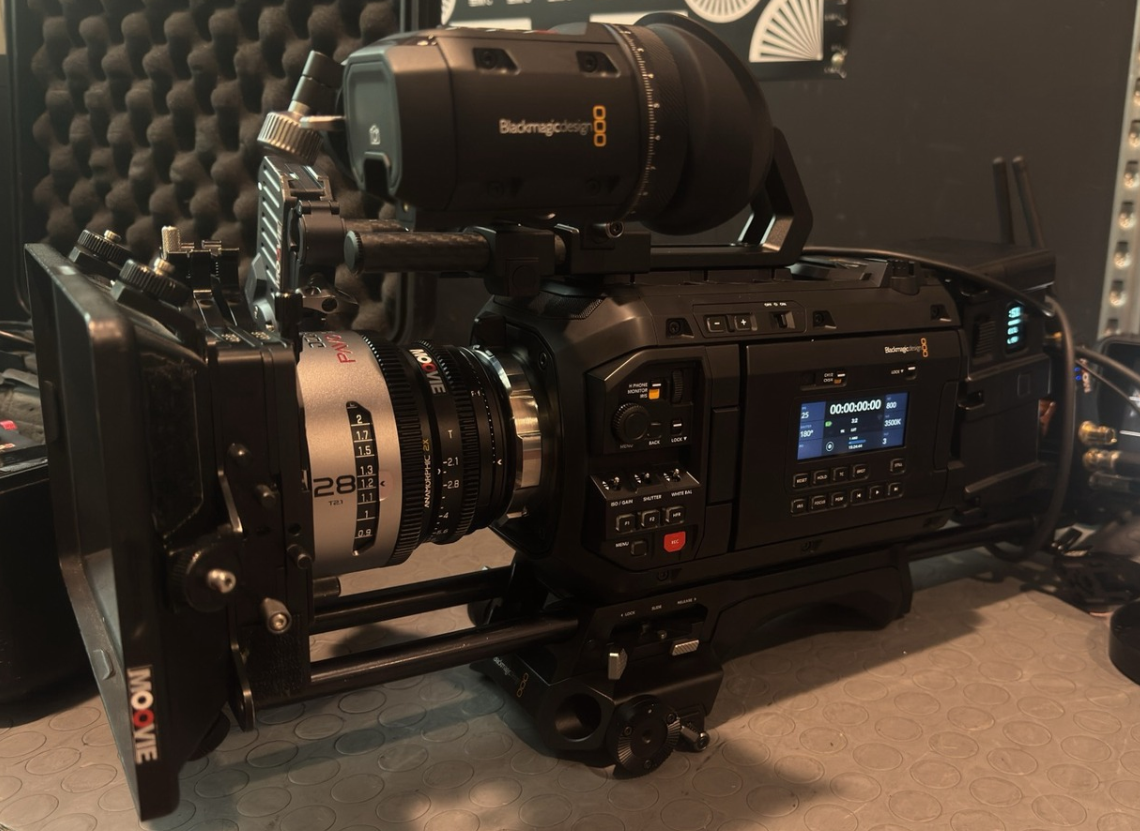
For the former, Mutti chose a DZOFilm PAVO 28 mm T2.1 2x anamorphic lens. The 28 mm focal length offered a sufficiently wide angle of view to follow the moving child without isolating him from his surroundings, keeping both the character and landscape as central elements of the composition.
“The image looked very natural, moving away from an overly digital aesthetic. The oval bokeh and the gradual softening of the edges also gave the images an intentionally softer look.”
For the CGI coin sequences, however, the priorities changed. The sequences were shot using a Laowa 12 mm T2.9 Lite Zero-D VV Cine spherical lens at f/4 to minimize distortion and maximize depth of field, producing cleaner, more controlled images for tracking, stabilization and compositing in post production.
Shooting handheld
The panoramic format also made composing handheld shots more delicate, particularly during the protagonist’s movements. While filming the child running through the fields and alleyways of Bobbio, the lightweight setup allowed the team to react to the action while maintaining the spontaneity of the movements.
“We kept the setup fairly simple, with the URSA Cine 12K LF on the Blackmagic shoulder mount, URSA Cine EVF, onboard monitor and a Teradek Bolt 6 LT for wireless video.”
“I was initially a little concerned about the size of the camera, but once it was built, the balance was excellent. We shot almost everything handheld with a documentary style approach, only adding an Easyrig for the longer tracking shots.”
Composing for the final screen
Mutti and the director didn’t want to try to fill every part of the panoramic image, so they treated the frame as three connected areas. “The main action stayed in the center, while the sides gave us more room for the landscape and wider context.”
“Movement then became a way of guiding the eye across the frame, particularly with the child and the coin moving in parallel until they finally come together on the bridge. We used gaze lines more selectively, mainly at the more emotional moments, such as the final reunion between father and son.”
Rather than relying primarily on lines of sight, the production built narrative continuity through movement. The child’s run and the coin’s path proceeded in parallel until they converged in the final sequence on the bridge at Bobbio.
Customized frame lines on the camera monitor helped the crew judge the final 8:1 composition, while two small colored tape markers acted as a reminder of the screen’s physical scale, helping them anticipate how large movements, distances and spaces would feel to the audience once projected.
Managing the 12K workflow
The unusual frame also influenced how the material was captured. Mutti shot the narrative scenes in 12K 6:5 anamorphic, while the CGI sequences were shot in 12K Open Gate, using letterboxing solely as a framing reference on set.
The production acquired in 12K at 50fps to the URSA Cine 12K LF’s built in 8TB media module, while generating H.264 proxies simultaneously in camera. Those proxies were uploaded to Frame.io at the end of each shooting day, allowing the edit to progress while the original Blackmagic RAW media remained available for final post.
Once editing was complete, the project was linked back to the original 12K Blackmagic RAW media files for color grading, visual effects and final finishing in DaVinci Resolve Studio.


