For decades, the professional entertainment industry built its business around a relatively simple idea: manufacturing, distributing and selling equipment capable of solving a specific need. A console for mixing audio. A loudspeaker for reproducing sound. A luminaire for lighting a stage. An amplifier for powering a system.
But that logic is changing.
Technological evolution, the convergence between AV and IT, the growth of networks, the development of software and the need to integrate more and more systems are changing not only the products that reach the market, but also the way those products are purchased, implemented and used.
Today, in many segments of the professional market, the customer is no longer simply looking for a piece of equipment.
They are looking for a solution.
And that difference, which may appear semantic, is transforming the entire value chain of the industry.
From the product to the result
For a long time, technical specifications were one of the main sales arguments.
More power. Greater coverage. More lumens. Greater zoom range. More channels. More processing. More features.
Technological competition continues to exist, but professional users are incorporating a different question: what problem does this technology actually solve?
A sound system is not purchased simply because it has a certain number of watts or because a loudspeaker is capable of reaching a certain sound pressure level. It is purchased to achieve coverage, intelligibility, consistency and control in a specific space.
A luminaire is not simply a light source either. It can be part of a visual solution that must respond to different types of shows, coexist with video, integrate into a control network and operate reliably throughout hundreds of hours of production.
The difference lies in moving from selling a specification to delivering a result.
Audio: when the system is more important than the loudspeaker
Professional audio is probably one of the clearest examples of this transformation.
A modern system can involve loudspeakers, subwoofers, amplification, DSP, audio networks, remote control, monitoring, software and prediction tools.
In that context, choosing a loudspeaker is no longer necessarily the beginning and the end of the decision.
The question is how that loudspeaker will perform within a system.
Technologies such as Dante, AES67 and other Audio over IP protocols have contributed to audio ceasing to be an isolated infrastructure and becoming part of networks capable of transporting, distributing, processing and controlling information.
This also changes the profile of the professional.
Knowledge of acoustics and electroacoustics remains fundamental, but it can now coexist with knowledge of networking, software, digital processing, control and system management.
The loudspeaker remains important.
But the system behind it is increasingly decisive.
Lighting: from the luminaire to the ecosystem
Professional lighting is undergoing a similar transformation.
For years, the evolution of a luminaire could be measured in relatively simple terms: power, light source, zoom, color mixing, number of effects or movement speed.
Today, these characteristics remain relevant, but a professional luminaire can also incorporate connectivity, control protocols, RDM, wireless capabilities, monitoring, sensors, advanced optical engines and tools designed to facilitate its integration into much more complex systems.
The evolution of LED technology was only one part of this transformation.
The real revolution appears when the luminaire stops being considered an independent device and begins to become part of a visual infrastructure.
A production can combine lighting, video, media servers, timecode, tracking, networking and automation.
In this scenario, the value of a luminaire does not depend exclusively on what it can do on its own, but also on how well it can integrate with everything happening around it.
Networking changed the rules
Perhaps one of the elements that best explains this transformation is the expansion of networks.
Networking is no longer an issue exclusive to the IT department.
Today it can be found at practically every level of a professional production.
Audio, lighting, video, control, intercom, monitoring and other systems can share infrastructure and communicate through networks.
This creates an important consequence: the historical boundaries between different disciplines are beginning to disappear.
An audio professional may need to understand networking concepts.
A lighting designer may work with protocols based on IP infrastructure.
An integrator may have to design an architecture capable of simultaneously transporting different types of information.
And a distributor who knows only the commercial characteristics of the product may find themselves facing a customer who needs something much more complex.
Technology is making integration knowledge increasingly valuable.
The new value of the distributor
This change is also redefining the role of the distributor.
Traditionally, the distributor operated as the link between the manufacturer and the market. It imported products, maintained inventory, developed sales channels and provided support.
That role remains fundamental.
But in a market where products are becoming increasingly complex, a new expectation is emerging: knowledge.
The distributor has the opportunity to become a true training and support center for its market.
They must not only know which product to sell, but also when to recommend it, which other products to combine it with, how to configure it and what training the user needs to take full advantage of it.
This is particularly relevant in Latin America, where the availability of technical knowledge can be as important as the physical availability of the product.
The sale of a solution begins long before the quotation.
It begins by understanding the problem.
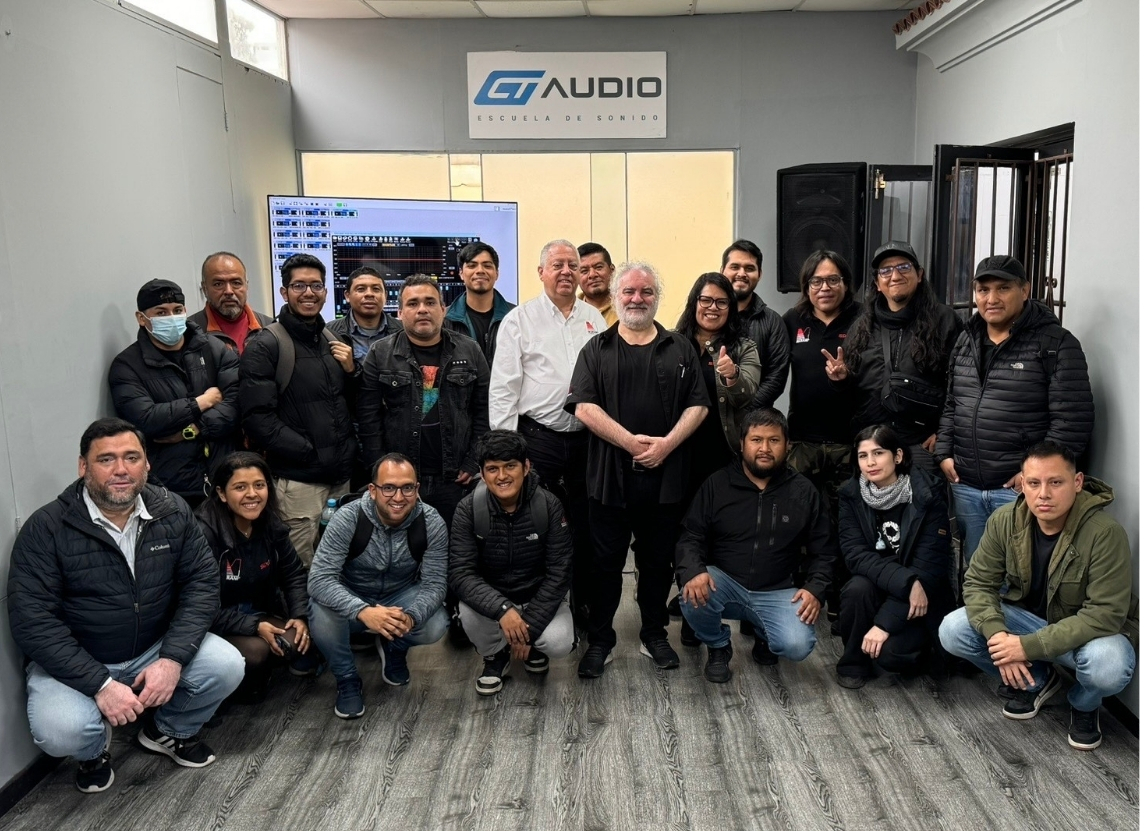
Education as part of the solution
Technological complexity is also making training an increasingly important part of the business.
A sophisticated piece of equipment can offer enormous possibilities, but those possibilities lose value if the user does not know how to use them.
That is why manufacturers and distributors are increasingly investing in academies, workshops, certifications, demonstrations and educational content.
Training is ceasing to be an additional service and becoming part of the product experience.
And this creates a particularly interesting opportunity for the professional market.
Whoever teaches people how to use a technology also helps create demand for it.
A user who understands the possibilities of a platform can discover needs they did not even know they had before.
The integrator as an architect
The evolution toward solutions is also increasing the importance of the integrator.
When a project involves audio, lighting, video, networks, control and software, the decision can no longer be based solely on which product has the best specifications.
It is necessary to determine how all the components interact.
The integrator thus becomes a kind of technological architect.
They must understand the customer’s needs, define the infrastructure, select compatible technologies, design the system, coordinate its implementation and, in many cases, accompany the user throughout the entire useful life of the project.
The value is no longer simply in installing.
It is in designing correctly.
From equipment rental to capability rental
The rental market is also undergoing a transformation.
A rental company does not compete solely by having a certain number of pieces of equipment available.
It competes through its ability to solve productions.
Two companies may have the same luminaires or similar audio systems, but offer completely different experiences depending on their technical, logistical and personnel capabilities and their knowledge.
For the customer, this means that many times the real product they are hiring is not a loudspeaker, a luminaire or a console.
It is the ability to make everything work.
The equipment is part of the offering.
The experience is the final product.
The customer has changed too
This transformation is not happening solely because manufacturers have developed new technologies.
It also responds to a change in customer expectations.
Professional users have access to more information than ever. They can compare products, consult specifications, watch demonstrations, analyze other users’ experiences and learn about new technologies before making contact with a distributor.
Therefore, a salesperson who simply lists technical features provides increasingly less value.
The customer expects advice.
They want to know which solution is appropriate for their application, what problems they may encounter, what infrastructure they need and how the system will evolve in the future.
The question is no longer: “What equipment do I need?”
And increasingly it is becoming: “What do I need to achieve?”
Hardware + Software + Service
Perhaps the most important transformation is that the modern professional product no longer necessarily ends with the hardware.
Software can define a fundamental part of the experience.
Remote control, updates, configuration tools, monitoring, applications, management platforms and associated services can be just as important as the physical device.
This even changes the way we think about the product life cycle.
Previously, a purchase could end when the equipment was installed.
Now, the relationship can continue for years through updates, support, training, maintenance, monitoring and new services.
The industry is moving from an economy based exclusively on the transaction toward a much more continuous relationship with the user.
An opportunity for Latin America
For Latin America, this scenario represents both a challenge and an opportunity.
The challenge is evident: new technologies require increasingly prepared professionals.
But the opportunity is also enormous.
Latin American markets have a mature professional industry, international manufacturers, specialized distributors, rental companies, integrators, designers, operators and a new generation of professionals familiar with digital tools.
The ability to connect this knowledge can become a competitive advantage.
In a market where access to products is increasingly global, local knowledge becomes even more important.
Knowing what product exists is relatively simple.
Knowing how to use it to solve a specific problem is much more valuable.
The future will not be a box
The evolution of the professional entertainment industry does not mean that the product has lost importance.
Quite the opposite.
Hardware innovation remains essential and will continue to define a large part of technological evolution.
But hardware is ceasing to operate in isolation.
A luminaire is part of a lighting system. A loudspeaker is part of an audio system. A console is part of a control infrastructure. A switch can become a critical component of an entire production. Software can be the element that connects all these technologies.
And behind all of this are people capable of designing, implementing, operating and maintaining the system.
Therefore, the industry’s next great competition may not be about who manufactures the most powerful, brightest or most sophisticated product.
It may be about who is capable of offering the best solution.
Because in the professional market of the future, the product may be the starting point, but the system is the true value.
And perhaps that is one of the most important transformations the industry is going through: it is no longer simply about selling equipment. It is about understanding problems, connecting technologies and building solutions.
Credits
Cover Photo: Ralph Larmann
Inside Photos: Ralph Larmann
The journalistic production, research, writing, editorial approach, and editing of this content are original works by LATAM STAGE and are protected by copyright.
No part of this content may be reproduced, copied, distributed, adapted, or published, in whole or in part, in any medium or format, without the prior written authorization of LATAM STAGE.