
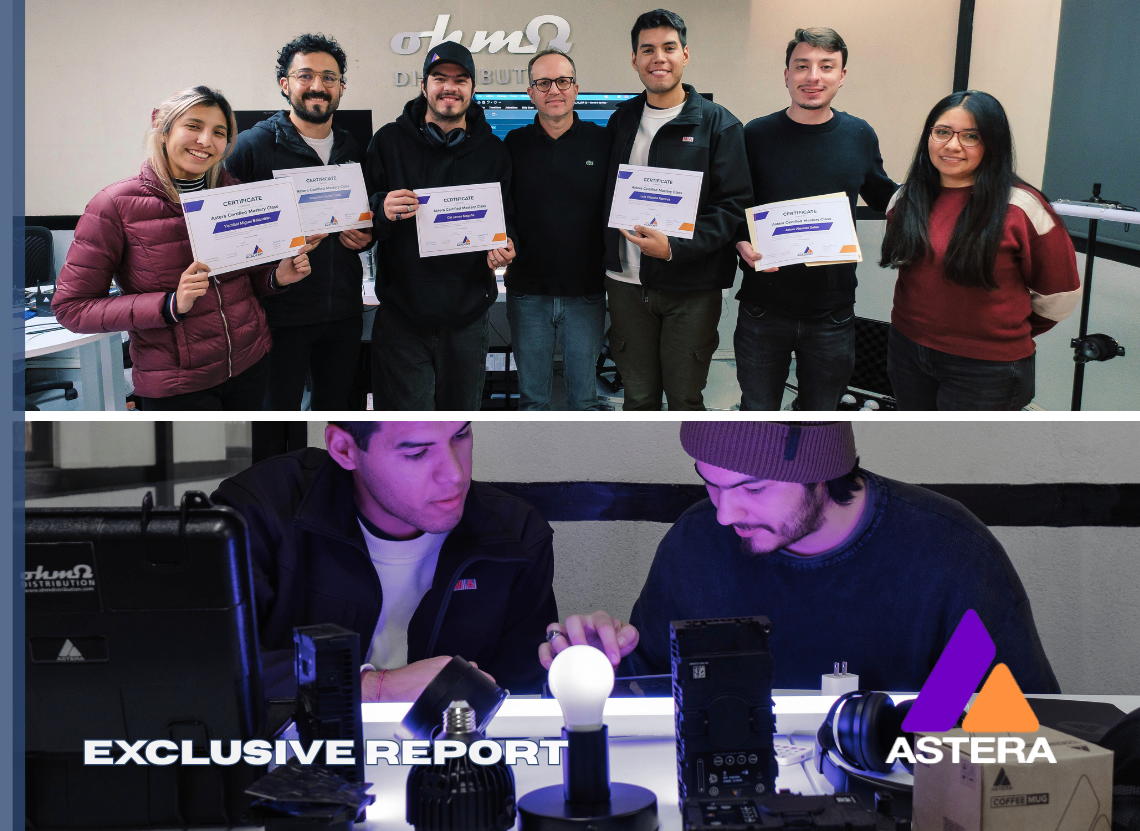
Driven by Astera and developed in Mexico together with Maceo Ruiz, the brand’s ambassador, Astera Academy proposes an intensive hands-on training experience that combines technology, workflow, and community to respond to the new demands of professional lighting.
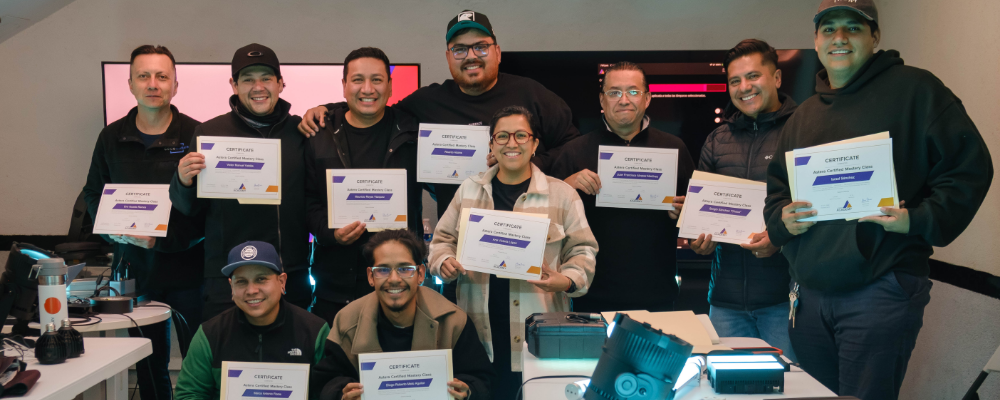
Lighting technology is evolving faster than ever. New tools, wireless ecosystems, mobile app control, CRMX integration, hybrid fixtures, and increasingly complex workflows are all part of an industry where learning is no longer optional: it is part of everyday work.
In this context, Astera is promoting an educational project in Mexico that seeks to go far beyond teaching how to operate fixtures. This is Astera Academy Mexico, an initiative developed together with OHM Distribution, the brand’s official distributor in the country, focused on hands-on training, understanding the ecosystem, and the professionalization of the industry.
Leading the project is Maceo Ruiz, brand ambassador and head of the training sessions, as well as one of the main driving forces behind the brand’s educational proposal in the country.
“Today, users want to learn things immediately. They want to quickly understand how the tool works and how they can actually apply it in their work,” explains Ruiz while describing a reality that impacts the entire industry.
But Astera Academy was not born solely as a response to this immediate need for knowledge. Its origins go back to the pandemic, when Jesper Sorensen, Product Specialist and head of Astera Academy, began developing an educational program focused on expanding access to technical training around the world. First through online content and later through an official certification system that is now replicated internationally together with local distributors.
“Jesper Sorensen created an educational project called Mastery Class, and the idea was for each country to have an ambassador capable of delivering that training. In Mexico, this happens together with OHM Distribution,” explains Ruiz.
The result is an intensive academy that seeks to condense the fundamental foundations of the Astera ecosystem into a single day. Not from a commercial perspective, but from real-world use.
And this is probably where the strongest concept of the entire proposal appears.
“What we seek is to turn users into superusers,” summarizes Ruiz.
The phrase is not accidental. It perfectly summarizes the philosophy of the academy: not simply teaching what a fixture does, but unlocking everything that is still unknown about its possibilities.
An ecosystem designed to be understood as a whole
One of the most interesting aspects of Astera Academy is that learning is not divided by individual products. The focus is the complete ecosystem.
“All Astera products technically work the same way. What changes is the form of the fixture and the type of light it generates.”
This logic allows anyone who understands the foundations of the system to quickly adapt to different tools within the brand: from a Titan Tube to a Hydrapanel, a Pluto Fresnel, or the new solutions from the Quick family.
In Mexico, one of Astera’s biggest current challenges is precisely expanding the market’s perception of the brand.
“We talk about Astera and many people still think only about tubes. Today, we are rediscovering the brand through the Fresnel world,” he says.
This is where products such as QuickPunch, QuickSpot, Leo, and Pluto come into play—fixtures that are beginning to gain ground especially within the Mexican film and audiovisual sector. “QuickPunch is currently one of the products with the best acceptance. The Quick family is responding very well,” he points out.
But beyond specific models, the academy seeks to communicate one central idea: all tools are part of the same operational language.
Learning through practice
The educational experience also breaks away from the traditional format of technical training.
There are no massive auditoriums or passive demonstrations.
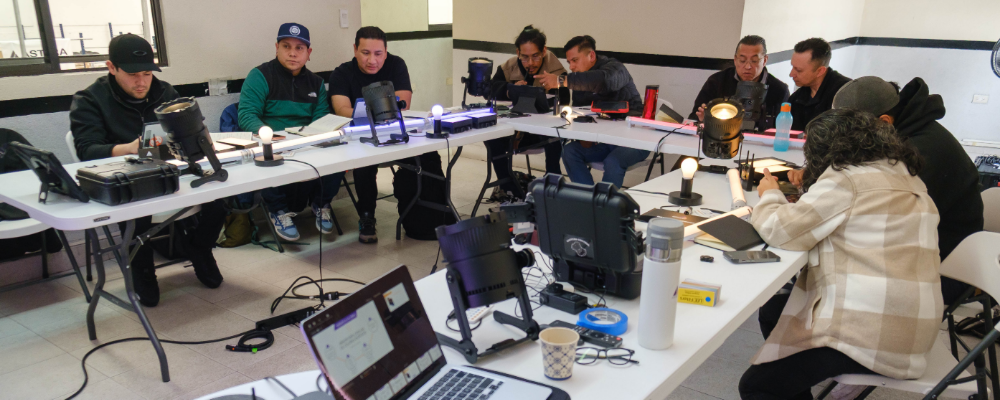
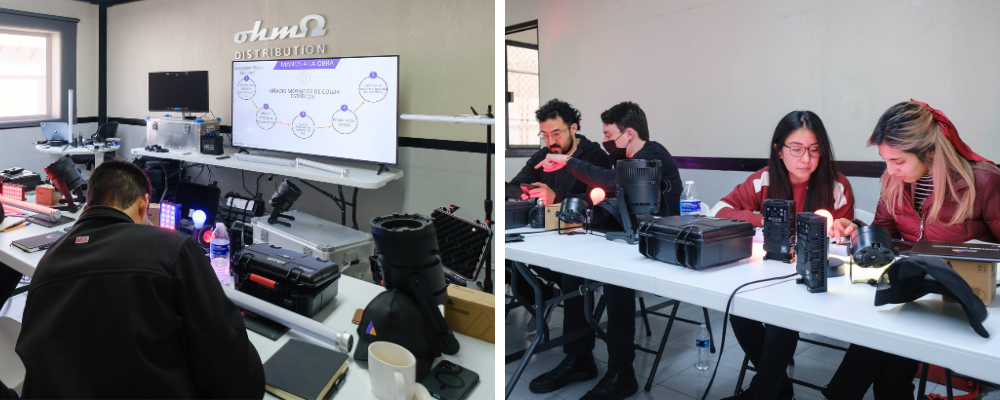
Classes operate with a maximum of ten people, organized into work groups where everyone uses exactly the same equipment.
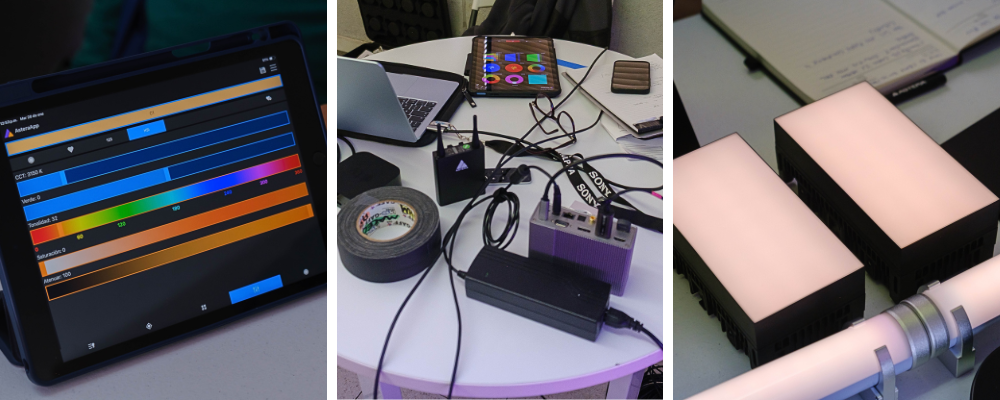
Each participant has fixtures, tablets, and full access to the ecosystem to experiment in real time as the training progresses.
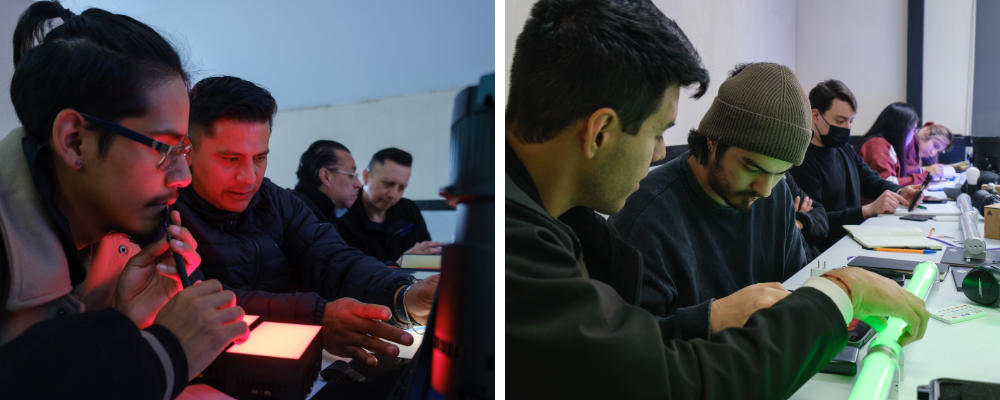
“There are moments where we completely stop the educational monologue and move into practical exercises. Everyone tests the functions directly on the fixtures.” This hands-on approach is a fundamental part of the project’s identity. The theory exists, but always connected to immediate practice.
And perhaps one of the most interesting aspects is that the academy is not aimed solely at lighting designers or advanced programmers.
The proposal also brings together account executives, rental managers, producers, and professionals who are just beginning to explore the ecosystem.
Ruiz especially recalls the case of the Mexican company Surface, which owns one of the largest and most diverse Astera inventories in the country, where even members of the commercial team actively participated in the training sessions.
“They wanted to understand how far they could push the brand’s possibilities. Not just sell it, but truly understand what it can do,” he explains.
This constant exchange also transforms the classroom into a collaborative space.
“Many times, the creatives who attend the course end up contributing ideas or explanations that even enrich the class. You always learn something new,” Ruiz acknowledges enthusiastically.
Mexico and an industry that continues to grow
The growth of Astera Academy also reflects a particular moment in the Mexican market. Film, broadcast, events, and audiovisual production are experiencing a context of expansion where technical training is beginning to occupy an increasingly important place.
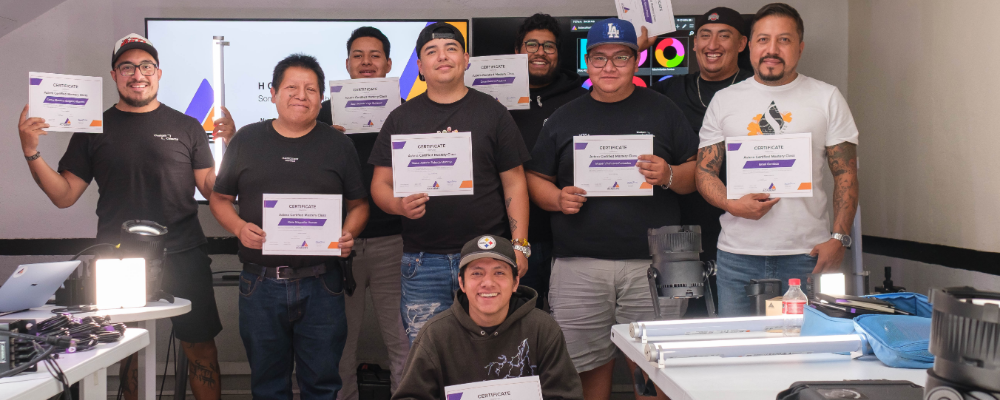
In just over three months, the academy has already trained around 60 students, consolidating a genuine interest from the industry.
Currently, the sessions take place in Mexico City, although the project is already beginning to look toward other key regions such as Guadalajara, Monterrey, and Riviera Maya, territories where audiovisual activity continues to grow steadily. But beyond physical expansion, the goal seems much more connected to building community than multiplying courses.
Because in the end, Astera Academy does not seek only to teach how to use wireless fixtures.
It seeks to train professionals capable of understanding the complete ecosystem, adapting to new technologies, and developing creative tools within an industry that is constantly changing.
And in a scenario where everything evolves faster and faster, this undoubtedly makes the difference.


