
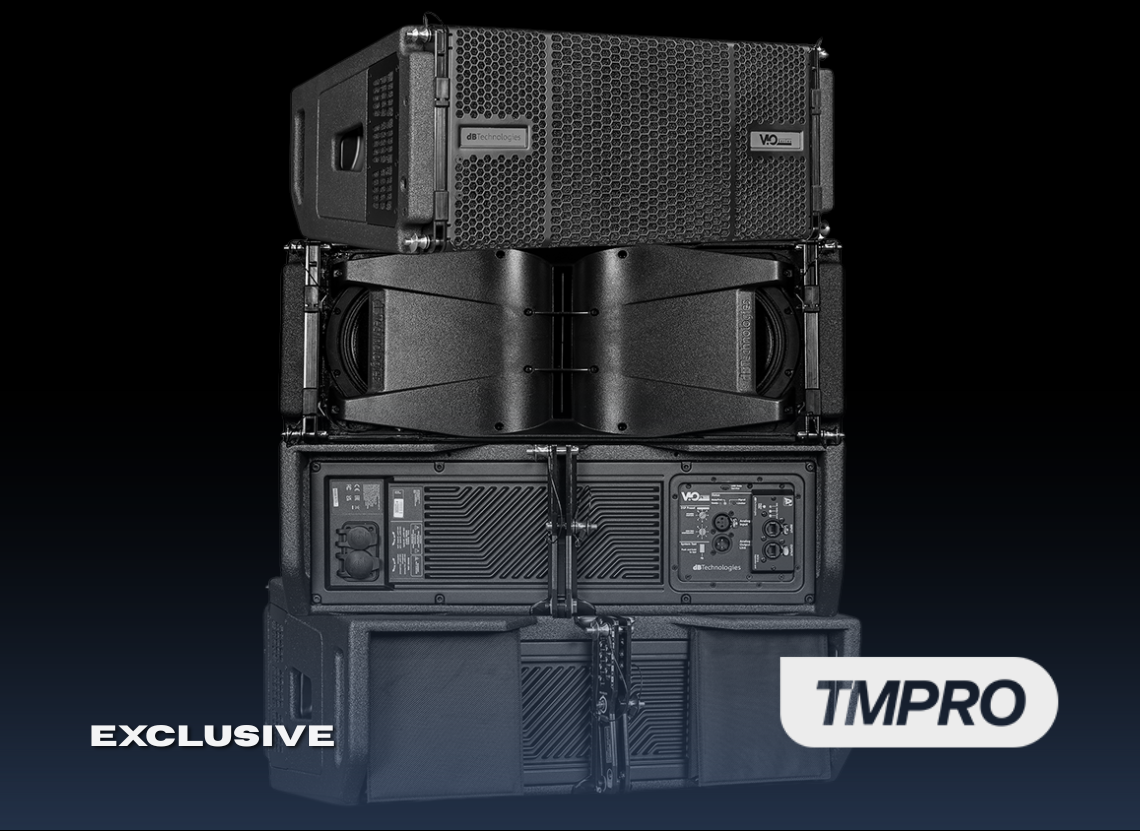
For years, the evolution of line array systems was driven by an idea that seemed unchangeable: achieving higher performance meant increasing the size, weight, and complexity of the equipment. Today, however, market demands are driving a shift in that paradigm, where operational efficiency, flexibility, and ease of deployment have become just as important as power and coverage.
With the introduction of the VIO L1608, dBTechnologies presents a different perspective on the concept of a compact system. To better understand the significance of this technological approach, LATAM STAGE spoke with the technical team at TM Pro, the brand’s official distributor in Argentina, whose experience provides valuable context for the engineering decisions behind this new member of the VIO family.
More than just reducing size
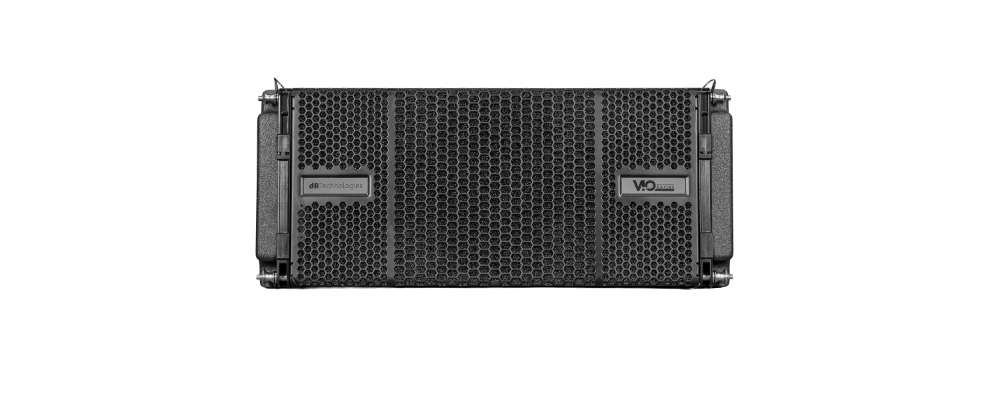
At first glance, the VIO L1608 could appear to be just another compact line array in an increasingly competitive segment. However, its development follows a different philosophy: delivering the acoustic behavior of a three-way system within an enclosure comparable in size to a traditional dual 8-inch line array.
Rather than being a simple exercise in miniaturization, this architecture addresses one of the main challenges of modern sound reinforcement: maintaining clarity, coverage, and sound pressure in applications where available space and logistics are becoming increasingly critical factors.
The decision to integrate two 8-inch low-frequency transducers alongside a coaxial mid/high-frequency assembly, powered by 1,600 W RMS amplification, reflects this pursuit of balance between size and performance. A low crossover point and an optimized waveguide further contribute to a more uniform and natural response, particularly in the midrange, one of the most critical areas for speech intelligibility and musical reproduction.
A trend shaping the industry
The launch of the VIO L1608 also reflects a broader transformation within the professional audio market. More and more productions require systems capable of adapting quickly to different venues while optimizing setup time, transportation, and configuration without compromising the quality of the final result.
In this context, performance is no longer measured solely by maximum sound pressure level or frequency response. Factors such as rigging efficiency, network integration, scalability, and compatibility with other systems within the same ecosystem have become decisive considerations for rental companies, system integrators, and audio professionals.
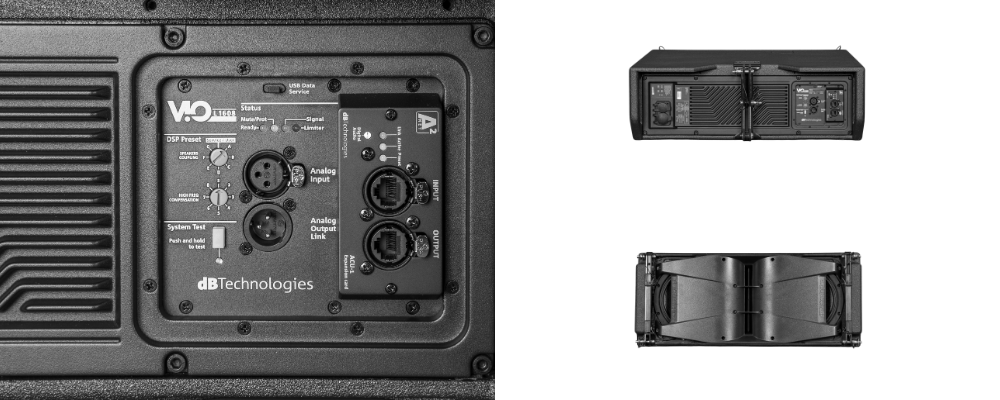
The VIO L1608 embraces this philosophy through a three-point rigging system, an approximate weight of 22 kilograms, native A2Net protocol integration, compatibility with Aurora Net, and the ability to operate seamlessly alongside other VIO family models thanks to the platform’s unified firmware.
More than a collection of technical specifications, these features reflect an increasingly evident trend: manufacturers are no longer designing loudspeakers alone, but complete solutions intended to support the entire workflow of professional productions.
In context: TM Pro’s perspective
According to TM Pro’s technical team, one of the most interesting aspects of the VIO L1608 is that it is not intended to replace larger-format systems, but rather to expand the possibilities for users who require a compact solution without sacrificing the capabilities of a professional platform.
They explain that incorporating a three-way architecture within this format delivers more consistent midrange performance and more controlled coverage, two factors that directly influence both audience perception and the work of the system engineer.
They also point out that the inclusion of the A2Net protocol as a standard feature represents an important step in the evolution of the VIO platform, as it enables digital audio transport and system control over a single infrastructure, simplifying both installation and operation.
From their perspective, another major advantage of the L1608 is its ability to integrate seamlessly with other VIO models. This compatibility allows rental companies and service providers to expand their systems progressively while maintaining a consistent operating philosophy and coherent sonic performance across different configurations.
Claudio Messina, Professional Audio Consultant at TM Pro, commented: “The VIO L1608 reflects a broader trend within the professional audio industry: the search for solutions that allow users to achieve more with fewer resources, less time, and less space, without compromising the quality of the final result.”
“That is probably the greatest contribution of this product launch. Not because it single-handedly redefines the compact line array segment, but because it demonstrates that innovation is no longer limited to developing more powerful transducers or more efficient amplifiers. It also means rethinking how a system integrates into the workflow of the professionals who use it every day.”
A new way of understanding compact performance
Beyond its technical specifications, the VIO L1608 raises a question that is currently at the center of much of the professional audio industry: how to deliver greater performance while using less space, requiring less installation time, and achieving more efficient logistics.
Innovation is no longer simply about developing more powerful amplifiers or more efficient transducers. It also involves rethinking how a system responds to the real needs of those working every day in live events, tours, installations, and audiovisual productions.
Time will ultimately determine the commercial impact of the VIO L1608. What already seems clear is that its development confirms a direction shared by much of the industry: the future of professional sound reinforcement is not simply about building larger systems, but about designing smarter, more versatile solutions that are better prepared to meet the challenges of contemporary production.
More than just another model within a product family, the VIO L1608 represents a new way of understanding the concept of compact performance.


