
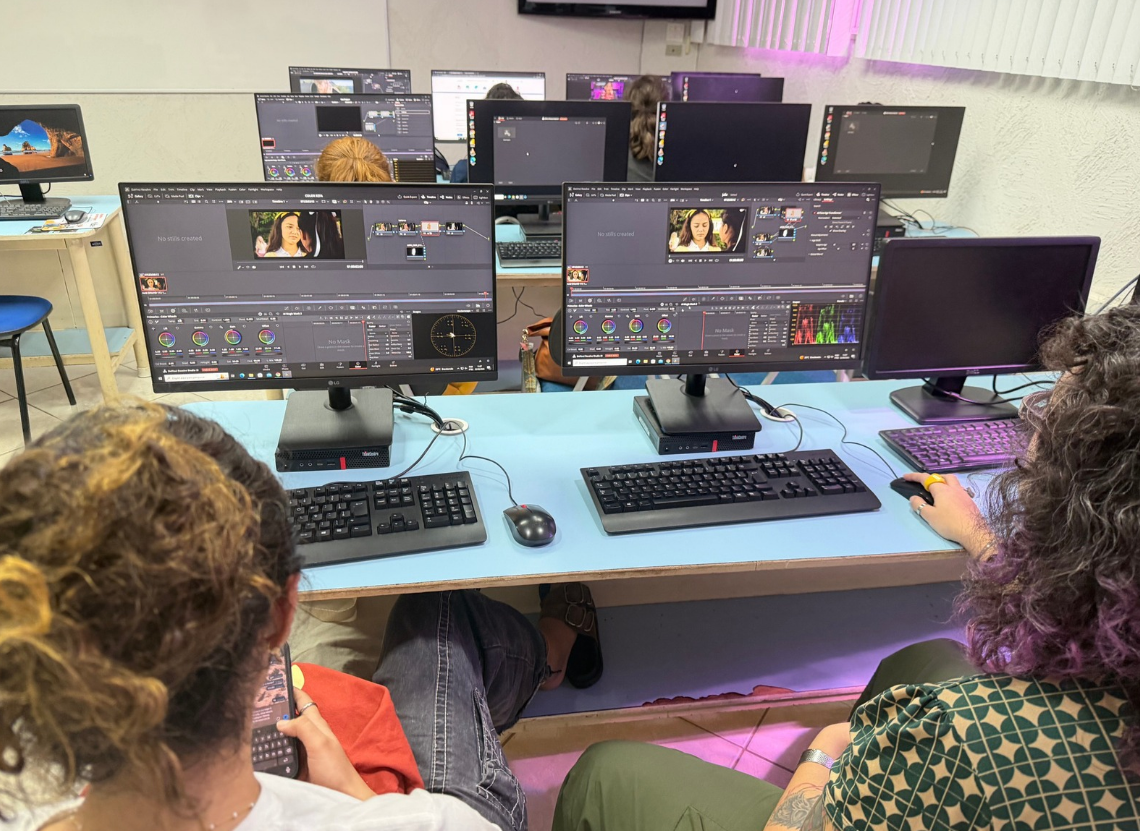
Brazil – Blackmagic Design today announced that UNIFACHA, a higher education university in Rio de Janeiro, has incorporated DaVinci Resolve Studio editing, photo editing, color grading, visual effects (VFX) and audio post production software as the primary post solution for its Cinema and Audiovisual program, further strengthening the curriculum and equipping more than 200 students per semester with industry standard tools.
Founded in 1971, Centro Universitário Hélio Alonso, also known as UNIFACHA, is committed to providing education that combines academic knowledge, professional practice, cultural development and social responsibility. In the fields of cinema, audiovisual and communication, the institution prepares students for careers in the creative industries by integrating theory, artistic experimentation, technical training and market oriented workflows.
“Since 2019, UNIFACHA has offered students the opportunity to learn DaVinci Resolve as part of its curriculum, playing a fundamental role in expanding access to post production education in the region,” said Guto Neto, professor at UNIFACHA and founder and director of Semear Filmes, a film production company based in Rio de Janeiro. “Over the years, many students have started editing, grading and finishing their own projects. Now, with DaVinci Resolve Studio fully integrated into our programs, our students have access to more advanced tools and a deeper post production workflow within the university’s lab.”
The lab supports UNIFACHA’s courses in Editing Principles and Techniques, Sound Recording and Processing Techniques, Color Grading, Motion Graphics, and Video Editing. “We have DaVinci Resolve Studio installed on 10 computers in our lab, and I also designed a program for students that is offered outside regular class hours,” added Neto. “The program introduces students to the expanded features of DaVinci Resolve Studio while deepening their understanding of professional post production workflows. Students who complete the program receive a certificate issued by the university.”
Beyond traditional courses, including a Cinema course coordinated by Neto, students get hands on experience in a multitude of projects throughout the semester with weekly classes, combining theoretical content, guided exercises and practical projects.
“Students work with real footage, short films, documentary material, exercises produced in class and projects developed throughout the semester,” he said. “In addition, as part of the Journalism program, the software is used in video editing, helping students understand audiovisual storytelling, editing structure, rhythm, sound and image organization for journalistic content.”
Neto continued, “One of the greatest benefits is that students can understand post production as an integrated creative process. DaVinci Resolve Studio allows them to move from editing to color, motion graphics, sound and finishing within the same software, which helps them see how each stage affects the final result. It gives students access to advanced tools that expand their creative and technical possibilities. This is especially important in color grading, where they can work with professional tools for image analysis, noise reduction, tracking, masks, VFX, look development and final delivery.”
“Since DaVinci Resolve is widely used across the industry, it’s important for students to become familiar with the professional platform while they are still in college. This strengthens their technical confidence and better prepares them for internships, independent projects and professional work.”
Just recently, UNIFACHA launched the Cinema and Audiovisual Center, a new academic and creative initiative designed to expand research, experimentation and production practices in the field of cinema and audiovisual creation.
“The Center has two main objectives: to broaden research and experimentation in cinematic form and language, and to strengthen students’ knowledge of contemporary production and post production technologies,” Neto explained. “DaVinci Resolve Studio once again plays an important role, especially in connecting artistic experimentation with professional workflows.”
Looking into the future, UNIFACHA plans to continue strengthening its Cinema and Audiovisual program by expanding practical learning, professional workflows and technological innovation in the classroom. DaVinci Resolve Studio will be central to this process, allowing UNIFACHA to offer students a complete and contemporary post production environment.
“Our goal is to deepen the use of the software in editing, color grading, sound, motion graphics and finishing, while also encouraging students to develop projects with a professional level of organization and technical quality,” he added. “We also intend to use DaVinci Resolve Studio in workshops, extension courses, special academic activities; helping students, professors and professionals engage with current workflows.”
Neto concluded, “For UNIFACHA, having incorporated DaVinci Resolve Studio into its curriculum is more than just access to a software: it represents a commitment to connecting education, creativity, technological innovation and the professional audiovisual market, preparing students to work with tools and processes that are shaping the future of cinema, communication and digital content production.”


