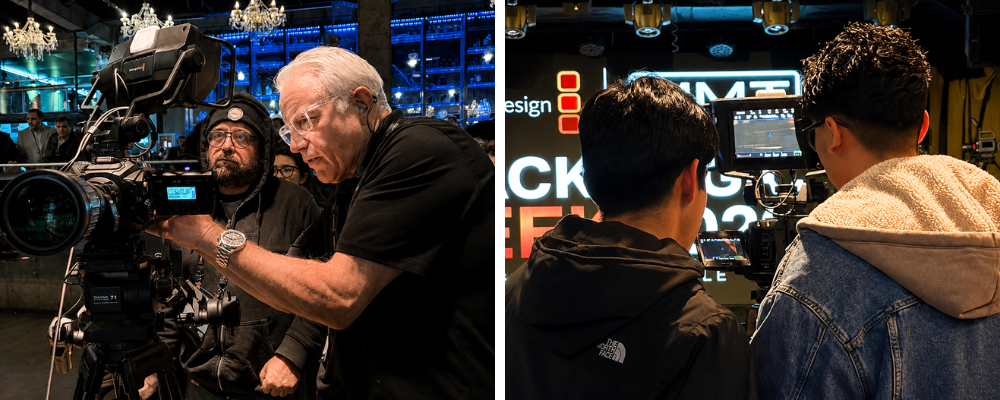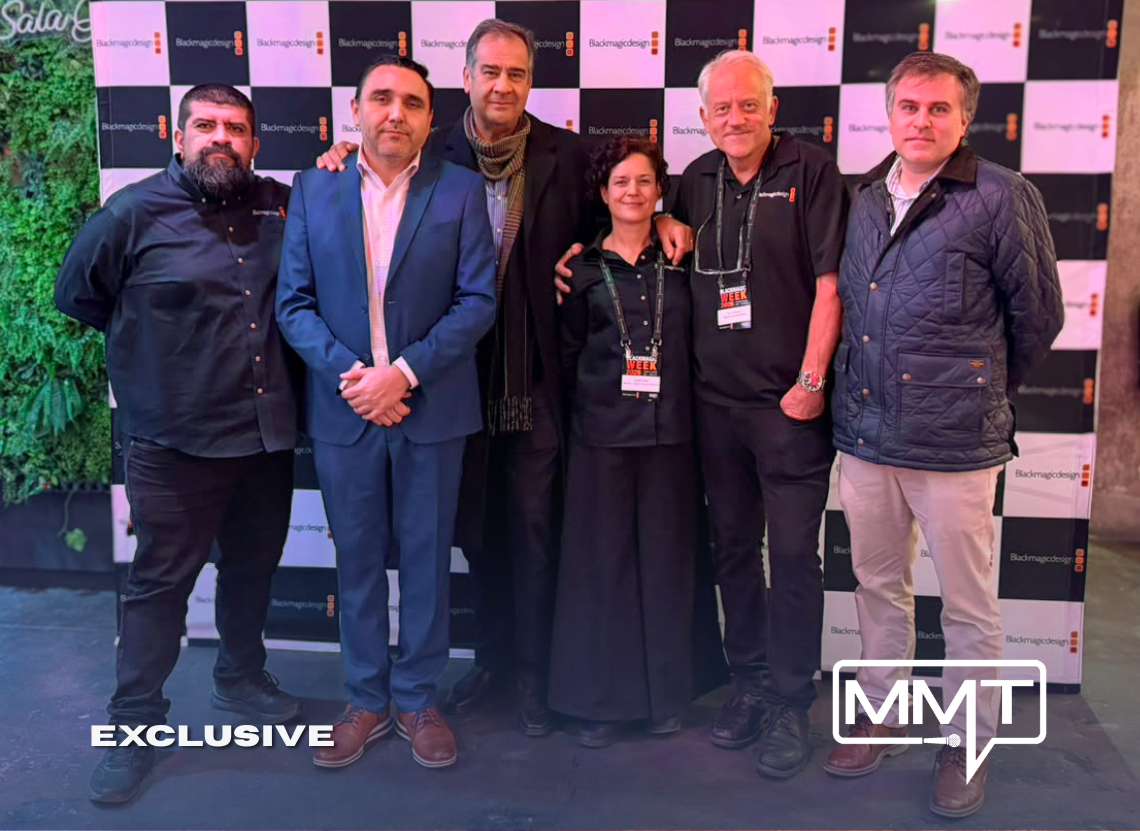
In an audiovisual market undergoing constant transformation, shared knowledge has become as valuable an asset as technology itself. Built on that premise, Blackmagic Week Chile, organized by MMT, once again brought together professionals from across the industry to discover the latest innovations from the brand, exchange experiences, and explore the direction in which audiovisual workflows are evolving. More than an event, a space to build community.
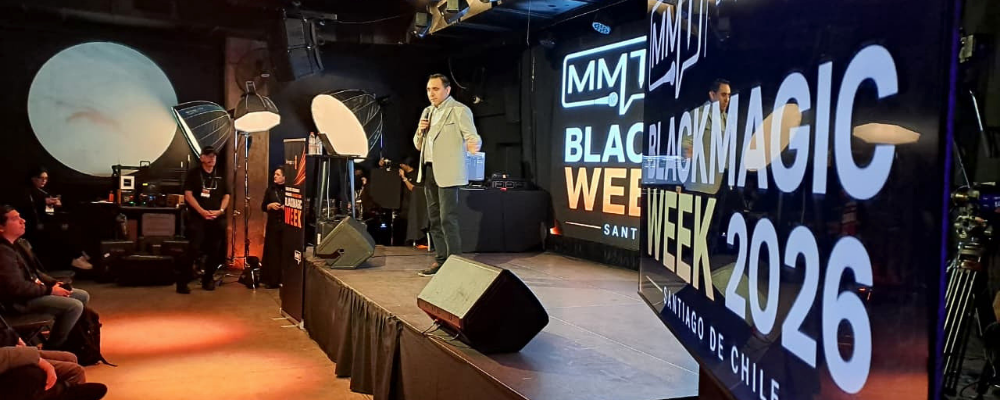
The rapid evolution of cameras, post-production, artificial intelligence, and new formats requires audiovisual professionals to stay continuously up to date. But the challenge is no longer simply about adopting new tools—it is about learning how to integrate them into today’s production workflows.
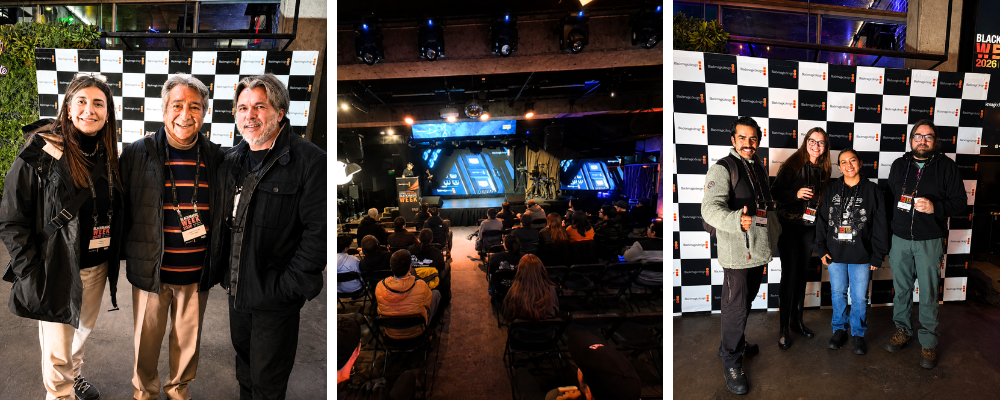
More than a technology showcase, Blackmagic Week Chile brought together professionals from different segments of the audiovisual industry to share experiences, discover new solutions, and engage directly with Blackmagic Design specialists.
For MMT, the brand’s official distributor and the organizer of the event, that close connection is precisely the initiative’s greatest value.
“It is an event that generates highly valuable conversations about the market, its changes, and the new opportunities we can develop both for the brand and for those who work with its solutions. For us, it is a fundamental opportunity to listen to the industry and strengthen Chile’s audiovisual community,” says Juan Pablo Jiménez, CEO of MMT.
Today, it is just as important to understand how other professionals work, learn about different production methodologies, discover new ways of collaborating, and gain access to experiences that are difficult to find outside gatherings like this.
“The idea was born with the purpose of continuing to position Blackmagic Design as a brand that is approachable and present,” explains Jiménez.
The evolution of the audiovisual market also demands greater adaptability from manufacturers, distributors, and professionals alike. Understanding these new dynamics is essential to meeting the needs of an industry that is constantly embracing new technologies, production profiles, and ways of working.
“I see a market in constant transformation, one that must quickly adapt to new formats, technologies, and ways of producing content. This change involves the entire ecosystem, from independent creators to major television networks,” says Juan Pablo Jiménez.
That perspective explains why MMT sees its role as extending far beyond product distribution.
Technical support, local product availability, specialized consulting, and the development of long-term relationships are all part of a strategy designed to support the growth of the Blackmagic Design ecosystem in Chile while fostering an increasingly connected professional community.
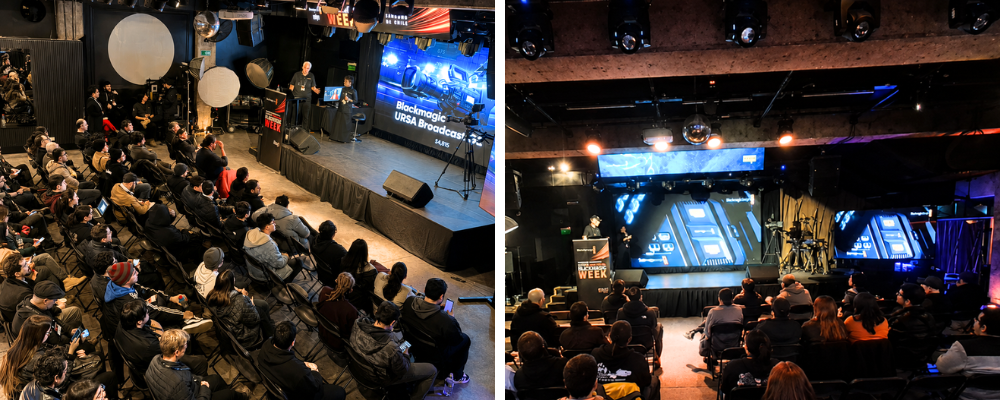
Technology serving a new way of creating
Technology was another of the event’s central themes. Through specialists from different disciplines and the participation of universities and academic institutions, Blackmagic Week demonstrated how the ecosystem integrates acquisition, post-production, and workflows into a single, unified solution.
“The majority of attendees came from the broadcast sector, but we also dedicated one day to digital cinema professionals. In addition, this year we expanded the invitation to include academic institutions and universities that are teaching with the technologies Blackmagic can offer the market,” explains Mauricio Rojo, Product Specialist at MMT.
The inclusion of the academic sector is no coincidence. As production technologies continue to evolve, so does the way new professionals prepare to enter the industry. Bringing these tools closer to students and educators helps narrow the gap between academic training and the real needs of a market that is constantly adopting new production workflows.
That approach was also reflected in the technical demonstrations. Rather than focusing exclusively on specifications, the presentations were designed to show how the different solutions interact within a complete workflow, allowing attendees to understand not only what each product does, but also how it integrates into real-world productions.
“One of the main focuses was showcasing the new cameras that Blackmagic Design has introduced to the market, especially the URSA Cine 17K and the PYXIS 12K. We also presented the URSA Cine 12K, the URSA Broadcast G2, and the Pocket line to demonstrate the wide range of solutions available for different market segments. In addition, we were joined by specialists who not only have extensive knowledge of the cameras, but also of post-production and the workflows required to process this type of material,” says Rojo.
The decision to integrate acquisition and post-production into a single experience responds to one of the audiovisual industry’s greatest challenges today.
For that reason, a significant part of the demonstrations focused on explaining how to manage increasingly large volumes of data without compromising project efficiency, taking advantage of the integration between Blackmagic Design’s acquisition hardware and its own post-production tools.
“People were especially interested in understanding how these cameras differ from other options on the market and also in learning how to work with files at such high resolutions. Managing those workflows using DaVinci Resolve generated tremendous interest among those who attended,” comments Rojo.
More than showcasing technology, the sessions brought real production experiences closer to attendees through practical, real-world workflows.
Training as a competitive advantage
Talking about new cameras, higher resolutions, or artificial intelligence-powered tools is inevitable when discussing the evolution of the audiovisual industry. However, technology alone does not guarantee better productions. Its true potential emerges when professionals are able to understand it, integrate it into their workflows, and turn it into a tool that serves creativity.
That was precisely one of the central themes of the event. In addition to the technical demonstrations, the gathering brought together specialists who shared real-world production experiences.
Among them was Cecilia Belliz, colorist, post-production supervisor, and DaVinci Resolve Master Trainer, recognized for her work training audiovisual professionals throughout Latin America and for her role as an instructor specializing in the Blackmagic Design ecosystem.
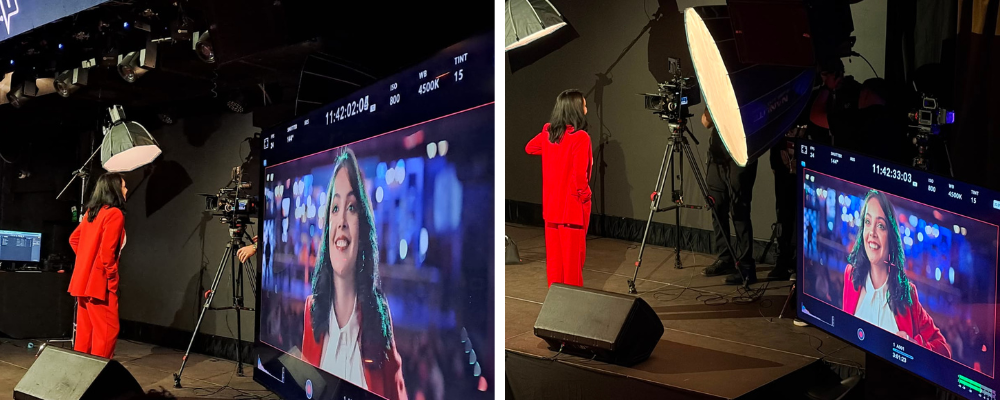
During her presentation, Belliz explored some of the latest tools incorporated into the platform, particularly those powered by artificial intelligence and designed to optimize work within the Color page.
“This time we focused primarily on some of the artificial intelligence-based tools available in the Color page. For example, the ability to blur part of a shot that is too sharp throughout, or conversely, improve critical focus. By selecting an area of the image, we can enhance that shot,” explains Belliz.
Far from presenting artificial intelligence as a replacement for human judgment, the specialist encourages professionals to see it as another tool.
“The artificial intelligence we use is analytical. Its purpose is to improve the workflow and make it more efficient, without necessarily taking work away from anyone. Instead, it gives people more time for creativity, allowing the creative process to continue evolving without wasting time on tasks that distract us from that part of the work.”
That perspective aligns with one of the audiovisual industry’s greatest challenges today. As technical possibilities continue to expand, production processes become increasingly complex. Automating certain tasks is no longer about replacing expertise, but about freeing up resources so creative teams can focus on the narrative, aesthetic, and expressive aspects that no technology can resolve on its own.
The openness of the Blackmagic ecosystem is also part of that philosophy.
“Our philosophy is that you don’t have to work exclusively with our products. We are very open to integrating with other environments. My recommendation is always to attend demonstrations like these because they allow you to discover new tools, cameras, developments, and the integrations that are constantly emerging across all products,” says Belliz.
Perhaps the most meaningful reflection of the event, however, was not about software or cameras, but about the way professionals learn a craft that is constantly changing.
For decades, much of the audiovisual industry’s knowledge circulated informally, supported by practical experience and self-learning.
“I believe these kinds of events are vitally important. For many years, the audiovisual industry lacked formal academic training, and many of us come from a self-taught background. What these gatherings do is strengthen that community of self-taught professionals by bringing together people with tremendous experience. Many attendees tell me that, otherwise, they would never have had the opportunity to see how a cinematographer works or ask questions that would be very difficult to answer in any other context,” Belliz concludes.
That idea ultimately became the common thread running throughout the entire event: in an industry where technology evolves constantly, shared knowledge remains the most valuable resource for keeping pace with that transformation.