
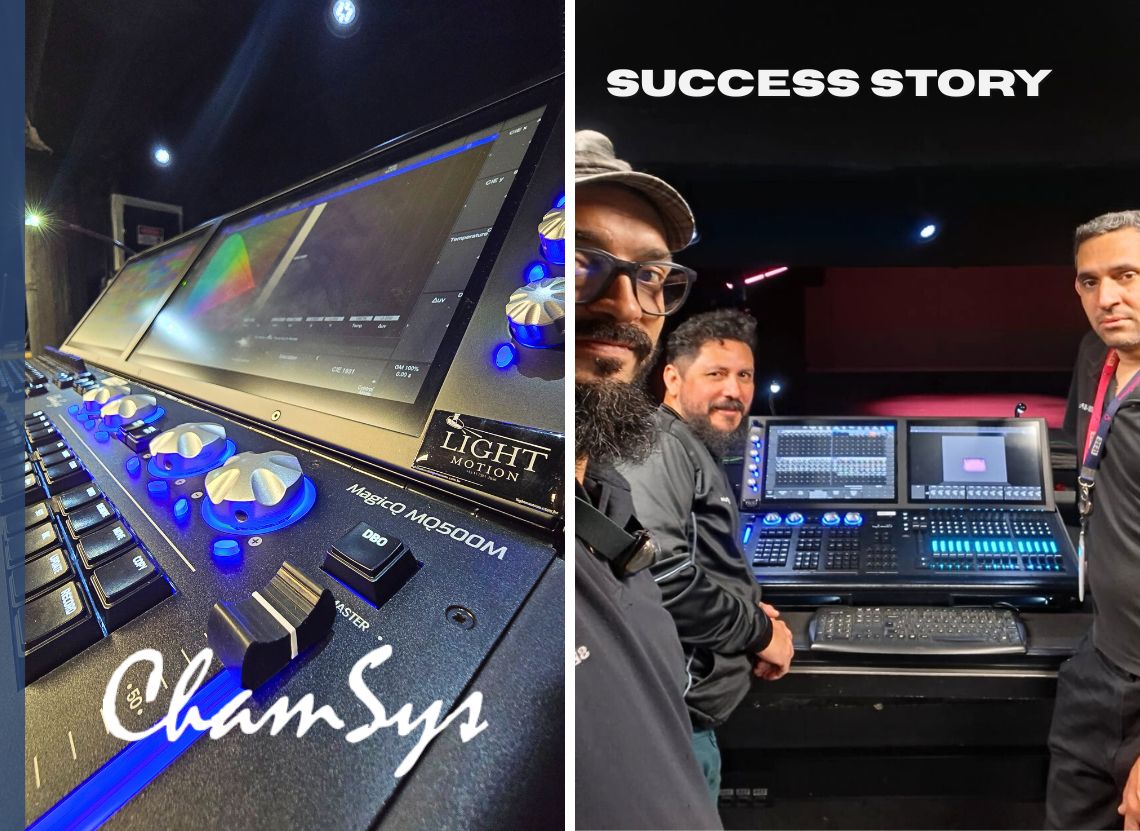
Teatro do SESI Paulista is one of the most active cultural venues in São Paulo. With a diverse and demanding programming, its technical team is always looking to stay ahead. The incorporation of the ChamSys MQ500M console marked a turning point in lighting operation and design, and André Salvador, the theater’s Technical Manager, was a key figure in this transformation.
Located on the iconic Avenida Paulista and part of the FIESP Cultural Center, Teatro do SESI Paulista is one of the most emblematic and active performing arts spaces in São Paulo and Brazil. With over seven decades of history, a free and multidisciplinary program, and a technical infrastructure that meets international standards, the theater has become a cultural reference and a hub for high-level artistic and technological productions.
From the Stage to the Console: André Salvador’s Journey at SESI Paulista
André Salvador’s story with stage lighting didn’t begin among consoles and fixtures, but rather on stage. “I have a degree in Performing Arts from UNICAMP and began my artistic journey as an actor and researcher,” he says. However, his path took a decisive turn in the 1990s, when he discovered that light could be much more than a technical tool. “I understood the importance of light as a stage language. From that point on, I dove deeper into technical and practical studies, coordinating workshops and implementing lighting labs at NGOs, where I also organized conferences focused on art and education.”
That intersection of art, pedagogy, and technology shaped a unique profile. Over time, André became a technical lead for various cultural spaces, specializing in the implementation of lighting and audiovisual systems. Since 2018, he has been part of the FIESP Cultural Center, where his role has evolved: “I’ve developed lighting projects for theater, dance, music, and exhibitions at Teatro SESI Paulista, applying contemporary technologies such as LED fixtures, moving lights, digital programming systems, and networks with advanced protocols like ArtNet, sACN, and RDM.” Today, his perspective goes far beyond operation: “I took on the role of Cultural Activities Analyst and now oversee production processes, technical evaluations for equipment acquisitions, and provide support to artistic and technical teams, ensuring that infrastructure and resources align with institutional guidelines and the needs of each production.”
A Technical Team Committed to Excellence
Since 2018, André Salvador has been part of the FIESP Cultural Center team, where he started as a lighting designer and currently serves as a Cultural Activities Analyst. His role has grown over time, assuming greater responsibility both technically and strategically. “I began working in cultural management, helping define technological solutions for stage lighting, sound, scenography, and new cultural spaces, ensuring that all resources align with institutional goals and the needs of each production,” he explains.
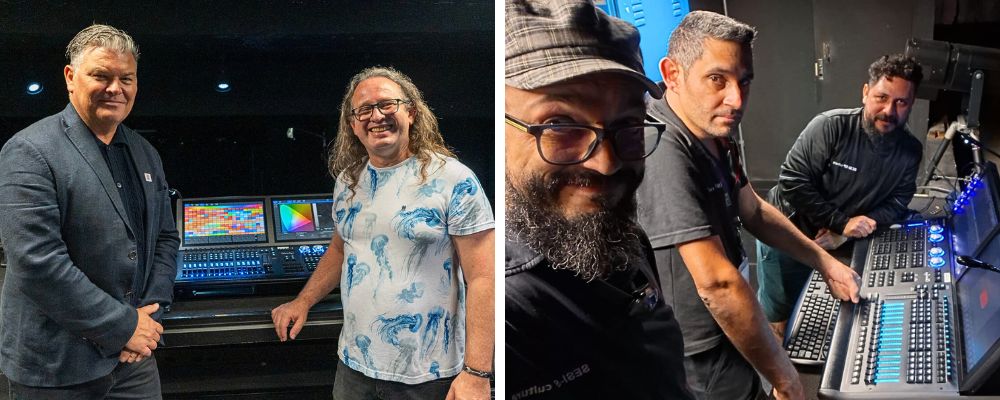
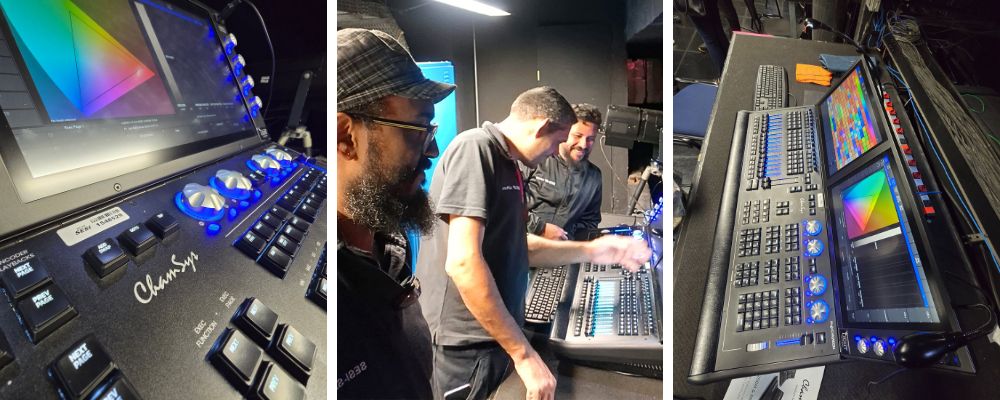
The lighting department at Teatro SESI Paulista relies on an experienced and highly specialized technical team. “We work collaboratively to ensure technical excellence in every production,” says André. The team includes Márcio Madi, Technical Supervisor of the Cultural Center, responsible for overall planning, infrastructure management, and coordination with artistic productions; and lighting technicians Rubens Marcel Gonçalves Torres Masson, Ronie de Araujo Ferreira, and Romario Muniz dos Santos, who handle setup, programming, maintenance, and support at each event. “Our team works in line with the guidelines of the FIESP Cultural Center, ensuring quality, safety, and innovation in lighting projects at one of Brazil’s most important cultural hubs,” Salvador emphasizes.
A History of Cultural Commitment and Technical Excellence
Teatro SESI Paulista is much more than a performing arts venue: it is a symbol of democratic access to culture in São Paulo and across Brazil. Its history began in 1948 with the SESI Workers’ Theater, an initiative that promoted cultural activities among industrial workers. Over time, the project evolved into the SESI Popular Theater in 1963, inspired by the French model of the Théâtre National Populaire. Since then, its path has been marked by bold, inclusive, and high-quality programming. “The first show of that phase was Ciudad Asesinada, by Antônio Callado, directed by Osmar Rodrigues Cruz,” recalls André Salvador.
A major structural milestone came in 1977, when the theater inaugurated its permanent home in the emblematic FIESP building on Avenida Paulista, with a performance that drew over 300,000 spectators. In 2004, a comprehensive renovation equipped the theater with cutting-edge infrastructure, positioning it as one of the most modern venues in the country. Since then, it has hosted productions directed by icons such as Miguel Falabella, Jô Soares, and Hector Babenco, and shows like Las Cangaceiras or Bossa Nova Cabaret Bar, reaffirming its ability to combine tradition with innovation.
“All performances are free, and the theater welcomes over one million visitors per year,” notes André, who highlights the theater’s ongoing commitment to audience development. Beyond its theater programming, the venue—part of the FIESP Cultural Center—also offers dance, music, exhibitions, workshops, and educational activities.
What truly sets Teatro SESI Paulista apart, according to its team, is the combination of artistic excellence with international technical standards. “We have a proscenium stage, advanced lighting and digital sound systems, and versatile and safe stage machinery,” says Salvador. The infrastructure allows the venue to handle complex productions with technical precision and a carefully curated visual and sound experience. “The acoustics are designed to ensure clarity, and the lighting systems allow for sophisticated and dynamic atmospheres,” he adds. Technology, curatorial vision, and free public access come together in one of Brazil’s most influential cultural spaces.
ChamSys MQ500M: Versatility, Power, and Precision on Stage
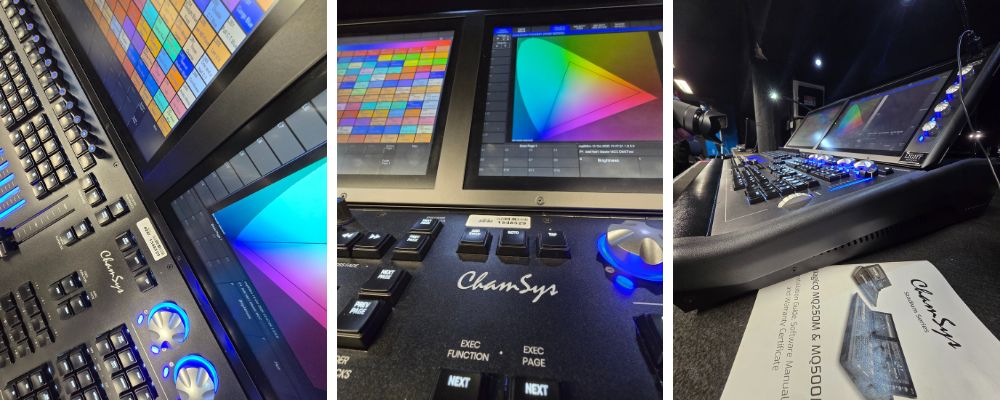
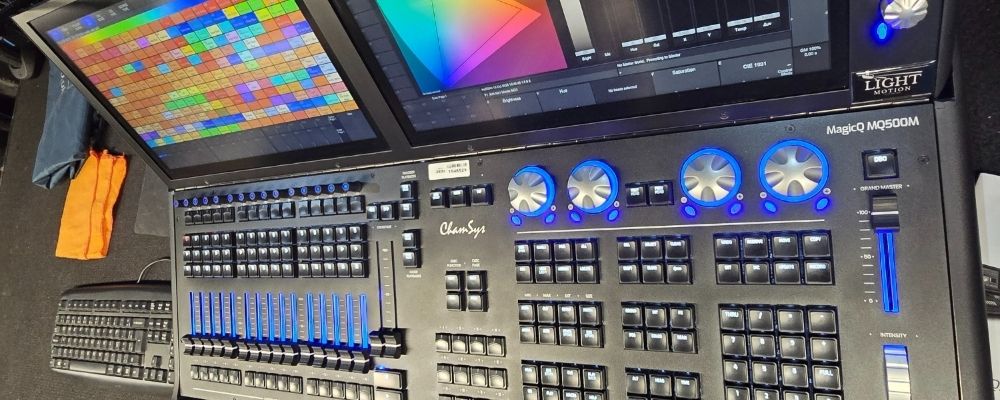
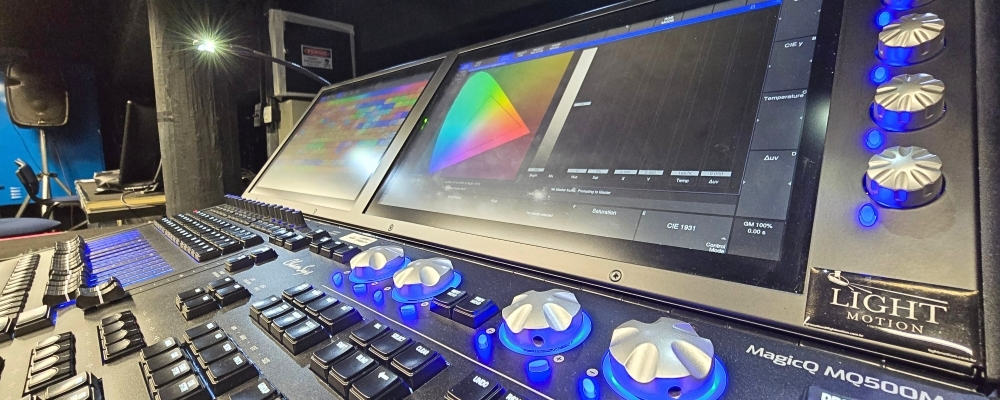
One of the most important technical decisions made by Teatro SESI Paulista was the acquisition of the ChamSys MagicQ MQ500M Stadium console, a tool that André Salvador considers essential for meeting the operational challenges of the venue. His testimony reveals not only a detailed technical evaluation but also firsthand experience using the console in a high-demand environment.
“The decision stemmed from the need to elevate the theater’s technical standard to accommodate increasingly complex and demanding productions,” says Salvador, Cultural Activities Analyst and technical reference at the venue. The MQ500M, he explains, was chosen for “offering advanced lighting control features, compatibility with modern protocols like ArtNet and sACN, and the ability to manage thousands of DMX channels with stability and precision.”
From the outset, the team noticed a paradigm shift. “The first impression was one of robustness and sophistication,” says André. Integration with the existing system was smooth and frictionless. “Thanks to compatibility with DMX networks and universal protocols,” the process was direct and effective. Operationally, the console delivered “faster response times and greater flexibility for creating complex lighting environments, while maintaining full control and safety.”
“This console has far greater capacity than any we’ve had before,” André emphasizes. “We now have 256 universes available, which significantly expands our possibilities for large-scale and complex projects.” This capability is complemented by a modern and functional interface: “The workflow logic is intuitive yet flexible. You can program anything from a simple scene to highly complex effects using tools like MagicVis, MagicHD, and Timeline. That’s something that sets it apart from other consoles.”
One of the most notable features is the number and layout of screens. The MQ500M includes two high-definition internal touchscreens and can connect up to five external monitors. “That’s a big help during operation. I can have different views on each screen—one for programming, another for effects, another for macros… That way I don’t waste time switching windows. It’s a huge advantage for our theater work, where speed is everything,” he says.
The ergonomic design is another concrete benefit. The console is equipped with 30 motorized faders arranged in three banks of 10, with backlit and assignable buttons. “I can create several fader layouts for different shows and recall them easily. And the fact that they’re motorized ensures no errors when loading a show,” André explains.
In terms of connectivity, the MQ500M is a robust station. “It has multiple network outputs, ArtNet, sACN, and DMX, as well as MIDI and GPI connections. That allows us to easily integrate it with other systems in the theater, like video servers, control systems, and automation.”
Among the most highlighted advantages, the technical team also lists a series of features that transformed their workflow: “Fast and reliable processing, reducing cue load and execution times; multitouch screens that speed up viewing and editing; integration with 3D visualizers to optimize scene preprogramming; and compatibility with modern protocols that ensure seamless integration with media systems and additional consoles.”
Regarding the daily operational impact, André says: “The MQ500M by ChamSys has brought much greater agility in creating cues and effects, significantly reducing programming time.” The ability to work with “dynamic palettes, intelligent groups, and preconfigured effects” frees operators from repetitive tasks, allowing them to focus on creativity.
This power translates into direct benefits for productions: “Large musicals, shows with digital sets, LED panel shows, and corporate events with multimedia synchronization benefit the most.” The console has become the ideal solution for visually and technically demanding productions.
Additionally, the operating system and hardware stability are key factors. “We’ve worked with daily shows for months without a single crash. And that, for us, is essential,” admits André. He also values ChamSys’ commitment to backward compatibility and constant updates: “The updates don’t break previous shows, and each version brings real improvements to the workflow.”
Finally, external feedback reinforces this choice. “Professionals highlight the intuitive interface, hardware power, and flexibility to create sophisticated effects. Many say the MQ500M places the theater on a technical level comparable to major international venues,” concludes André. And he sums it up: “The MQ500M is not just a console with great capacity. It’s a tool that lets us work with precision, speed, and reliability. In a theater like ours, where everything has to go perfectly, that makes all the difference.”
A Strong Partnership with a Future Vision
For Teatro SESI Paulista, implementing the ChamSys MQ500M was far more than just a purchase: it was the result of a strategic partnership with Light Motion, the official distributor of the brand in Brazil. “From the very first contact, the Light Motion team provided fast and specialized support, ensuring safety throughout every stage of the acquisition,” says André Salvador. The partnership included not only the purchase of the console, but also comprehensive support. “Technical support is quick and efficient, both for answering questions and for preventive maintenance. In addition, Light Motion provided personalized training, allowing us to make full use of the MQ500M’s advanced features.”
In specific cases, there was even direct communication with ChamSys’ international team, as André adds: “We had indirect contact through Light Motion, which acts as a liaison with the global team. In particular situations, such as firmware updates or questions about advanced features, we received quick responses and precise solutions thanks to this smooth coordination between local and international support.”
A Solid Present, a Connected Future
When asked to sum up his experience with the console, André doesn’t hesitate: “What stands out most is the combination of power, flexibility, and innovation. The MQ500M offers control of up to 256 DMX universes, Timeline Playback, Pixel Mapping, compatibility with modern protocols… and all of that enables perfect synchronization between lighting, video, and special effects.” For a theater like SESI Paulista, with intense and diverse programming, these tools are not a luxury—they are a necessity. “The console ensures fast programming and total stability during live shows,” he emphasizes.
Looking ahead, André envisions a clear path for stage lighting in Brazil: “We are moving toward greater integration between technology and art. ChamSys will play a leading role in that process because it offers tools that make it possible to create immersive and interactive experiences aligned with global trends.” Automation, remote network control, 3D visualization, and multimedia synchronization are already part of the SESI Paulista present. And thanks to partnerships like the one with Light Motion, they are also part of the future of many Brazilian theaters looking to take a leap in quality. “ChamSys, with its philosophy of innovation and continuous support, plays a strategic role in making that happen,” André concludes.


