
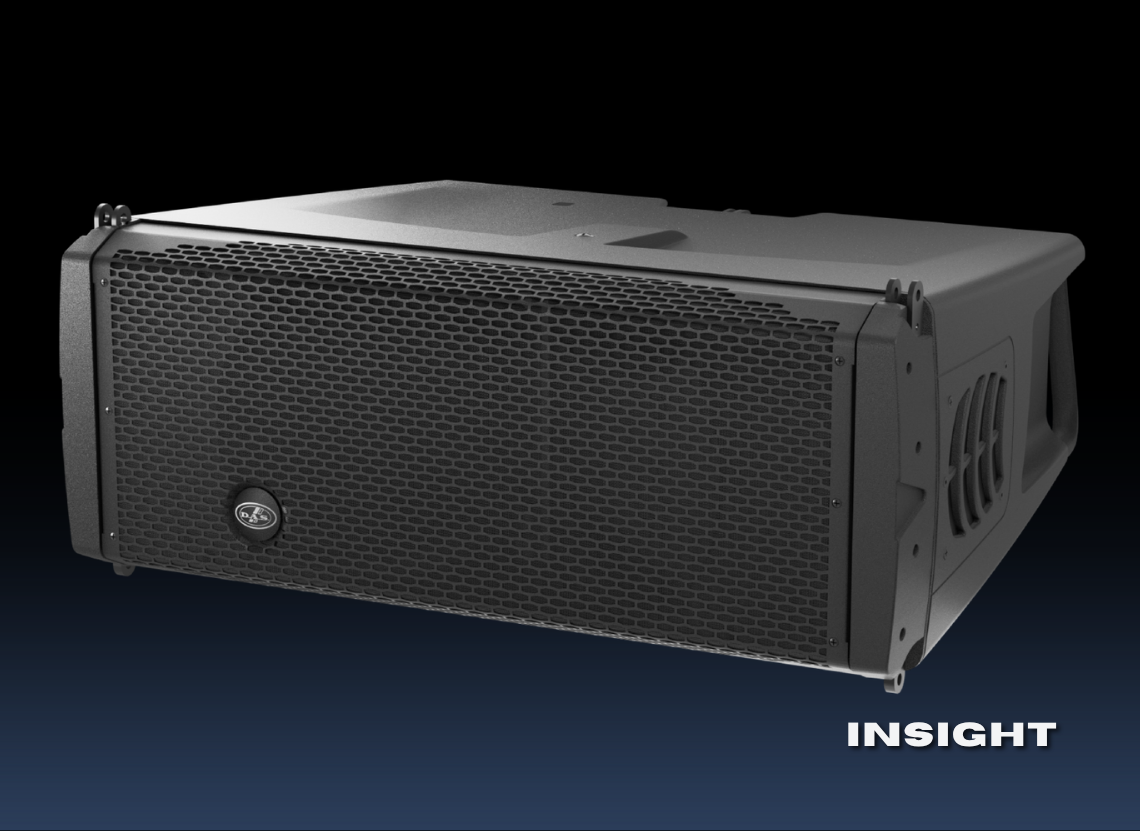
More than a compact, high-performance line array, the EVENT-30A proposes a new way of working: sensors, DSP, FIR processing, automation, and a rigging system designed to reduce setup times and errors. A platform that seeks to make complex tasks simpler and respond to an increasingly specific need in the professional market: achieving consistent results, faster and with less operational effort.
The EVENT-30A is not only about delivering more power in less space. Its true differentiator lies in combining acoustics, DSP, sensors, automation, and mechanical design to transform the way a line array system is configured and operated.
In a market where more and more performance is demanded in less time, innovation is not only about achieving more SPL, greater coverage, or more powerful components. It is also about something much more concrete: making a professional system faster to deploy, easier to configure, and, above all, more consistent in its results. It is precisely at this point that DAS AUDIO’s EVENT-30A finds its main argument.
More than a compact line array
At first glance, the EVENT-30A can be defined as a compact and lightweight self-powered line array system equipped with two 10-inch transducers and two 1.75-inch M-60 compression drivers. Its Class D amplification delivers 1,000 W continuous and 2,000 W peak, while the system reaches a maximum of 142 dB linear SPL and offers 90° horizontal coverage.
But reducing the EVENT-30A to its specifications would mean overlooking what is most interesting.
At 26.5 kg, DAS AUDIO has sought to balance performance and portability in a format capable of responding both to the needs of rental and touring companies and to medium- and large-scale permanent installations.
The symmetrical V configuration of the low-frequency transducers allows the system to maintain constant 90° horizontal coverage down to 200 Hz, while the waveguide controls vertical dispersion and promotes coupling between the different units when building an array.
In other words, the goal is not simply to create a small enclosure that delivers high output. The challenge is for that enclosure to behave as part of a coherent system.
And this is where the true innovation of the EVENT-30A begins.
When the system recognizes where it is
One of the most interesting features of the EVENT-30A is Smart Self-Tuning.
The idea is simple to explain, although technologically it is much more sophisticated: each unit can identify its position within the array using infrared sensors.
The system detects how many boxes are part of the array, identifies the upper and lower positions, and recognizes where each unit is located. Based on that information, it can automatically load the corresponding presets, including long-throw and short-throw configurations.
This changes a fundamental element of the workflow. Traditionally, configuring a line array involves a series of decisions and adjustments that must be made manually. The larger the system, the greater the number of parameters that need to be controlled and, consequently, the greater the possibility of making a mistake.
Smart Self-Tuning seeks to reduce precisely that margin. It is not about replacing the technician. It is about eliminating part of the repetitive and error-prone work so that the professional can focus on the decisions that actually require experience.
And that difference is important.
Automation does not mean losing control
Sometimes, when automation is discussed in professional audio, there is an idea that technology is attempting to replace the operator’s knowledge.
The concept behind the EVENT-30A proposes exactly the opposite.
Automation works as an assistance tool. The technician continues to decide where to place the system, how many units to use, how to distribute coverage, what overall configuration the event requires, and how to integrate the main system with subwoofers, frontfills, and delays.
What the EVENT-30A does is help make part of the configuration faster, more accurate, and more repeatable. This is becoming increasingly important in the professional market.
Rental companies work with increasingly tight schedules and with crews that may vary from one event to another. A system capable of recognizing its own configuration can help make the final result less dependent on manual tasks and more dependent on a structured workflow.
In this case, technology does not replace experience: it enhances it.
The precision behind simplicity
Ease of configuration only has value if behind it there is a platform capable of guaranteeing consistent acoustic behavior.
That is why another of the EVENT-30A’s central elements is its DSP platform.
The system incorporates 24-bit processing and FIR filters designed to optimize system response and maintain constant phase response. The goal is to achieve transparent sound reproduction, with clarity and definition, while at the same time maintaining consistency among the different units that make up the array.
Here we find a fundamental idea: automation does not mean simplifying the technology; it means making complex technology easier to use.
The user does not necessarily need to intervene in each of the layers that make the system’s operation possible. The complexity is integrated within the platform.
And that philosophy also extends to the DAScontrol ecosystem.
Rigging is also part of the innovation
There is another aspect that is often overlooked when discussing innovation in sound systems: mechanics.
In a line array system, setup time does not depend exclusively on the electronics. It is also determined by the physical process of assembling, transporting, and adjusting the boxes.
The EVENT-30A incorporates the FSS (Fast Set Splay) system, developed to streamline that process.
The angle of each element can be selected directly from the transport cart, with 1° adjustments between 0° and 10°. The steel hardware allows arrays of up to 24 units to be configured.
The advantage is simple but significant: part of the system preparation can be completed before the boxes leave the cart.
That means less work at height, a more orderly operation, and faster deployment.
At a festival, on tour, or at an event where setup times are strictly constrained, every minute counts.
A system that does not remain frozen on the day of purchase
Another element that deserves attention is the integrated Wi-Fi connectivity.
The EVENT-30A allows wireless firmware updates, a feature that becomes especially relevant when analyzing the product from the perspective of a rental company.
A professional system should not become technologically frozen on the day it comes out of the box.
The ability to update firmware means that the platform can evolve over time and that future improvements can be incorporated without physically modifying the equipment.
This turns the EVENT-30A into more than a hardware investment. It is a platform designed to evolve.
From product to ecosystem
The new generation of the EVENT series should also be analyzed from a broader perspective.
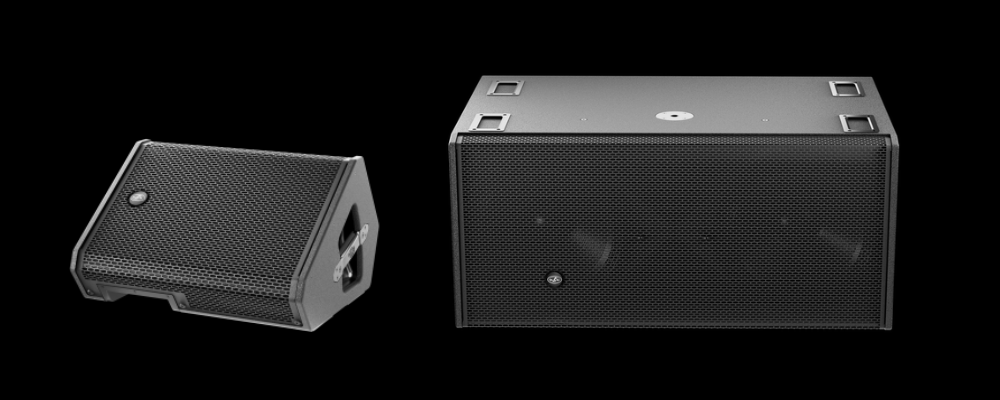
DAS Audio did not present the EVENT-30A as an isolated product. The system is part of a platform that also includes the EVENT-S218A subwoofer and the EVENT-M12A monitor, all of them based on a common DSP architecture.
The EVENT-S218A incorporates two 18-inch neodymium transducers and was designed to work specifically with the EVENT-30A. Its cardioid presets for two- and three-unit configurations allow rear energy to be controlled in applications where this aspect is particularly important.
Meanwhile, the EVENT-M12A extends the platform into stage monitoring and can also be used as a point-source system.
This integration has an important consequence: the user is not simply acquiring three different products. They are accessing an ecosystem.
The goal is for different elements to share the same philosophy of processing, control, and operation.
Why could this be revolutionary for the market?
The word “revolutionary” is often used too easily in the industry.
A new loudspeaker is not revolutionary simply because it has more power than its predecessor. Nor is it revolutionary because it incorporates a new DSP or weighs a few kilograms less.
True innovation appears when several technologies simultaneously solve real user problems.
And that is precisely what the EVENT-30A proposes. More performance in a relatively compact format. Lower weight. Configuration automation. Identification of each unit within the array. Automatically adapted presets. FIR processing. Wi-Fi updates. Rigging designed to accelerate deployment. Compatibility with a complete platform.
The result is a system that seeks to reduce the gap between technological complexity and ease of operation.
A particularly relevant need for Latin America
This concept takes on even greater importance when looking at the Latin American market.
Rental companies need systems capable of adapting to different environments: concerts, festivals, corporate events, churches, theaters, convention centers, and permanent installations.
In many cases, the same systems must also be transported between cities and assembled within very short timeframes.
Therefore, weight, setup speed, ease of configuration, and the ability to achieve consistent results are not secondary issues. They are part of the business.
A system that can deliver 142 dB of linear SPL, provide 90° horizontal coverage, and work with up to 24 units, but that also weighs 26.5 kg per box and automates a significant part of its configuration, can open up new possibilities for companies that need professional performance without necessarily taking on the logistical infrastructure associated with larger systems.
True innovation lies in simplifying
The EVENT-30A represents an interesting evolution in the way a line array is understood.
Its innovation lies not only in the two 10-inch drivers, the 2,000 W peak output, or the 142 dB. It lies in the integration.
Acoustics, DSP, infrared sensors, FIR processing, Wi-Fi connectivity, automation, and rigging work within a single philosophy: making a complex professional system faster, simpler, and more consistent to operate.
And that is probably why the EVENT-30A deserves to be analyzed beyond its technical specifications.
Because the next generation of professional sound systems will not necessarily be defined solely by how much SPL an enclosure can produce.
It will also be defined by how much it can help the professional achieve the right result, in less time and with less room for error. The innovation of the EVENT-30A is not only in what the system can do. It is in how much it can simplify the work required to do it well.
Credits
Cover Photo: DAS AUDIO
Inside Photos: DAS AUDIO
The journalistic production, research, writing, editorial approach, and editing of this content are original works by LATAM STAGE and are protected by copyright.No part of this content may be reproduced, copied, distributed, adapted, or published, in whole or in part, in any medium or format, without the prior written authorization of LATAM STAGE.


