
USA – Altitude101 has spent recent months filming immersive productions in some of the world’s most demanding environments, from deserts and mountains to underwater locations. Along the way, the French production company has been developing its own approach to immersive storytelling, with each project contributing new lessons about how audiences experience content in Apple Immersive Video.
“Immersive production is still at the very beginning,” said Cofounder Amaury Pierlot. “We want to write the rules that will define the medium moving forward. Being one of the first studios to create for this format couldn’t be more exciting.”
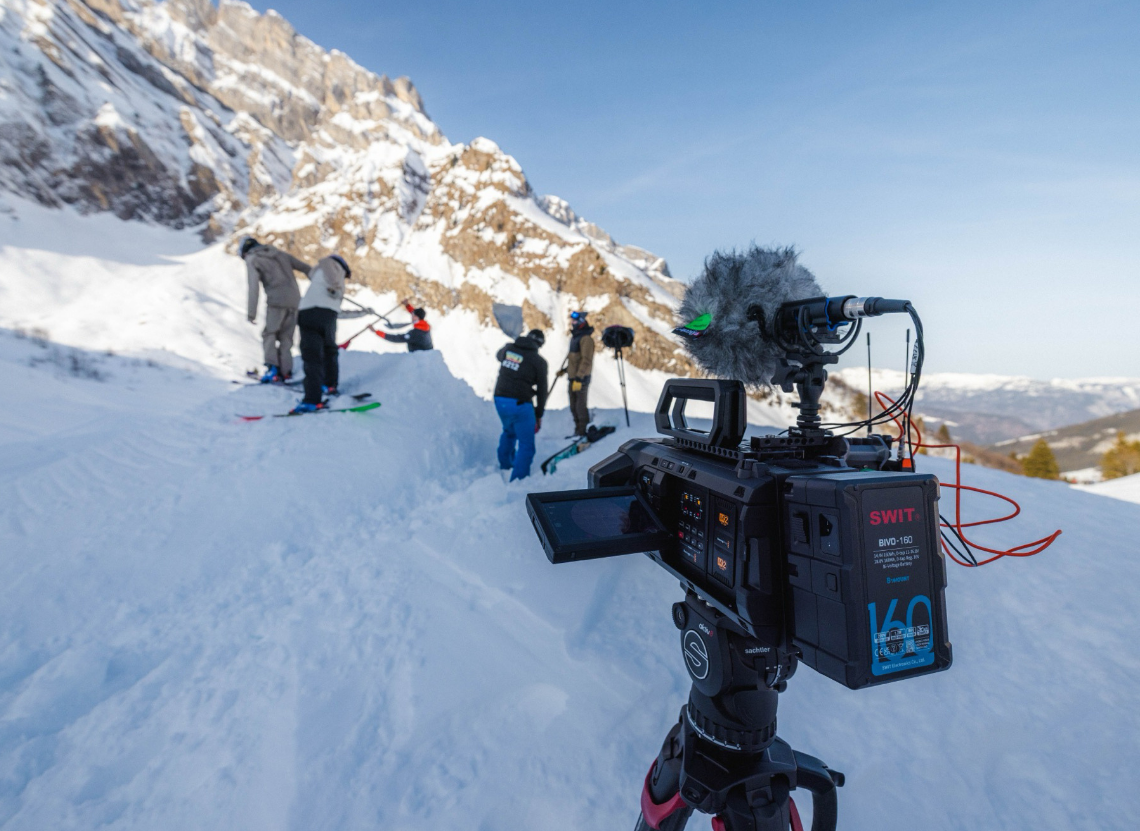
The company’s latest project, “KICK,” was captured in the French Alps using the Blackmagic URSA Cine Immersive digital film camera and Blackmagic RAW. The film follows three French skiers as they venture deep into the mountains in search of the perfect location to perform a double backflip.
“The goal from the start was to create the most entertaining and visually impressive film possible while telling a comprehensive, compelling story,” explained Pierlot. “Skiing looks unbelievable in Apple Immersive Video, and as sports enthusiasts we absolutely wanted to bring people with us into the mountains so they could feel the same thrill.”
One of the key considerations throughout production was maintaining the viewer’s perspective. Director Antoine Baille says the team approached camera placement differently than they would for a traditional production.
“The rule was that the viewer would be sat down to experience the video, so we almost always placed the camera height at the viewer’s eye level,” he said.
That thinking extended to everything from camera distance and horizon leveling to how movement was incorporated into the film. Around ten percent of “KICK’s” shots were captured in motion, helping place viewers alongside the skiers while maintaining a comfortable viewing experience.
Pacing was equally important. Most shots remained on screen for between five and eight seconds, giving audiences time to explore the environment before moving on.
“Every immersive project is an opportunity for us to experiment with different ways of shooting and telling stories,” said Baille. “The storytelling techniques are not the same as in 2D and as we finish projects, we start mastering them more and more.”
One lesson that has become increasingly clear is the reduced role of traditional voiceover led storytelling. “The image in immersive is so strong that the classic voiceover storytelling technique used in 2D doesn’t work as well,” said Pierlot. “It’s about understanding how we could tell compelling stories using the image as the centerpiece.”
Beyond the creative considerations, “KICK” also highlighted the practical realities of immersive production. Working in bright alpine conditions meant the team had to carefully manage shadows, footprints and equipment positioning, while the large data volumes generated by immersive capture required a robust workflow built around Blackmagic Media Dock and DaVinci Resolve Studio editing, grading, visual effects (VFX) and audio post production software.
For Pierlot, there are many lessons learnt from the production that he will take into future projects. One being the importance of pre production planning because in immersive, he said, “the ‘fix it in post’ rule doesn’t apply.”
Those future projects include the Apple Immersive Video production “The Longest Day,” which follows an amateur triathlete through the physical and mental demands of preparing to qualify for the Triathlon World Championships.
“KICK” and Altitude101’s “Echoes of the Middle East” are available free to Apple Vision Pro users via the Theater and Amplium apps.


