
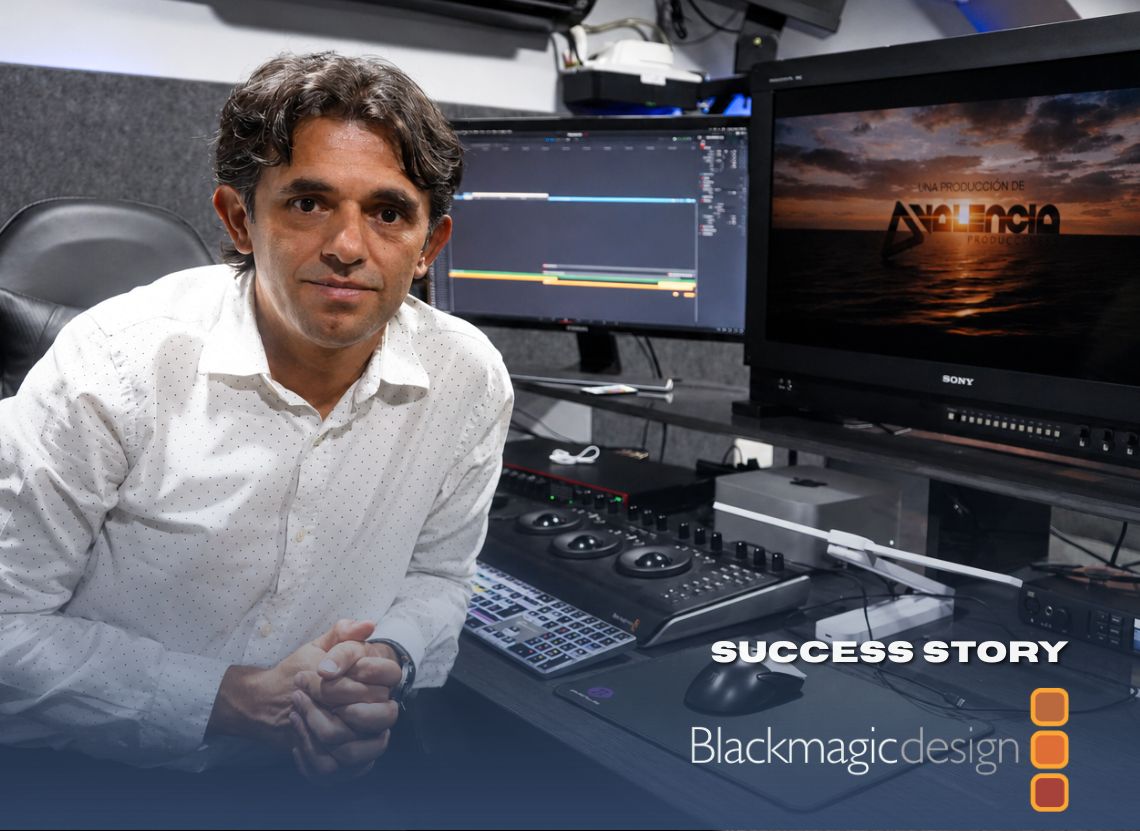
The evolution of a studio is not always measured by the number of productions it delivers, but by its ability to rethink the way those stories reach the screen.
At Stargate Studios Colombia, that constant drive to innovate led the company to integrate the entire creative process—from production through final delivery—within the Blackmagic Design ecosystem. The result was not simply a more efficient workflow, but a new way of producing films and series for international streaming platforms.
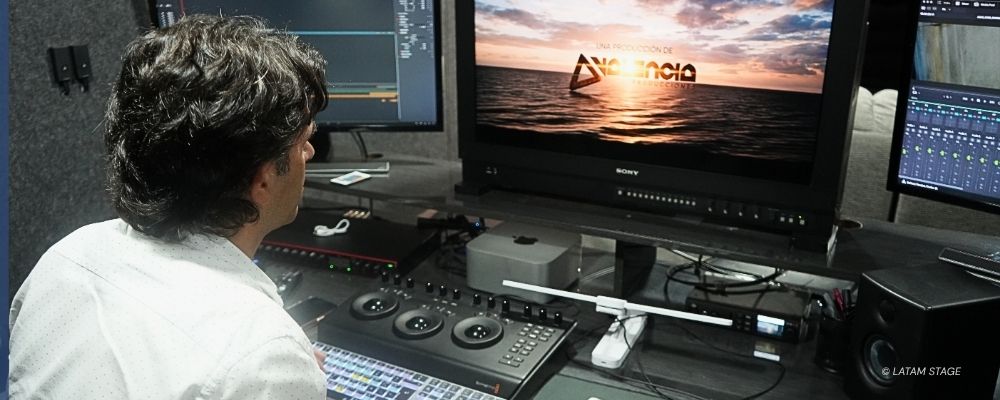
Some companies find a workflow and spend years refining it. Others prefer to start over every time a new challenge emerges.
From the very beginning of his career, Andrés Valencia chose the latter.
At a time when visual effects were still relatively unexplored in Colombia, his team was already developing digital sequences for local productions. That experience, driven by the television series Chica Vampiro, ultimately marked the beginning of a company that never stopped evolving: Valencia Producciones.
What began as a studio specializing in visual effects gradually evolved into a creative ecosystem capable of managing complete post-production workflows for feature films, television series, and international streaming platforms.
Its partnership with Stargate Studios Los Angeles, established in 2019, definitively opened that door, allowing the company to work on projects for Disney, Netflix, Prime Video, Lionsgate, and other globally recognized studios and streaming platforms.
Joining Stargate’s international network marked a turning point for the company. More than simply expanding its client portfolio, it meant adopting new production standards, strengthening technical collaboration with studios in other markets, and participating in projects where image quality, collaborative workflows, and delivery processes must meet international requirements.
That environment accelerated a transformation already underway within the studio: building an increasingly integrated workflow capable of supporting productions from beginning to end.
And when the market changes, the workflow must evolve with it.
For many years, the studio built its creative process around different tools. They worked—but eventually they were no longer enough.
“When we started working with Disney, we were no longer doing only visual effects. We began handling the entire post-production process and entered the world of HDR, SDR, and Dolby Vision. That’s when we realized the best path forward was to work with DaVinci Resolve, and that’s when our relationship with Blackmagic Design truly began,” Andrés recalls.
That moment represented much more than the adoption of a new software platform.
It marked the beginning of a complete transformation in the way the company produces content.
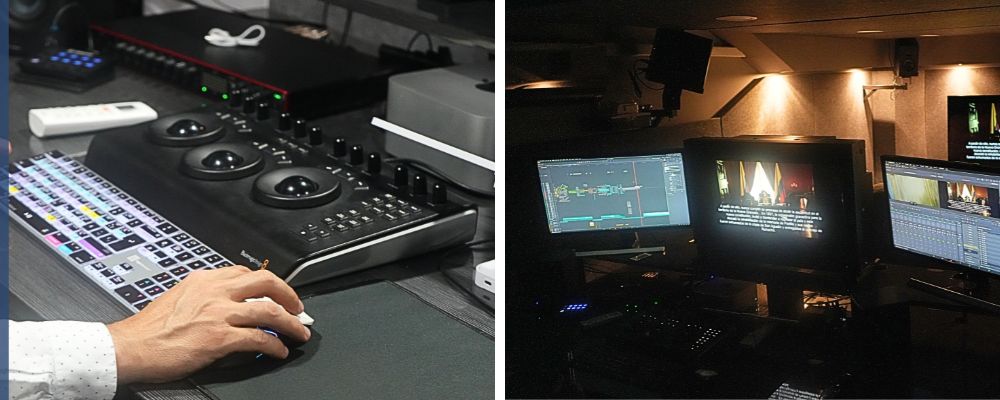
Technology stops dividing processes
Until then, much of the studio’s work depended on constantly moving projects between different platforms.
Editing progressed in one application. Color grading took place in another. Final conforming required additional migrations and verification. Every change consumed time. Every correction added complexity.
Blackmagic Design made it possible to break that cycle.
“One of our biggest challenges was constantly migrating projects from one platform before completing the color grading in DaVinci Resolve. Today, all of our films and series are developed within the Blackmagic Design ecosystem, and that process is no longer an obstacle.”
That integration not only streamlined the studio’s operations. It also enabled the team to maintain complete control over image quality throughout the entire production process, preventing data loss between platforms and making it easier to transition between SDR and HDR projects without compromising the visual consistency of each delivery.
In productions where color is an essential part of the storytelling, that continuity became not only a technical advantage, but also a creative one.
A film that begins post-production while it is still being shot
The transformation was fully consolidated during the production of the feature film the studio is currently developing. Andrés Valencia wanted to put into practice a methodology the team had never implemented as a fully integrated workflow.
To achieve this, they incorporated a Blackmagic Cloud Store 80 TB, allowing multiple teams to work simultaneously on the same project.
“I wanted to take the risk because we needed to work in parallel. From the very first week of principal photography, we were already ingesting and syncing footage in DaVinci Resolve. Two weeks later, we had already begun editing scenes while, at the same time, the colorist was starting the grading process.”
What had previously been a sequential workflow began happening simultaneously.
While production continued, the film was already taking shape inside the post-production suite.
That was when the studio realized that the real transformation was not simply about speed—it was about rethinking the entire production process.
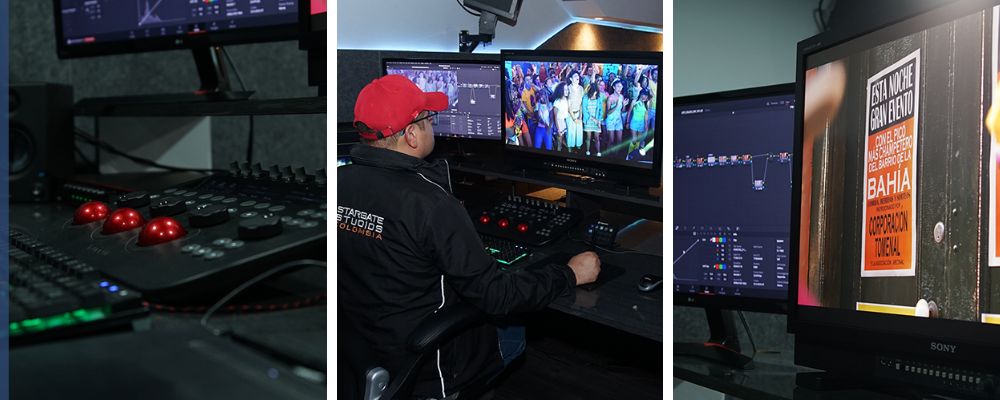
From production to color without interrupting creativity
One of the most significant changes occurred even before the footage reached the post-production suite.
Today, part of the color workflow begins directly on set.
“We have a Mac computer running DaVinci Resolve right on set. We offload the footage, review it, and validate the look we want for the film. By the time we reach post-production, the colorist already knows exactly the visual direction we’re aiming for and can begin working from that foundation.”
That workflow also transformed the way the team collaborates. Thanks to DaVinci Resolve, different members of the production can work on the same project from different locations without losing continuity, while production continues to move forward.
Post-production is no longer a stage that begins once filming ends. It has become an integral part of the production process.
An ecosystem that grows with every project
As the studio’s challenges grew, so did its technology ecosystem.
Today, Stargate Studios Colombia relies on DaVinci Resolve Studio as its central post-production platform, complemented by DaVinci Resolve Micro Color Panels, DeckLink capture cards, ATEM Mini switchers, Blackmagic Cinema Camera 6K, and Blackmagic URSA Mini Pro 4.6K G2 cameras, integrating acquisition, monitoring, editing, color grading, and finishing within a single production philosophy.
However, Andrés Valencia insists that the true value of the ecosystem lies not in the number of tools available, but in the continuity it provides throughout the entire production process.
“What we value most is having complete control over image quality throughout the entire production. Being able to move seamlessly from SDR to HDR while maintaining that level of control across the entire workflow has completely changed the way we finish our projects.”
Another aspect Andrés highlights is the stability of the Blackmagic ecosystem and the community that has grown around the platform. For a studio constantly adopting new technologies, having access to experienced specialists, training, and responsive technical support is just as valuable as the tools themselves.
“Whenever we need support, we always find people who know the platform inside and out and can help us. On top of that, the fact that DaVinci Resolve offers a free version has allowed so many people to learn the software, helping the entire community grow.”
That integration has also allowed the studio to quickly adapt to new production formats. When the team began producing series designed exclusively for vertical viewing, there was no need to build a separate workflow.
“We simply configured the project in a vertical format and continued working exactly the same way. We even create our subtitles directly inside DaVinci Resolve.”
Technology stopped imposing limitations and instead became a platform capable of adapting to any storytelling format.
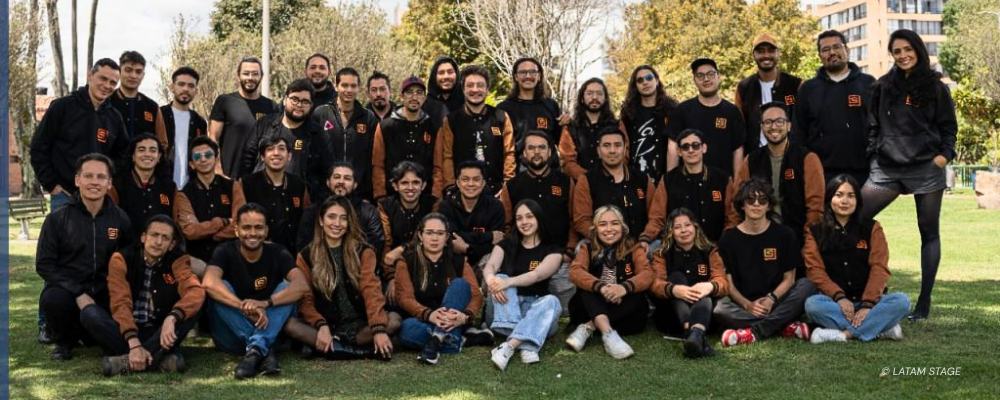
Innovating as a working philosophy
The evolution of Stargate Studios Colombia has never been driven solely by the growth of the industry. It has also been shaped by a constant commitment to taking on projects that push the studio beyond its comfort zone.
That journey began more than a decade ago with the visual effects for Chica Vampiro, continued through its partnership with Stargate Studios Los Angeles, and is now focused on an even more ambitious goal: developing original productions capable of competing in the international market.
“I’ve always wanted to do things differently from what is typically done in Colombia. Today, we’re developing a feature film that brings together everything we’ve learned: visual effects, production, art, new technologies, and artificial intelligence. We want to demonstrate just how far Colombian talent can go when it dares to take on new challenges.”
To support that evolution, Andrés believes it is essential to maintain a close relationship with the companies developing the technology.
“We’ve always sought to work very closely with manufacturers. Being able to test new versions, receive technical support, and share our needs allows us to evolve at the same pace as the industry itself.”
That close relationship with manufacturers has been part of the studio’s philosophy for years. Testing new releases, participating in technology validation processes, and sharing real-world production needs enable the team to adopt new tools before they become industry standards, maintaining a constant cycle of innovation.
Building the future before it arrives
The evolution of Stargate Studios Colombia demonstrates that innovation is not built around a single project, but through the ability to continually reinvent the way productions are made.
Along that journey, Blackmagic Design has become the ecosystem that unifies production, editing, color grading, visual effects, and final delivery within a single production philosophy.
Today, as the studio develops productions that combine cinema, artificial intelligence, art, and new forms of storytelling, it approaches every challenge with the flexibility needed to ensure creativity has no limits.
Credits
Cover Photo: LATAM STAGE (@latamstage)
Inside Photos: LATAM STAGE (@latamstage)
The journalistic production, research, writing, editorial approach, and editing of this content are original works by LATAM STAGE and are protected by copyright.
No part of this content may be reproduced, copied, distributed, adapted, or published, in whole or in part, in any medium or format, without the prior written authorization of LATAM STAGE.


