
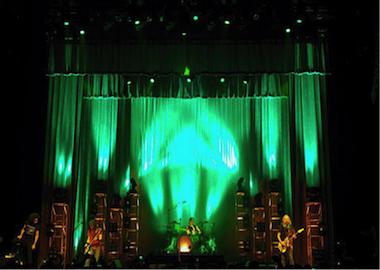
Alice in Chains recently wrapped the second
leg of their 2016 North American tour, with Production Designer Marty Postma at
the visual helm. To help achieve his uncluttered vision for the tour, Postma
specified 14 High End Systems SHAPESHIFTER C1’s along with a full Hog4 console.
Marty explains, “Last year we toured with a similar design, based around a
‘clean stage’ look that was achieved in part with two sets of neutral gray
shaded legs and borders, and a semi-translucent textured backdrop. For
this tour, we wanted to expand on that without losing our overall clean look.
Economy of design is critical to maintaining this, since having too much gear
all over the stage and around it quickly ruins the look. The trick here is
to create enough dynamic and unique looks with a small rig, and SHAPESHIFTER is
the perfect choice to meet all of these requirements. They are effectively
seven units as a single fixture. We can easily create looks with ten fixtures
that look as if there are 70 or more fixtures in the rig.”
Marty continues, ”The SHAPESHIFTERs are a big
part of the overall design. Instead of simply washing the drapes and
backdrops with 2D looking colors and patterns via more conventional fixture
types, we are able to create a huge range of extremely dynamic looks on the
scenic elements. At the same time we are able to achieve aerial effects
and highlights on the band members themselves. No other unit I have come across
is able to fill all the roles the SHAPESHIFTER does for this
design. Initially I was concerned at not having any gobos or patterns to
project onto the drapes, but I did not miss them at all in the end with all the
many options using SHAPESHIFTERs. Even though the rig is numerically small, the
brightness of these fixtures cannot be overstated. They hold up extremely
well in daylight. Even in some of the large festival rigs we encountered, our
14 SHAPESHIFTERs easily kept up with (and in some cases out-gunned) dozens of
more typical 1200-1500 watt type spots and washes.”
Eight C1’s are positioned atop vertical truss
towers that frame out the stage and scenic drapes. Two of the units are on
the floor at the base of the upstage drapes, and four units sit on top of empty
cases behind the backdrop. He says, “Having units in front of and behind the
semi-translucent textured backdrop aids in our ability to create a large range
of very dynamic looks without it looking 2D or flat. We can create the
illusion of depth and change the perception of the stage space very easily this
way.”
Marty points out that “Alice In Chains is a
band of such astounding talent alone that they don\’t need any special tricks or
gags to compensate for weaknesses in the performance. This leaves me
completely free to highlight and enhance all the little individual layers and
details within the music. Having all the individual cells within SHAPESHIFTER
is a very natural and easy way to apply visual enhancements to these, and they
are simply a lot of fun to work with and program! We do make use of the
excellent pixel-mapping features on the Hog4, but also make quite a bit of the
looks more traditionally with effects, chases, and cue crossfades. The Hog4
pixel-mapping features are unmatched in my experience. Being able to smoothly cross
from a pixel-mapped look to a solid color or drive intensity separately played
a large role in making the design a success. The indigo highlighter is
probably one of the most underrated features of the SHAPESHIFTER. Not only do
they play into the ability to create depth and change spacial perceptions, but
even more simply they make a great way to give a dark glow to the stage between
songs, without having to give other elements away.
Having worked on many versions of the desk,
Postma’s preferred console is now the flagship Hog4. “Having the full hardware
set, including rate wheel and buttons above and below the screens are an
integral part of my workflow. Additionally, I find the third smaller screen in
the middle very useful. I have two main layouts for this tour. The primary one
is a very typical ‘Page-per-song’ layout with base looks combined with bumps
and overrides on each Page. A second ‘busking’ layout is used when the band
decides to throw something new in or make the occasional audible change to the
set list mid-show.”
In closing, Marty also gives kudos to his
crew and vendors.“See Factor have been our lighting equipment supplier for the
past two years, and have done an outstanding job on the prep as well as with
support along the way. Sew What? supplied our rental drapes and
custom backdrop. They have a great team and continue to be a strong
partner in our productions.”
Photography by Scott Kinnebrew


